





By: Nkosiyabusa Nsibande
Intellectual property is increasingly being positioned as a strategic economic resource capable of generating revenue, attracting investment and creating employment opportunities, with Government now seeking to embed intellectual property management into some of the country’s fastest-growing sectors.
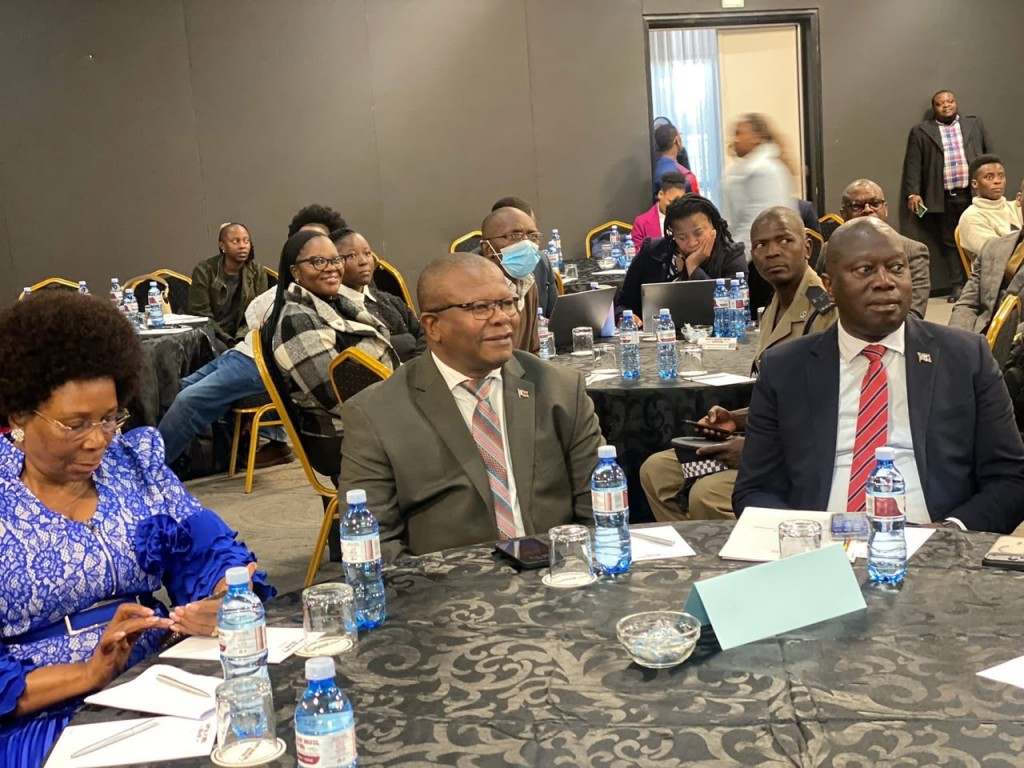
Speaking during the commemoration of World Intellectual Property Day 2026 at Happy Valley Hotel in Ezulwini, Minister of Commerce, Industry and Trade Manqoba Khumalo argued that Eswatini must move beyond viewing intellectual property merely as a legal protection mechanism and instead recognize it as a commercial asset capable of contributing meaningfully to economic growth.
“Sport is also rich with intellectual assets that create value, generate income and contribute to economic growth,” Khumalo said, setting the tone for a speech that focused heavily on the commercial potential of intellectual property.
His remarks signalled a broader shift in Government thinking, placing intellectual property alongside more traditional drivers of economic development such as manufacturing, trade, and investment promotion. The minister emphasized that ideas, brands, innovation, content, and technology are increasingly becoming valuable economic resources in their own right as economies become more knowledge-driven.
Khumalo used the occasion to reflect on the progress made since last year’s Intellectual Property Day celebrations, which focused on the music industry. The Minister stated that efforts over the past year have started yielding measurable results, such as enhanced monitoring of music use on national broadcasters, a rise in copyright licensing by businesses, and greater involvement in collective management structures.
These developments, he noted, demonstrate that intellectual property can translate into tangible economic activity when rights are properly recognized, protected, and managed.
“These developments are encouraging because they demonstrate that intellectual property can translate into real economic activity when rights are recognised, managed and enforced,” he said.
While acknowledging these gains, Khumalo cautioned that challenges remain, particularly regarding the limited consumption of local content by public broadcasters. He noted that low levels of local content usage directly affect royalty collections and ultimately reduce earning opportunities for creators, highlighting the economic consequences of weak intellectual property utilization.The Minister’s speech, however, was forward-looking and centred on the potential of intellectual property within the sports economy. He argued that sport has evolved far beyond athletic competition and now operates as a sophisticated commercial ecosystem built around branding, sponsorships, media rights, merchandising, technology, and digital content.
“Modern sport is built not only on athletic performance but also on branding, technology, media content, sponsorships, merchandising, data and entertainment,” Khumalo said.
In this environment, intellectual property serves as the foundation upon which much of the sector’s commercial value is created. Team identities, event brands, broadcast rights, sports technologies, athlete images and digital content all represent intellectual assets that can be protected and monetised.
Indeed, the Minister described intellectual property as “the invisible engine that powers the global sports economy.”
His message carries significant implications for Eswatini’s broader economic diversification agenda. As the country seeks new avenues for growth, intellectual property presents opportunities that require relatively limited physical infrastructure while offering high-value economic returns. Properly managed intellectual property can support entrepreneurship, stimulate innovation, enhance competitiveness, and create entirely new business models across multiple sectors.
The Minister specifically highlighted opportunities for athletes, sports clubs, event organizers, technology innovators, and content creators to extract greater value from their intellectual assets. Personal brands, logos, competition formats, digital platforms, technological innovations and media products can all be transformed into commercial products capable of generating sustainable income streams.
Perhaps the most notable aspect of Khumalo’s address was his emphasis on commercialisation rather than protection alone.
“Rights must be identified, protected, licensed, monitored and commercialized. Awareness alone is not enough. Strategic utilisation is what transforms intellectual property into economic opportunity,” he said.
That statement reflects a growing recognition that intellectual property only delivers economic benefits when it is integrated into business strategies and linked to market opportunities.
The Minister urged stakeholders to begin evaluating intellectual property through a business lens by considering what intellectual assets are being created, how they can be protected, how they can be commercialized, and how they can contribute to long-term sustainability.
For Eswatini’s innovation ecosystem, the message represents an important policy direction. As economies globally become increasingly dependent on knowledge, creativity and technology, the ability to generate value from intangible assets may become a critical determinant of competitiveness. Intellectual property therefore occupies a strategic position at the intersection of innovation policy, enterprise development and economic growth.
By concluding his address, Khumalo left little doubt about the role the government envisions for intellectual property in the economy.
“By integrating intellectual property into the sporting ecosystem, we can unlock additional revenue streams, attract investment, create employment opportunities and strengthen our innovation and creative economy,” he said.
The statement encapsulates a broader national ambition: transforming intellectual property from a legal concept into a productive economic asset capable of generating wealth, stimulating enterprise growth and supporting Eswatini’s long-term development agenda.

Other Articles