






By: Nkosiyabusa Nsibande
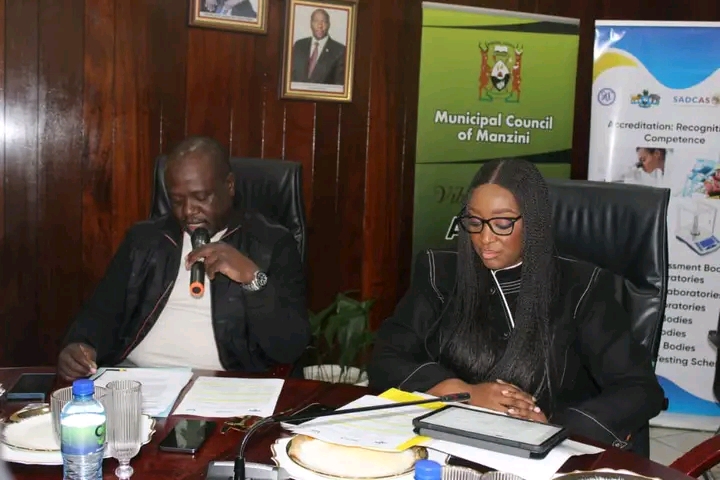
Efforts to strengthen Eswatini’s quality infrastructure received a significant boost this week as stakeholders from government, industry, and standards bodies gathered in Manzini to commemorate World Accreditation Day 2026, an event that highlighted the growing role of accreditation in supporting trade, investment and sustainable economic development.
Held under the theme “Innovation, Trust and Sustainability: The Power of Accreditation,” the celebration brought together representatives from the Ministry of Commerce, Industry and Trade, the Ministry of Housing and Urban Development, the Southern African Development Community Accreditation Service (SADCAS), regulators and other stakeholders involved in quality assurance and standards development.
While World Accreditation Day is observed globally to raise awareness about the value of accredited services, this year’s local commemoration carried added significance for Manzini Municipal Council following the extension of its SADCAS accreditation to include food testing. The development strengthens the council’s laboratory capabilities and positions it to play a more active role in safeguarding food quality and public health standards.
For businesses operating in the food value chain, accreditation is increasingly becoming a strategic asset rather than a compliance requirement. Accredited testing services provide assurance that products meet recognised standards, reducing uncertainty for consumers while helping producers access new markets. As regional and international markets continue to tighten quality requirements, reliable testing and certification systems are becoming essential for exporters seeking to remain competitive.
The extension of accreditation to food testing comes at a time when Eswatini is seeking to expand industrial production, increase agro-processing activities and strengthen participation in regional trade. Industry experts argue that the availability of accredited local testing facilities can reduce costs for businesses that would otherwise have to seek certification services outside the country, while also shortening turnaround times for quality verification.

Accreditation also plays a critical role in attracting investment. Investors are often guided by the strength of a country’s quality infrastructure when assessing manufacturing opportunities, particularly in sectors such as food processing, pharmaceuticals, agriculture, and consumer goods. A credible accreditation framework provides confidence that products, services and regulatory systems meet accepted benchmarks.
Speaking during the event, the Minister of Housing and Urban Development delivered the keynote address, underscoring the importance of accreditation in fostering public trust and supporting sustainable development objectives. The discussions centred on how accredited institutions contribute to innovation, improve service delivery and create an environment where businesses and consumers can engage with greater confidence.
For small and medium-sized enterprises (SMEs), stronger accreditation systems can open pathways into formal value chains. Many SMEs struggle to meet procurement and export requirements because of limited access to recognised testing and certification services. Expanding accredited facilities within the country has the potential to lower these barriers, enabling more local enterprises to demonstrate compliance with quality standards and participate in larger markets.
The event also highlighted the growing connection between accreditation and sustainability. As businesses face increasing pressure from consumers, regulators, and investors to demonstrate responsible practices, accredited assessments provide an independent mechanism for verifying claims related to quality, safety and environmental performance. This is becoming particularly important as global supply chains place greater emphasis on transparency and traceability.
As Eswatini pursues its industrialisation and export growth ambitions, stakeholders believe that investment in standards, testing, certification and accreditation infrastructure will remain critical. The expansion of accredited services at local institutions such as Manzini Municipal Council is therefore viewed not only as a technical achievement but also as a contribution to the country’s broader competitiveness agenda.
With accreditation increasingly serving as a bridge between regulation, consumer confidence and market access, this year’s World Accreditation Day celebrations reinforced the message that strong quality systems are becoming an important pillar of economic growth and business development in Eswatini.

Other Articles