




By: Nkosiyabusa Nsibande
Accreditation is emerging as a strategic tool for economic development, helping businesses gain access to new markets, meet regulatory requirements, and build consumer trust in an increasingly competitive global economy. As governments across Southern Africa pursue industrialization and export-led growth, industry experts say internationally recognized accreditation systems are becoming essential for businesses seeking to demonstrate quality, safety, and compliance.
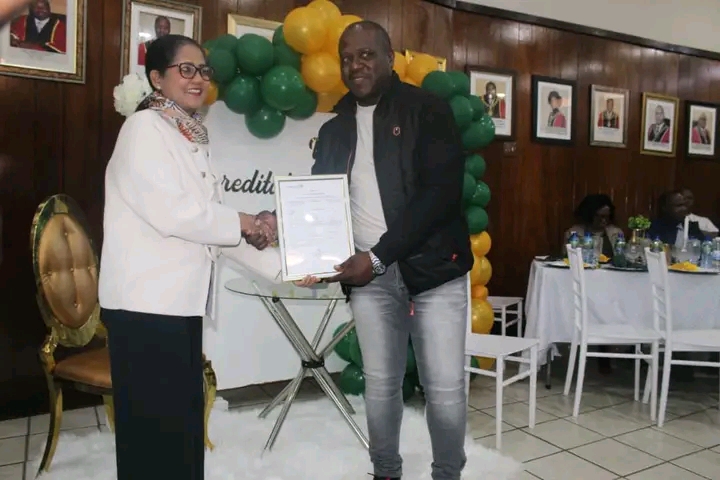
These issues took center stage during the World Accreditation Day 2026 celebrations and the Municipal Council of Manzini accreditation certificate handover ceremony held in Manzini on Friday. The event brought together representatives from government, local authorities, standards institutions, and quality infrastructure bodies to reflect on the role accreditation plays in supporting trade, innovation, and sustainable economic growth.
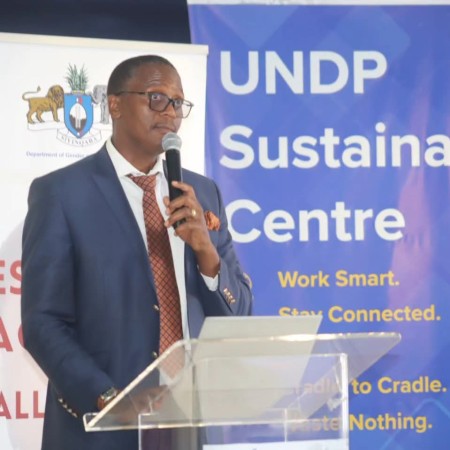
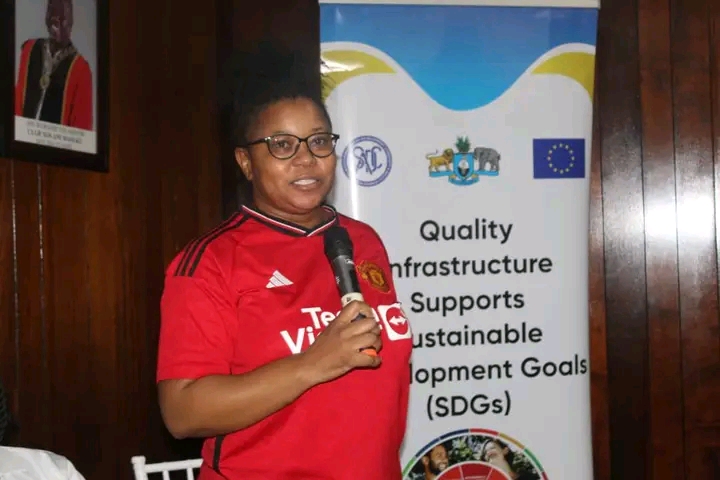
Speaking on behalf of the Chief Executive Officer of the Southern African Development Community Accreditation Service (SADCAS), Scheme Coordinator for Testing Laboratories, Proficiency Testing, and Verification Laboratories Accreditation Schemes, Dr. Varsha Gungoa said accreditation was no longer merely a technical requirement but an important mechanism for enabling businesses to compete and grow.
Addressing delegates, Dr. Gungoa said this year’s World Accreditation Day theme, “Innovation, Trust, and Sustainability: The Power of Accreditation,” highlights the growing importance of accreditation in modern economies where businesses must continually demonstrate compliance, quality assurance, and environmental responsibility. “In today’s global economy, businesses face increasing challenges in accessing markets, demonstrating compliance, and remaining competitive. At the same time, consumers demand confidence that products and services are safe, reliable, and environmentally sustainable,” she said.
The remarks come at a time when countries across the region are seeking to strengthen domestic production and expand exports into regional and international markets. For businesses operating in sectors such as food processing, manufacturing, agriculture, and value-added production, the ability to prove compliance with recognized standards can determine whether products are accepted in foreign markets or rejected at the border.
According to Dr. Gungoa, accreditation provides assurance that testing, inspection, and certification bodies are competent and operate according to internationally recognized standards. This confidence is increasingly important as governments, investors, and consumers demand greater accountability from institutions responsible for assessing product quality and safety.
“Through independent oversight, it ensures that conformity assessment bodies are competent, impartial, and reliable,” she said. She explained that accreditation helps facilitate international trade through mutual recognition arrangements, supports regulatory compliance, enhances consumer confidence, and contributes to improved organizational performance. By ensuring that test results and certifications can be trusted beyond national borders, accredited institutions help reduce unnecessary duplication of testing and lower compliance costs for businesses.
The Municipal Council of Manzini’s achievement formed one of the highlights of the event. The council was recognised for expanding its accreditation scope in food testing, strengthening its position among laboratories capable of providing internationally recognised testing services. The development is expected to improve confidence in local testing capacity and support public health, food safety and regulatory enforcement efforts.
Dr. Gungoa commended the council for successfully navigating what she described as a rigorous accreditation process. “Achieving accreditation is no small feat; it is a rigorous and demanding journey,” she said.
“Your success deserves a resounding round of applause because it reflects commitment, competence, and dedication, and it will undoubtedly bring tremendous benefits to the Municipal Council of Manzini.”
The council is accredited to ISO/IEC 17025:2017 for microbiological analysis, a globally recognised standard that sets requirements for the competence of testing and calibration laboratories. Accreditation under the standard provides assurance that laboratories produce technically valid and reliable results, a critical requirement for institutions involved in food safety testing and public health monitoring. However, Dr. Gungoa cautioned that accreditation should not be interpreted as a blanket endorsement of all laboratory activities. “You would have noticed that accreditation is specific to the test methods and matrices used and listed in the Schedule of Accreditation and the scope of the tests done in the facility; hence, this is not a blanket accreditation,” she said.
Beyond the achievements of the Municipal Council of Manzini, the event also highlighted the growing demand for accreditation services across the Southern African region. According to Dr. Gungoa, SADCAS had issued 423 accreditation certificates to 352 accredited facilities across 13 SADC member states by March 2026, while a further 50 applications were at various stages of assessment.
The accreditation body has also conducted 324 training programs throughout the region to strengthen technical capacity among conformity assessment institutions. These investments, she said, are helping build a stronger quality infrastructure system capable of supporting industrial development and regional trade integration.
“These numbers are not just statistics; they demonstrate the strong and growing demand for accreditation services and the capacity of SADCAS to deliver high-quality, trusted accreditation across borders,” she said.
SADCAS currently provides accreditation services to 14 SADC member states that do not yet have their own national accreditation bodies, including Eswatini. Through international and regional recognition arrangements, accreditation certificates issued by SADCAS are accepted beyond national borders, providing accredited facilities with greater credibility and market recognition. For businesses, the benefits extend well beyond compliance. Accreditation can reduce operational risks, improve product consistency, strengthen corporate reputation, and enhance consumer confidence. For regulators, it provides assurance that testing and inspection results can be relied upon when making decisions related to public safety and market surveillance. For consumers, it offers confidence that products and services meet recognized standards of quality and performance.
As Eswatini seeks to expand exports and strengthen its industrial base, stakeholders increasingly view accreditation as a critical component of the country’s quality infrastructure. Without credible testing and certification systems, businesses often face additional costs, delays, and barriers when attempting to access regional and international markets.
Industry observers argue that while accreditation often operates behind the scenes, its impact is felt throughout the economy. From supporting exporters and manufacturers to protecting consumers and attracting investment, accreditation helps create the trust needed for markets to function efficiently.
Concluding her remarks, Dr. Gungoa urged stakeholders to recognize the significance of the Municipal Council of Manzini’s achievement and the broader role accreditation plays in supporting economic development. “Your accreditation marks a new chapter of excellence and trust,” she said.

Other Articles

Export Ambitions Face Quality Infrastructure Gap