






By: Nkosiyabusa Nsibande
The launch of a E30,000 Trolley Dash Competition for unemployed persons with disabilities has brought into sharp focus a deeper economic reality confronting many emaSwati living with disabilities: access to food assistance remains significantly easier to obtain than access to sustainable income opportunities.
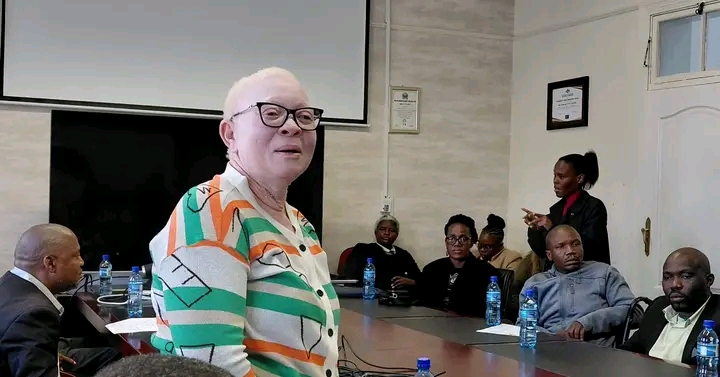
The initiative, launched by Deputy Prime Minister Thulisile Dladla and supported by Cabinet ministers, private companies and individual donors, will provide selected beneficiaries with an opportunity to collect groceries worth up to E2,000 through a supervised trolley dash programme to be held at Pick n Pay Stores across the country. While the programme offers immediate relief to vulnerable households, it also raises important questions about Eswatini’s broader strategy for disability inclusion, labour market participation and economic empowerment.

At face value, the programme represents a practical example of how social welfare interventions are being financed through partnerships between government leaders, businesses and private citizens. The E30,000 fund was assembled through contributions from several stakeholders, including E4,500 from Deputy Prime Minister Thulisile Dladla, E4,000 from Finance Minister Neal Rijkenberg, E4,000 from Tinkhundla Minister Sikhumbuzo Dlamini, E2,000 from Health Minister Mduduzi Matsebula, E1,500 from Natural Resources Minister Prince Lonkhokhela and E2,000 from Commerce Minister Mancoba Khumalo. Corporate partners also made significant contributions, with Pick n Pay Eswatini donating E3,000 and African Alliance contributing E4,000, while anonymous donors added a further E3,000.
The composition of the funding itself tells an important economic story. As governments across developing economies face growing fiscal pressures, social support programmes increasingly rely on collaborative financing models that bring together public institutions, private companies and individual contributors. Such partnerships can expand the reach of welfare initiatives without placing additional strain on government budgets. However, they also expose a difficult reality: charitable contributions continue to fill gaps that might otherwise be addressed through stronger economic inclusion mechanisms. This is where the trolley dash becomes more than a goodwill initiative.

The competition is specifically targeted at unemployed persons with disabilities, a group that remains among the most economically vulnerable segments of society. While disability discussions are often framed around accessibility, social protection and human rights, the underlying challenge is fundamentally economic. Individuals excluded from employment opportunities face a higher risk of poverty, food insecurity and financial dependence. They are also more likely to experience difficulties accessing credit, building savings and participating meaningfully in the formal economy.
The significance of the programme therefore extends far beyond the E30,000 raised. It highlights the continued reality that many persons with disabilities remain on the margins of economic activity despite years of policy commitments aimed at promoting inclusion and equal opportunity.
That applicants must be unemployed to qualify underscores the scale of the challenge. It suggests that disability and unemployment continue to intersect in ways that limit economic participation and weaken household resilience. For many families, the inability of a member with a disability to secure stable employment can have long-term consequences for household income, consumption patterns, and overall financial security.
During the launch, Pick n Pay Eswatini revealed that nine persons with disabilities are currently employed across its stores nationwide. While this demonstrates progress in workplace inclusion, it also highlights the broader challenge facing the private sector. Employment opportunities for persons with disabilities remain relatively limited across many industries, particularly among small and medium-sized enterprises that often lack the resources or infrastructure to accommodate diverse workforce needs.
This raises an important question for businesses: should disability inclusion be viewed purely as a social responsibility initiative, or as an economic opportunity? Increasingly, international evidence suggests that inclusive workplaces generate measurable business benefits. Diverse workforces can improve innovation, strengthen customer engagement and expand access to previously underserved consumer segments. Companies that actively recruit and retain employees with disabilities often report stronger employee loyalty, lower turnover rates and enhanced corporate reputations. In this context, disability inclusion is not simply a social objective; it is also a business strategy.
The structure of the trolley dash itself offers an interesting example of targeted consumption support. Unlike direct cash transfers, the initiative ensures that donated funds are converted directly into food and household necessities. This reduces the likelihood of misuse while guaranteeing that assistance addresses immediate consumption needs. It also channels spending into the formal retail sector, creating a small but measurable economic circulation effect.
Every emalangeni contributed by ministers, corporate partners and private donors will ultimately be spent within formal retail outlets, supporting commercial activity while helping vulnerable households access essential goods. Although the overall amount is relatively modest in macroeconomic terms, the programme demonstrates how social investment can simultaneously address welfare needs and generate economic activity. Yet the long-term question is not whether the trolley dash will provide relief. It almost certainly will. The more important question is whether such interventions can produce lasting economic outcomes.

Deputy Prime Minister Dladla emphasised the importance of sustainability during the launch, and that emphasis reflects one of the central challenges facing social protection programmes across Eswatini. One-off donations and charitable initiatives often generate immediate benefits and positive public sentiment, but their long-term impact is limited if they are not connected to broader economic empowerment strategies.
Food assistance can help households manage immediate hardship, but it does not address the structural barriers that contribute to unemployment among persons with disabilities. These barriers include limited access to quality education and skills development, inadequate workplace accommodation, transportation constraints, discrimination in hiring practices, and restricted access to finance for entrepreneurs seeking to establish businesses.
Without addressing these underlying obstacles, social support programmes risk becoming recurring responses to recurring problems. The participation of companies such as Pick n Pay Eswatini and African Alliance nevertheless points to an evolving understanding of corporate citizenship within the country. Businesses are increasingly expected not only to generate profits but also to contribute towards social and economic development objectives. Strategic corporate social investment can play an important role in supporting vulnerable communities, particularly when aligned with broader national development priorities.
However, the greatest economic value may emerge when corporate involvement moves beyond donations and towards inclusive hiring practices, supplier development programmes, entrepreneurship support and skills training initiatives that integrate persons with disabilities directly into economic value chains. Such interventions create sustainable income streams rather than temporary relief.
Ultimately, the E30,000 trolley dash should be viewed as both a commendable act of solidarity and a reminder of unfinished economic work. The programme will undoubtedly provide meaningful assistance to selected beneficiaries, helping households meet immediate food needs during a period of financial pressure. However, its broader significance lies in highlighting the gap between welfare support and economic participation.
As Eswatini pursues inclusive growth, the accurate measure of success will not be the number of trolley dash winners announced in July. It will be the extent to which persons with disabilities gain access to jobs, business opportunities, financial services and productive assets that enable them to participate fully in the economy. Only then will disability inclusion move beyond charity and become a genuine driver of economic empowerment and sustainable development.