




By: Nkosiyabusa Nsibande
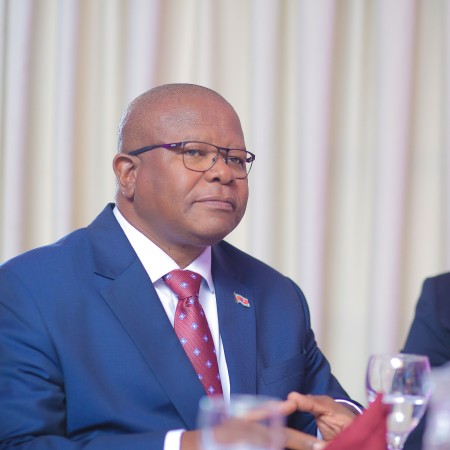
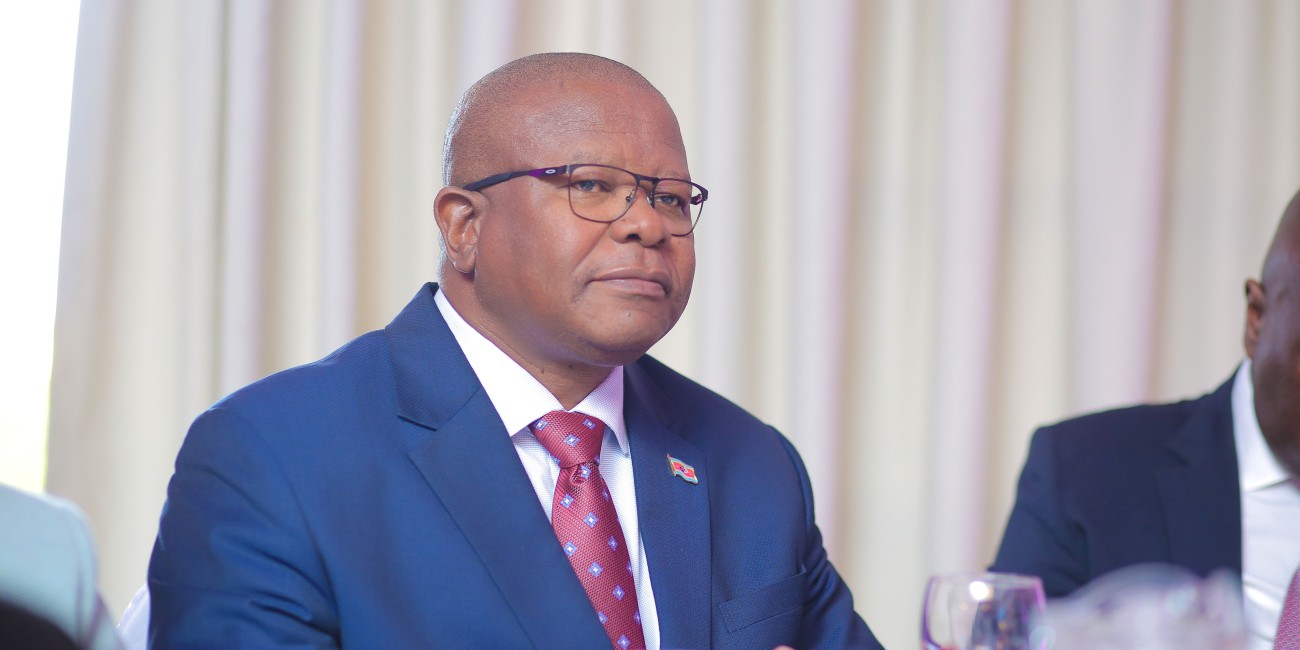
Eswatini’s small-business sector needs to move from a survival model to a commercially scalable model, with Commerce, Industry, and Trade Minister Manqoba Khumalo calling for greater focus on profitability, productivity, cost management, and access to larger markets.
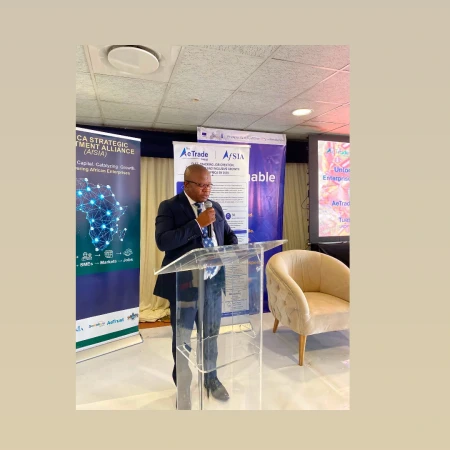
Speaking at the Powering Profit Symposium at the UNDP Sustainable Centre at the Mavuso Trade and Exhibition Centre yesterday, Khumalo said the cost of doing business directly influences decisions by enterprises on whether to invest, employ additional workers, increase production, enter new markets, or remain operational.
“For government, therefore, creating an environment in which businesses can survive, grow, and become competitive must remain a priority,” he said.

Khumalo said Eswatini should not measure the performance of its MSME sector simply by the number of businesses established. The more important economic test, he said, is whether enterprises are generating sustainable cash flows, increasing productive capacity, creating employment, and progressing into larger businesses.
The profitability challenge is particularly important for smaller enterprises because they generally operate with thinner financial buffers and less predictable revenue streams. Costs related to finance, energy, infrastructure, compliance, technology, and market access can quickly erode margins, leaving businesses with limited funds for reinvestment and expansion.
The Blended FinScope MSME Survey of 2023 identified five major constraints facing MSMEs: access to finance, access to markets, business capabilities, the business environment, and business resilience. These constraints affect both the revenue and cost sides of the business equation, making it difficult for enterprises to generate sufficient returns to sustain growth.
Access to finance remains one of the most significant barriers. Khumalo said many MSMEs struggle to obtain affordable and appropriate funding to start, operate, and expand their businesses. Limited access to capital restricts investment in productive assets, working capital, inventory, technology, and additional capacity.
The financing challenge, however, is not simply about the amount of money available. Businesses also need funding structures that correspond with their cash-flow cycles and investment requirements. Where financing costs are high or repayment terms do not match the period required to generate returns, borrowing can place additional pressure on already constrained cash flows.
Market access presents a similar challenge. MSMEs often operate with limited customer bases while competing against larger domestic businesses and foreign suppliers. Without access to larger markets and value chains, businesses may struggle to achieve the volumes required to improve capacity utilization, spread fixed costs, and strengthen margins.

Khumalo, therefore, placed greater emphasis on businesses entering larger domestic, regional, and international value chains. Expanding beyond small local markets can give enterprises access to higher sales volumes, larger contracts, and more predictable demand, while creating opportunities to improve economies of scale.
The minister also highlighted weaknesses in financial management, accounting, marketing, technology, and other business capabilities. These gaps have direct financial consequences because poor record-keeping can weaken financial decisions, inadequate cost accounting can result in underpricing, and weak cash-flow management can leave businesses unable to meet short-term obligations despite having viable operations.
The operating environment adds further pressure. Registration and compliance requirements, bureaucracy, energy costs, infrastructure constraints, and other expenses contribute to the cost base of enterprises. Khumalo said Government must continuously identify and address unnecessary barriers that prevent viable businesses from investing and expanding.
Business resilience is another concern, particularly because many MSMEs operate with low and irregular cash flows. Such enterprises have limited capacity to absorb unexpected increases in costs, declines in demand, or economic and climate-related disruptions. Stronger liquidity management, diversified revenue streams, and more stable markets are therefore important components of long-term business sustainability.
The government’s policy response is anchored in the Eswatini National MSME Policy 2024–2029, which provides seven intervention pillars, including access to finance, infrastructure and technology, markets and value chains, and human capital development.

Khumalo said the policy objective should ultimately be reflected in the number of businesses that successfully progress through different stages of growth. “Our ambition, therefore, must be bigger than simply having more MSMEs,” he said, adding that Eswatini needs more enterprises that survive, grow, and transition “from micro to small, and from small to medium-sized enterprises.”
That graduation is important because business scale can influence an enterprise’s ability to invest, employ workers, negotiate with suppliers, access larger contracts and participate in regional value chains. A stronger pipeline of medium-sized enterprises would also deepen the domestic corporate base and create greater opportunities for employment and investment.
The minister argued that entrepreneurship policy must therefore focus on converting business ideas into productive and commercially sustainable enterprises. “How do we translate entrepreneurship into productive businesses, sustainable jobs, and economic growth?” he asked.
Productivity, he said, must be central to that transition. “Growth cannot simply mean doing more of what we have always done,” Khumalo said, calling on businesses to use technology more effectively, understand their markets and costs, add value to local production and continuously identify more efficient ways of operating.
For MSMEs, this means that higher turnover should not be viewed as the only measure of growth. Revenue expansion that is accompanied by faster increases in input, financing, and operating costs can leave a business with larger sales but weaker margins. Sustainable growth requires enterprises to increase revenue while maintaining or improving their profitability and cash generation.
Technology and digitalization can support this process by improving record-keeping, reducing transaction costs, widening market access, and increasing operational efficiency. Agro-processing and value addition can similarly allow businesses to capture a larger share of the economic value generated from Eswatini’s agricultural production instead of remaining concentrated at the lower end of the value chain.
Khumalo identified digitalisation, technology, agro-processing, value addition, finance, investment, and access to larger regional and international markets as key areas for the next phase of MSME development. These areas offer opportunities for businesses to move towards higher-value activities, expand their customer base, and build stronger commercial models.
Employment remains an important part of the equation. As more young Emaswati enter the labor market, the economy needs enterprises capable of progressing beyond owner-operated businesses into sustainable employers. Khumalo said Eswatini needs businesses that “employ people, process what Eswatini produces, and compete successfully beyond our borders.”
The minister also acknowledged that Government cannot deliver this transition alone, recognizing the European Union and UNDP for their continued support towards infrastructure, productive activity, and enterprise development. He cited Siphofaneni as an example of how sustained development investment can create infrastructure and productive opportunities upon which farmers, enterprises, and communities can build.
The ultimate measure of MSME policy, however, will be whether enterprises become financially stronger and more productive. Khumalo said the key questions should be, “Are our businesses growing? Are they becoming more productive and competitive? Are they creating jobs? He also asked whether more of today’s MSMEs are becoming “the larger Eswatini businesses of tomorrow.”
For Eswatini, that represents a shift from measuring MSME success through enterprise formation towards measuring it through commercial performance. The next stage will require businesses to control costs, strengthen cash flows, attract capital, improve productivity, protect margins, and access larger markets.
“The next chapter of MSME development in Eswatini must be about scale, productivity, competitiveness, and jobs,” Khumalo said.

Other Articles
Eswatini Bank Embraces a New Era During Spring Day