





By: Nkosiyabusa Nsibande
The official opening of KFC Woodlands has added another commercial asset to Mbabane’s northern growth corridor, but for the Minister of Housing and Urban Development, Apollo Maphalala, the significance of the investment extends well beyond retail expansion. Speaking at the launch, Maphalala framed the development as part of a broader shift in urban planning, where private investment increasingly serves as a catalyst for stronger municipal finances, decentralized economic activity, and more sustainable cities.
Rather than viewing new commercial buildings simply as additions to the urban landscape, the Minister argued that developments of this nature strengthen the financial position of local authorities by expanding their long-term revenue base. “For us, we see not only these buildings as buildings,” he said. “Apart from enhancing the outlook of our cities, it also helps in improving the outlook of our fiscals. The rates that are going to accrue here after we put up the development will certainly improve.” His remarks highlight a frequently overlooked aspect of private investment: every new commercial property contributes recurring revenue through municipal rates, providing local governments with additional resources to maintain infrastructure and deliver public services.
The Minister’s comments point to an important principle in urban economics. Municipalities with expanding commercial property portfolios are generally better positioned to finance roads, waste management, public lighting, and other essential services without relying exclusively on transfers from the central government. As the commercial tax base grows, so too does the capacity of municipalities to invest in further economic development, creating a cycle in which private investment and public infrastructure reinforce one another.
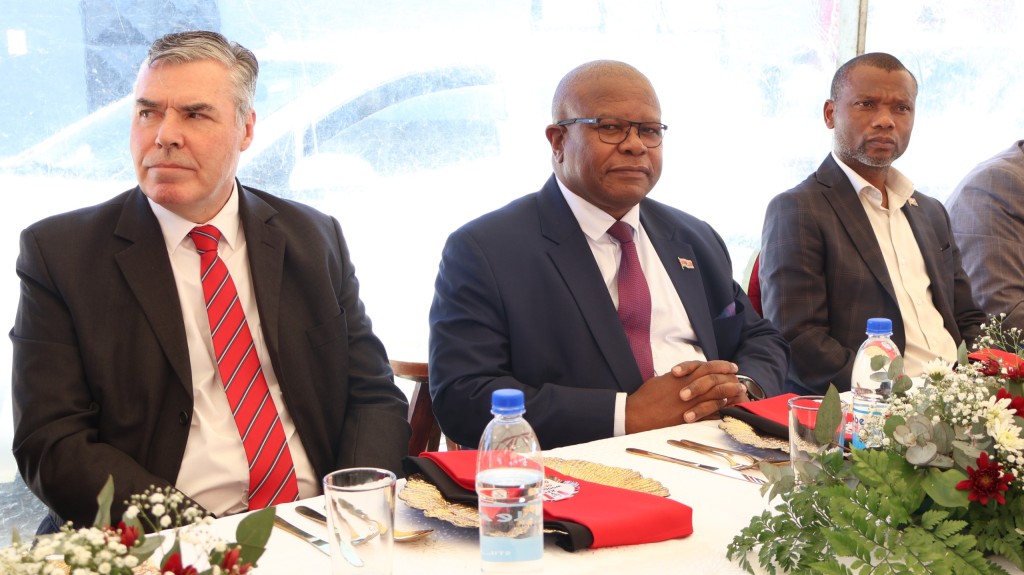
Maphalala also linked the Woodlands development to the emerging concept of the 15-minute city, an urban planning model that is increasingly influencing cities around the world. Under this approach, residents should be able to access essential goods, services, employment, and recreational facilities within approximately 15 minutes of where they live. “Within 15 minutes, you should be able to access everything that you need,” he said, explaining that urban development is moving away from concentrating economic activity in a single central business district toward creating multiple commercial nodes closer to residential communities.
For investors, this represents more than a planning philosophy. Decentralized commercial centres often create new property markets, increase land values in surrounding neighborhoods, and stimulate further private investment. The Woodlands area has experienced significant residential expansion in recent years, and the addition of a major international food franchise strengthens its evolution into a mixed-use commercial precinct capable of attracting complementary businesses.
Maphalala argued that commercial infrastructure should grow alongside residential developments rather than after them. “It is very essential that you have all of these commercial centres now developing along with the residential estates so that we don’t all cram into what we used to call the CBD,” he said. Integrating retail, services, and housing within the same growth corridors reduces travel distances, eases congestion, and supports more efficient patterns of urban development. From an economic perspective, such integration also increases the attractiveness of surrounding real estate for both developers and investors.

The Minister further emphasized that successful urban development depends on collaboration between the public and private sectors. Referring to the partnership behind the project, which brought together the Eswatini National Provident Fund (ENPF), Eswatini Housing Board (EHB), Alliance Foods, and other stakeholders, he recalled a definition he had encountered during a United Nations conference: “A city is a place where people meet other people to create value.” He said the Woodlands project embodied that principle by demonstrating how institutional investors, developers, government, and private enterprise can jointly deliver economic assets that generate returns beyond their immediate commercial purpose.
Such partnerships are becoming increasingly important as municipalities seek to finance urban expansion without excessively pressuring public budgets. Institutional investors provide long-term capital, private businesses create commercial demand, and the government establishes the regulatory framework necessary for development to proceed. The result is infrastructure that supports economic activity while simultaneously expanding the municipal revenue base.
Maphalala also credited the Ministry of Commerce, Industry, and Trade for maintaining an investment environment that continues to attract private capital into urban areas. Addressing Commerce Minister Manqoba Khumalo directly, he said, “These efforts are not in vain. We are really appreciating and enjoying the benefits that come with these efforts.” His comments reflect a broader recognition that investment promotion and urban development are increasingly interconnected, with successful economic policy translating into physical transformation within municipalities.
Viewed through a financial lens, the Woodlands KFC project illustrates how commercial developments deliver value beyond construction spending or employment creation. They generate recurring municipal income, strengthen surrounding property markets, encourage decentralized economic activity, and improve the long-term sustainability of urban infrastructure financing. For municipalities facing growing service delivery demands, developments of this nature represent not only private-sector confidence, but also an expanding fiscal foundation upon which future urban growth can be built.