





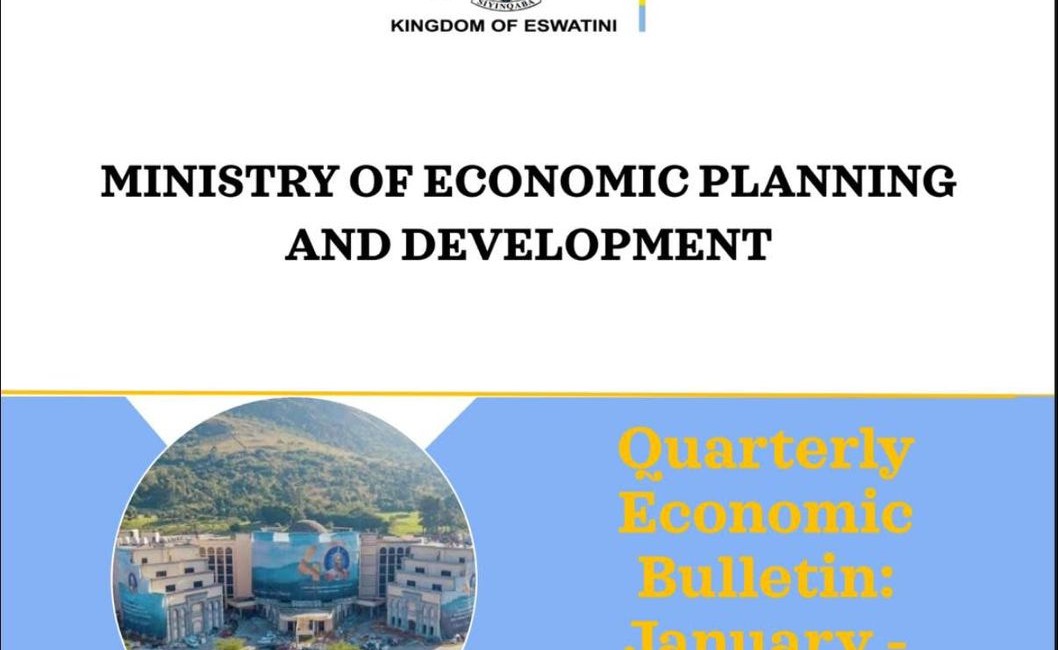
The Ministry of Economic Planning and Development has released the 2026Q1 Economic Bulletin, offering a comprehensive view of global, regional, and domestic economic trends. The report highlights resilience at home, even as international challenges continue to shape the outlook.
Global Context
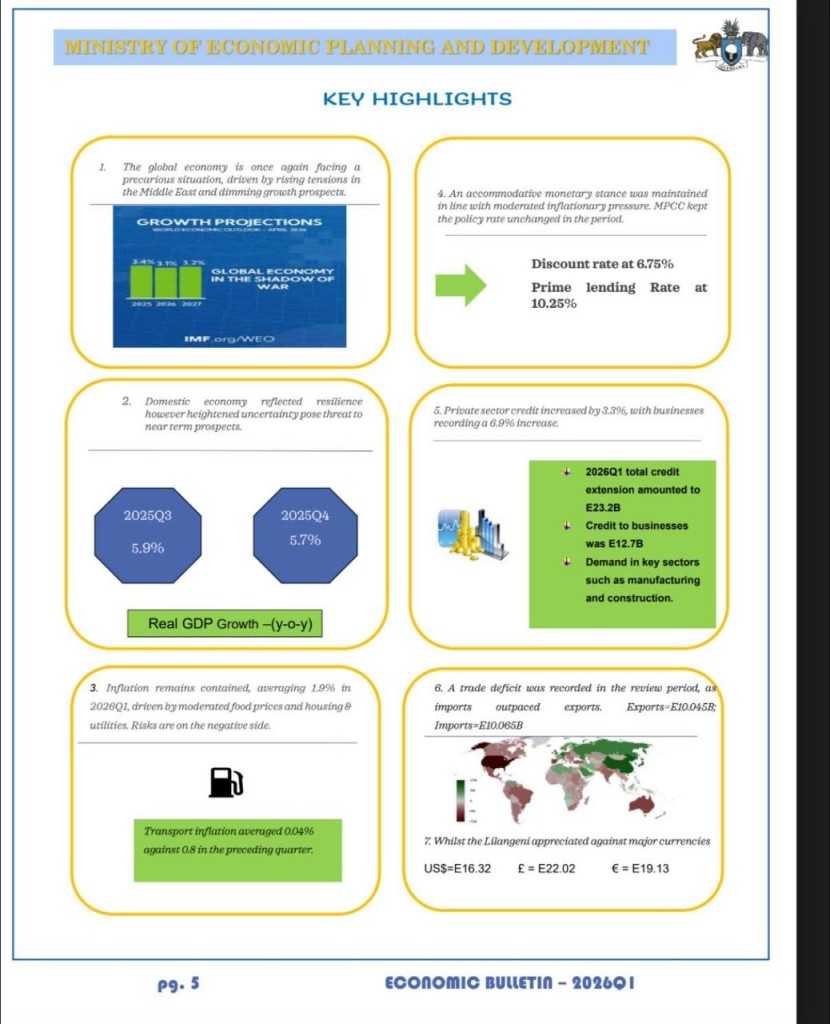
The global economy is facing renewed challenges. Rising tensions in the Middle East and dimming growth prospects have led to downward revisions in world output, now projected at 3.1 percent in 2026 compared to 3.4 percent in 2025. Advanced economies remain sluggish, while emerging markets show moderate resilience. Sub-Saharan Africa is expected to grow at 4.3 percent, though oil-importing nations face mounting pressure from rising energy costs.
Domestic Growth
Eswatini’s economy continues to defy global headwinds. Real GDP grew by 5.7 percent in the fourth quarter of 2025, driven by powerful performances in mining, quarrying, and forestry, alongside robust expansion in ICT, wholesale and retail, and financial services. Construction surged by 11.8 percent, offsetting declines in manufacturing and utilities. This growth underscores the strength of the secondary and tertiary sectors, which remain the backbone of domestic resilience.
Inflation Stability
Headline inflation averaged 1.9 percent in the first quarter of 2026, down from 2.6 percent in the previous quarter. Food prices rose modestly, but housing and transport costs eased significantly. Inflationary pressures across goods and services declined, while Common Monetary Area inflation trends mirrored this moderation. Forecasts suggest inflation will remain contained, with risks tilted to the downside.
Monetary Policy
The Monetary Policy Consultative Committee maintained an accommodative stance, keeping the discount rate at 6.75 percent and the prime lending rate at 10.25 percent. This stability reflects confidence in moderated inflationary pressures and provides businesses with a supportive environment for expansion.
Credit Expansion
Private sector credit rose by 3.3 percent, with businesses borrowing 6.9 percent more, particularly in manufacturing and construction. Total credit extension reached 23.2 billion, signaling strong business confidence and laying the foundation for job creation and industrial growth.
Trade Developments
Eswatini recorded a trade deficit of 20.3 million in the first quarter of 2026, as imports slightly outpaced exports at 10.065 billion compared to 10.045 billion. Exports fell by 20.4 percent compared to the previous quarter, with sugar, textiles, and miscellaneous edibles all declining. Imports contracted by 10.3 percent, except for fuel and energy, which rose modestly. The Southern African Customs Union remained the dominant export destination, accounting for 75.3 percent of exports, reinforcing the region’s importance to Eswatini’s trade balance.
Currency Movements
The Lilangeni appreciated against major currencies, trading at 16.32 per US dollar, 22.02 per British pound, and 19.13 per euro. This appreciation reflects regional strength and South Africa’s economic performance, though investor sentiment remains cautious due to global conflict.
Fiscal Policy
Revenue collection fell by 2.2 percent, driven by declines in SACU receipts, fuel tax, and corporate tax. SACU receipts dropped by 20.4 percent, while VAT surged by 30.7 percent, reflecting higher consumption. Government expenditure declined by 7 percent, but capital spending rose by 143 percent, funding major projects such as the Mpakein Dam, the International Convention Center, and LUSIP II. These investments highlight the government’s commitment to infrastructure as a driver of long-term prosperity.
Socioeconomic Indicators
Population reached 1.217 million in 2025, GDP per capita rose to 5,036 US dollars, and poverty levels declined to 31.1 percent. The manufacturing sector’s share of GDP increased to 7.9 percent, while agriculture’s share fell to 8.3 percent. Unemployment edged up to 3.7 percent, but the Human Development Index showed gradual improvement, reflecting progress in living standards.
Closing Note
The 2026Q1 Economic Bulletin is more than a report; it is a testament to Eswatini’s resilience. The nation is growing, inflation is contained, businesses are expanding, and infrastructure investment is accelerating. Yet, global uncertainties remind us that vigilance and adaptability remain essential. Eswatini’s story is one of strength in the face of adversity, a narrative of progress that inspires confidence in the future.

Other Articles
Money Won’t Buy Happiness, But How You Use It Can