




By: Nkosiyabusa Nsibande
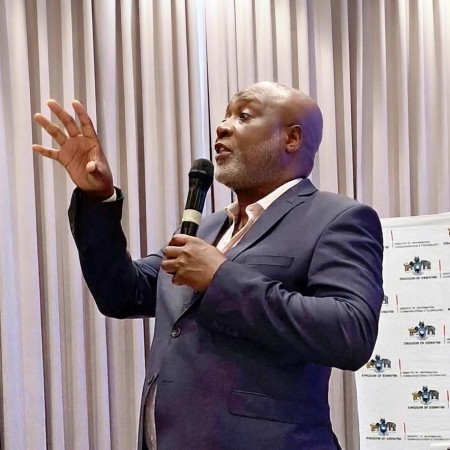
Housing and Urban Development Minister Apollo Maphalala has placed municipal finance at the center of Eswatini’s urban development agenda, warning that local authorities are being given broader responsibilities while continuing to operate under constrained financial resources. Speaking at the launch of the second Eswatini Urban Forum 2026 at the Hilton Garden Inn Hotel in Mbabane today, Maphalala said the country must develop sustainable revenue streams, alternative municipal financing mechanisms, and more resilient infrastructure to close the growing gap between municipal mandates and available resources.
Eswatini’s urban development agenda is increasingly becoming a question of how local authorities will finance the infrastructure and services they are expected to deliver, with Housing and Urban Development Minister Apollo Maphalala identifying municipal revenue shortfalls and traditional funding bottlenecks as key constraints facing towns and cities.
Speaking today at the Hilton Garden Inn Hotel during the launch of the second Eswatini Urban Forum 2026, Maphalala said the country’s municipalities are operating at a point where their responsibilities are expanding faster than their financial capacity. He described the situation as a “paradox defining modern Eswatini municipalities—expanding mandates coupled with constrained financial resources,” highlighting the growing pressure on local authorities to fund development while also maintaining essential public services.

The minister said local authorities are increasingly expected to finance and implement complex digital transitions, green infrastructure, and essential social services, yet continue to face “systemic revenue shortfalls and traditional funding bottlenecks.” The issue moves beyond municipal administration because the ability of towns and cities to raise and deploy capital directly affects the pace at which infrastructure, housing, and other urban investments can be delivered.
Maphalala said the Urban Forum is therefore intended to provide a platform for confronting what he termed the mandate-resource gap, bringing together policymakers, municipal leaders, development partners, and private-sector participants to examine alternative ways of financing urban development. Among the priorities is the development of “sustainable revenue streams and alternative municipal financing,” signaling a push to broaden the funding base available to local authorities rather than relying solely on traditional sources.
This financing question sits at the center of the forum’s broader theme, “Empowering Eswatini’s Local Authorities: Financing, Smart Solutions, Resilient Infrastructure, and Housing for All.” Maphalala said the theme should not be treated as merely a conference slogan, but as an “urgent, uncompromising call to action” aimed at ensuring that urban development remains economically viable while responding to the country’s changing infrastructure and housing needs.

The forum’s financial agenda extends beyond raising municipal revenues to the question of how local governments can unlock financing for capital-intensive projects. One of its six core sub-themes is explicitly titled “Bridging the Mandate-Resource Gap: Unlocking Local Government Financing,” while another focuses on “Sustainable Revenue Streams: Financing the Future of Eswatini’s Local Authorities.” Together, the two themes place municipal balance sheets, revenue capacity, and access to funding at the heart of the country’s urban-development discussion.
The funding challenge is also closely connected to infrastructure resilience. The minister said the forum will examine climate-resilient infrastructure and smart-city development alongside municipal financing, recognizing that urban authorities will need financial capacity not only to construct infrastructure but also to adapt existing systems to changing environmental and technological requirements. The forum will consequently consider “climate-resilient infrastructure and smart city blueprints” as part of the response to the country’s urbanization pressures.

Housing forms another major component of the financing equation. Maphalala said the forum will address “Housing for All: Upgrading Informal Settlements and Scaling Affordable Social Housing,” placing affordable housing and informal-settlement upgrading alongside revenue mobilization, infrastructure, and local economic development. For municipalities, this means the urban financing discussion extends into the capital required to provide housing solutions for households that may not be adequately served by conventional urban development models.
The minister also linked urban development to the ability of local economies to generate broader economic participation, particularly among young people. The forum will examine inclusive governance, youth empowerment, and local economic development, with the objective of creating urban economies that are not only administratively functional but also capable of supporting wider economic activity.
https://pagead2.googlesyndication.com/pagead/js/adsbygoogle.js?client=ca-pub-6220053793596587
Maphalala said the Second Eswatini Urban Forum 2026 will take place from 28 to 30 October 2026, with registration expected to open next week and the official registration portal scheduled to be ready by Monday, 28 September. The event is expected to bring together municipal leaders, councillors, traditional authorities, development partners, private-sector innovators, civil society, youth leaders, academia, urban planners, housing practitioners, and developers.
For Eswatini’s local authorities, the significance of the October forum will ultimately depend on whether the discussion can move beyond identifying financing constraints towards practical mechanisms for improving municipal revenues and unlocking capital for urban investment. Maphalala’s launch speech makes clear that the government views the financing of local authorities as a central component of the country’s response to rapid urbanization, demographic change, and economic transformation.


Other Articles

Drought Cost Eswatini 7% Of GDP,Cities Now Planning For The Next Shock
Dr. Mnisi Calls For Smarter Use Of Data And Technology