






By: Nkosiyabusa Nsibande
Eswatini’s push towards a digitally enabled public service is placing institutional readiness alongside technology investment as a critical factor in determining whether digital transformation delivers value to the public purse. The Ministry of Information, Communications, and Technology held its second Change Readiness Assessment Workshop at the Hilton Garden Inn Mbabane as part of the Digital Eswatini Project, bringing together change agents from various government ministries to assess the country’s preparedness for the transition.
The workshop focused on organizational readiness, potential implementation challenges, and strategies for helping government institutions manage the changes associated with digital transformation. While the immediate discussion centered on people and institutions, the underlying issue is financial: the economic return on the government’s investment in digital infrastructure will depend heavily on whether ministries can successfully adopt and integrate the systems being introduced.
Digital government requires expenditure across infrastructure, connectivity, software, cybersecurity, technical capacity, and system maintenance. Such spending does not automatically translate into efficiency gains. Where employees remain dependent on manual processes, institutions operate in isolation, or new systems are poorly adopted, the government can end up carrying the cost of both legacy processes and new technology without capturing the full productivity benefits of digitalization.

The change agents participating in the workshop are therefore positioned as an important part of the implementation chain. Their role includes assessing institutional preparedness, identifying areas where resistance or operational difficulties may emerge, and supporting employees as ministries transition towards new systems and processes. From a public-finance perspective, effective change management can help protect the value of technology expenditure by increasing the likelihood that investments are actually used as intended.
The potential economic gains extend beyond the government’s internal administration. More effective digital systems can reduce paperwork, shorten processing times, improve information sharing, and limit duplication across public institutions. For businesses and individuals dealing with the government, these improvements can translate into lower administrative costs and less time spent navigating public services, while for the state they can support a more efficient allocation of personnel and other resources.
Digitalization can also strengthen the government’s capacity to collect, manage, and use information for decision-making. However, those benefits depend on the quality of implementation, the ability of different systems to communicate with one another, and the willingness of institutions to change established operating practices. Technology that is procured but poorly integrated into government workflows risks becoming an additional expenditure rather than a productivity-enhancing asset.
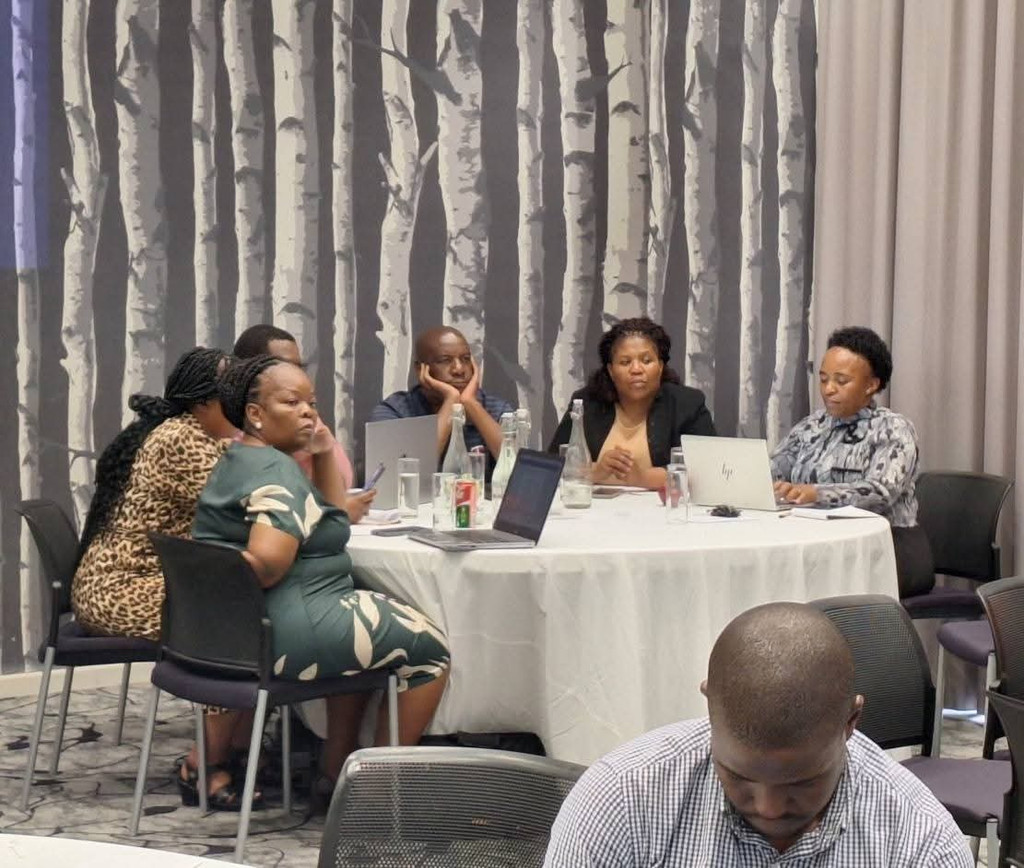
The workshop consequently forms part of a broader institutional challenge for Eswatini: converting digital investment into measurable improvements in the performance of the state. The Ministry’s people-centered approach recognizes that digital transformation cannot be treated solely as an information-technology exercise. Employees, management structures, operating procedures, and institutional cultures must adapt alongside the systems being deployed.
For taxpayers and businesses, the ultimate test of the Digital Eswatini program will therefore be visible in service delivery rather than the number of systems introduced or workshops conducted. Faster transactions, reduced administrative burdens, improved access to government services, and stronger coordination between ministries would provide tangible evidence that digital investment is producing economic value.
As Eswatini advances its digital transformation agenda, the question for government will increasingly be how effectively it converts technology expenditure into lower administrative costs, greater institutional productivity, and better public services. The Change Readiness Assessment process places that institutional capacity question at the center of the digitalization program, recognizing that the financial return on technology depends ultimately on the people and organizations responsible for using it.


Other Articles
Mbabane Puts Municipal Finances Under Scrutiny