





By: Nkosiyabusa Nsibande
The latest Household Income and Expenditure Survey (EHIES) 2023/24 paints a picture of cautious progress for Eswatini’s economy, but an even stronger picture of the financial struggles that continue to define everyday life for many households. Although the national poverty rate has fallen from 58.9 percent in 2016/17 to 53.5 percent, the figures still mean that more than one in every two people lives below the national poverty line. Behind the statistical improvement lies a reality of constrained household incomes, rising living costs, and uneven economic opportunities across the country.
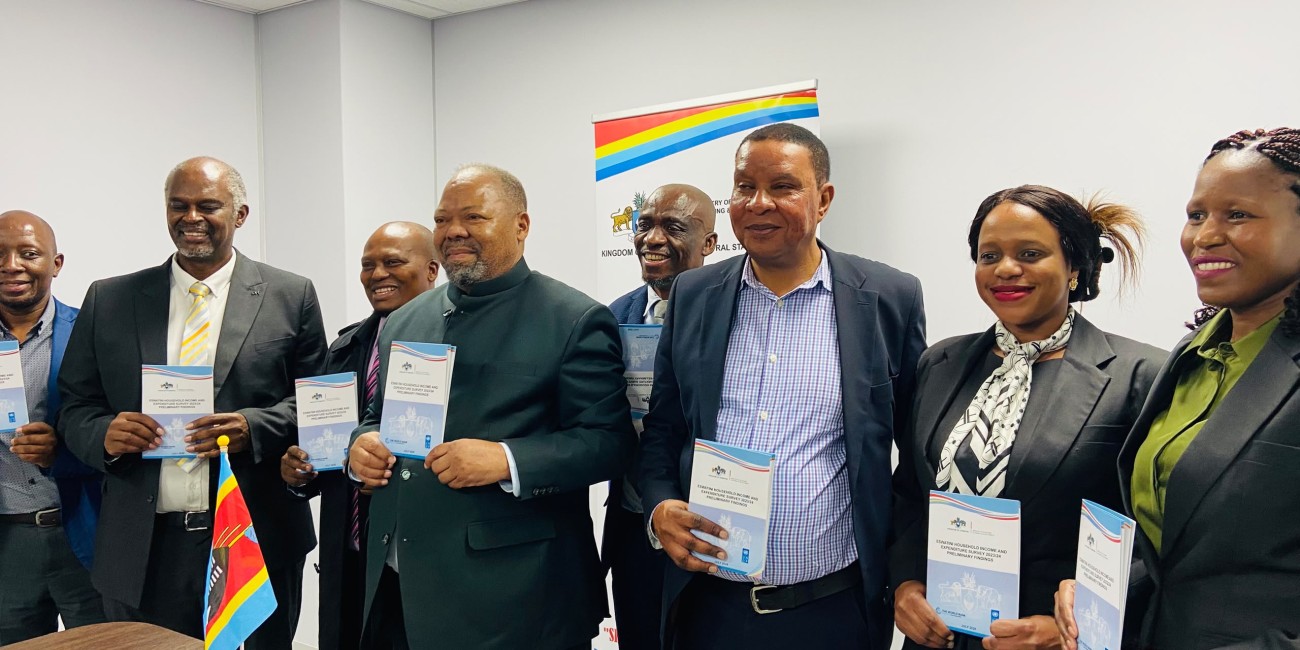
Launching the preliminary survey findings, Minister of Economic Planning and Development Tambo Gina emphasized that the report should not be viewed simply as another statistical publication. “This survey is much more than a collection of numbers. It tells the story of our people, how households earn their livelihoods, how they spend and save, and the challenges and opportunities they face in their daily lives.” His remarks highlight the survey’s financial significance, which provides the government and the private sector with an evidence-based understanding of how households are coping with the country’s economic conditions.
While the poverty reduction is encouraging, the survey demonstrates that the benefits of economic progress have not been shared equally. Rural poverty remains particularly severe, although it declined from 70.2 percent to 62.8 percent over the seven years. These figures suggest that despite improvements, nearly two-thirds of people living in rural communities continue to experience financial hardship, making it difficult for many households to build savings, accumulate productive assets, or improve their standard of living. For families that depend largely on agriculture and informal economic activities, income remains vulnerable to economic shocks and changing market conditions.
The survey also points to an emerging concern within urban areas. Urban poverty increased from 19.6 percent to 25.3 percent, indicating that financial pressure is no longer confined to rural communities. Rising household expenses, persistent unemployment, and slower income growth appear to be placing increasing strain on urban families, many of whom face higher housing, transport, and utility costs. The findings suggest that while cities continue to offer greater economic opportunities, they are also becoming increasingly expensive places in which to maintain a reasonable standard of living.
Regional disparities remain another defining feature of Eswatini’s household economy. Shiselweni continues to record the country’s highest poverty rate at 72 percent, followed by Lubombo at 57.2 percent. In contrast, Manzini recorded the lowest poverty incidence at 42.4 percent. These differences illustrate that household financial well-being varies significantly by location, with access to employment, infrastructure, markets, and public services continuing to influence income-earning opportunities.
The survey also reveals that women continue to experience greater financial vulnerability than men. Poverty among women stands at 55.7 percent compared to 51.2 percent among men, reinforcing concerns that many female-headed households remain disproportionately affected by economic challenges. The figures point to the continued need for policies that strengthen women’s participation in the economy through employment, entrepreneurship, and improved access to financial services.
Despite the positive movement in several indicators, Minister Gina cautioned against interpreting the results as evidence that the country’s poverty challenge has been resolved. “These findings demonstrate that while progress may have been achieved in certain aspects of household welfare, poverty and inequality continue to affect a significant proportion of our population.” His remarks acknowledge that although the country is moving in the right direction, millions of Emalangeni will still need to be invested in programs that improve household incomes and reduce economic vulnerability.
For financial institutions, businesses, and investors, the survey provides valuable insights into household purchasing power and consumer behavior. Understanding where incomes are improving, where poverty remains entrenched, and how households allocate their spending allows businesses to make better investment decisions while enabling lenders to assess market opportunities more accurately. Equally important, the government can use the findings to target public expenditure more effectively in areas where financial hardship remains most severe.
Minister Gina further stressed that the findings would shape future economic planning, saying, “The findings we launch today will serve as a critical foundation for national planning, policy formulation, program implementation, and resource allocation over the coming years.” As the government, development partners, and the private sector respond to the latest household data, the survey is expected to influence future investment in social protection, education, healthcare, employment creation, and rural development.
For Eswatini’s households, however, the most important figure remains 53.5 percent. While it represents an improvement from 58.9 percent seven years ago, it also serves as a reminder that the country’s economic growth has yet to translate into financial security for a majority of its people. The latest survey therefore offers not only a measure of progress but also a clear indication of how much work remains before more households can experience meaningful and sustainable financial well-being.