






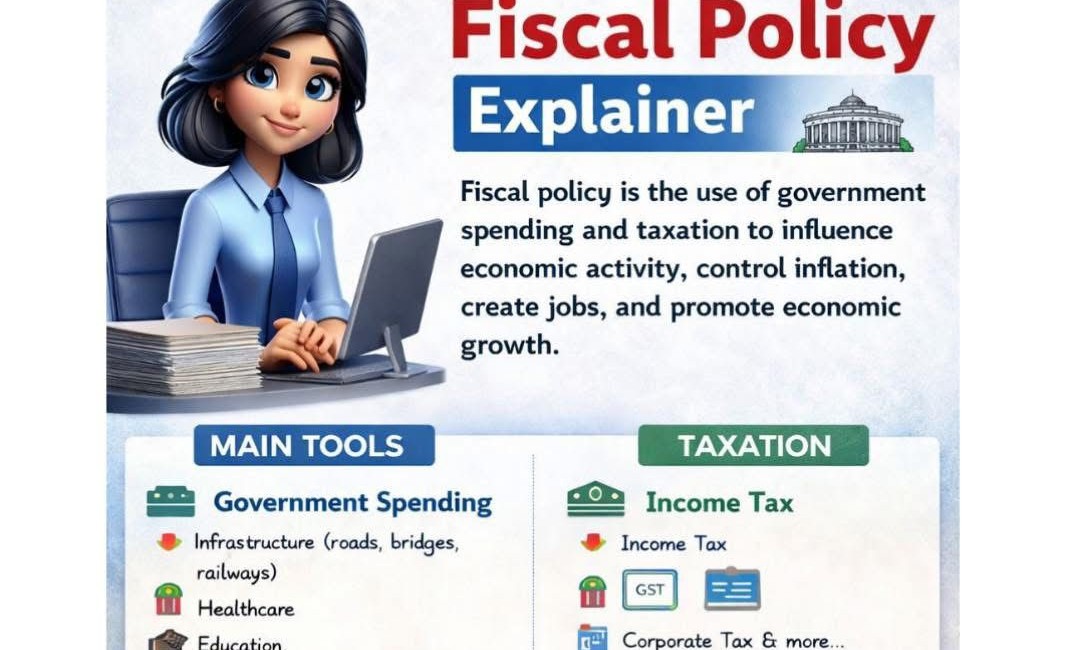
Financial Literacy Saturday Feature
Fiscal policy is more than a technical term. It is the government’s steering wheel for the economy. Every tax adjustment, every budget allocation, and every infrastructure project influences how families live, how businesses grow, and how communities thrive.
Editor’s Note: Speaking Our Mind, Guiding Our Future
Financial literacy is not just about numbers. It is about dignity, empowerment, and the choices we make every day. Fiscal policy is more than a government tool; it is the bridge between national vision and household reality.
When the government invests in roads, schools, and healthcare, it is investing in us, in our children’s future, in our businesses’ growth, and in our communities’ strength. When taxes are adjusted, they shape the rhythm of our daily lives, from the price of bread to the cost of education.
This is why Financial Literacy Saturday matters. It is a call to every citizen: understand the forces shaping your economy, and claim your role in it. Fiscal policy may sound technical, but at its heart it is about people, about jobs, opportunities, and stability.
What Is Fiscal Policy
Fiscal policy refers to the government’s use of spending and taxation to guide economic activity. It balances growth, employment, and inflation, ensuring that the economy remains stable while creating opportunities for citizens.
The Two Pillars
THE TWO PILLARS OF FISCAL POLICY
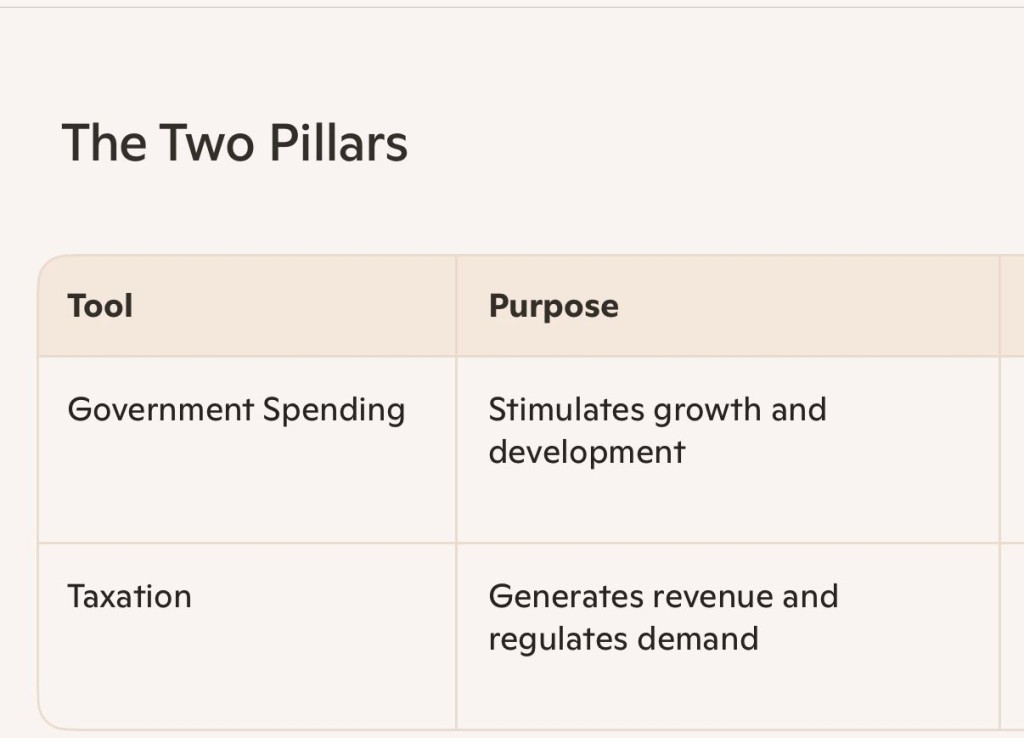
Government Spending Stimulates growth and development Expanding road networks, upgrading hospitals, and investing in schools
Taxation Generates revenue and regulates demand Adjusting VAT rates or corporate taxes to manage inflation
Types of Fiscal Policy
• Expansionary Policy: Boosts growth during recessions by increasing spending and reducing taxes.
• Contractionary Policy: Controls inflation by reducing spending and raising taxes.
Fiscal vs Monetary Policy
• Fiscal Policy: Managed by the government, focused on taxes and spending.
• Monetary Policy: Managed by the Central Bank, focused on interest rates and money supply.
Together, they form the backbone of economic management.
What’s In It for You
Here is how fiscal policy directly improves lives:
• Job creation: Infrastructure projects open employment opportunities and stimulate local businesses.
• Affordable healthcare: Public spending strengthens hospitals and clinics, making care more accessible.
• Better education: Investment in schools ensures quality learning for the next generation.
• Stable prices: Smart taxation and spending protect household budgets from inflation.
• Business growth: Lower taxes or targeted spending encourage entrepreneurship and innovation.
In a Nutshell
Fiscal policy is the invisible hand guiding the economy. By understanding it, citizens can see how public funds shape daily life, from the jobs we work, to the healthcare we receive, to the schools our children attend.