






Rising Credit Costs in Times of Inflation
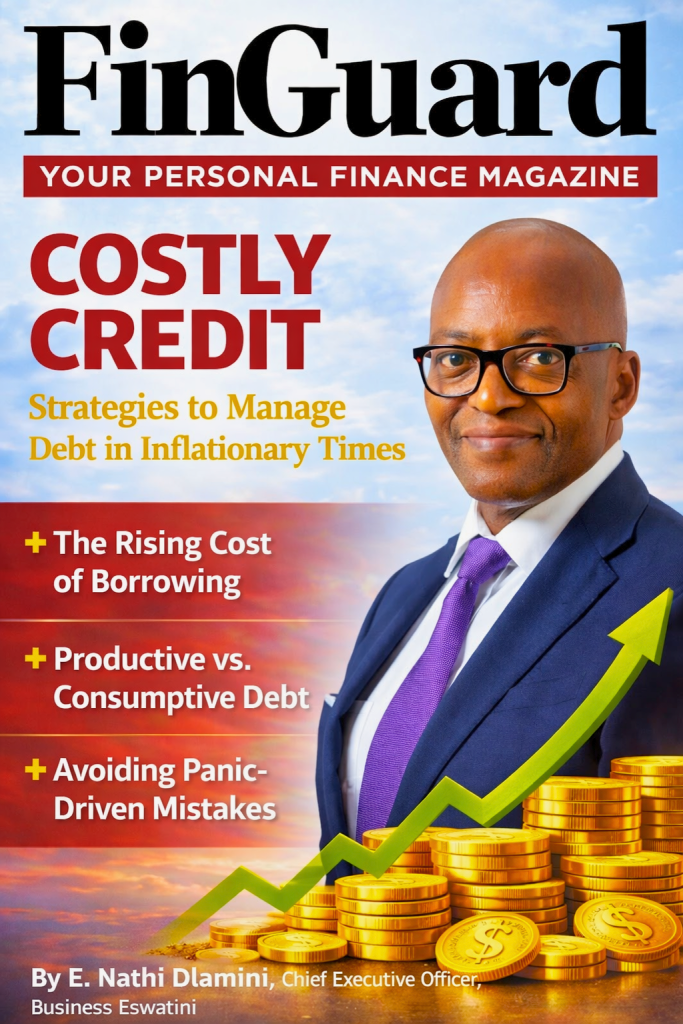
One of the clearest risks identified by Mr. Dlamini is the relationship between inflation and the rising cost of credit. During inflationary periods, central banks typically tighten monetary policy by raising interest rates to stabilize prices and curb excessive consumer spending. Yet higher interest rates also increase borrowing costs for households and businesses.
“When inflation goes up, interest rates go up, which means the cost of borrowing also goes up,” Mr. Dlamini explained.
This dynamic places particular strain on young entrepreneurs and unemployed graduates attempting to establish small businesses. Financing vehicles, equipment, or working capital becomes more expensive precisely when economic conditions are deteriorating.
Debt Discipline in Uncertain Times
Periods of uncertainty require stricter financial discipline, particularly regarding debt exposure. Mr. Dlamini emphasizes that debt should be undertaken only when it finances assets capable of generating future returns.
“If you must get into debt, make sure that what you are buying is an asset that will bring you benefits. It must create money for you.”
He draws a critical distinction between two forms of debt:
• Productive debt, which finances assets that generate cash flow or income streams, such as commercial vehicles, equipment, or business infrastructure.
• Consumptive debt, which finances discretionary spending that depreciates rapidly and produces no long‑term financial return, such as holidays or luxury goods.
“Do not get into debt for consumption. Consumption means treating yourselves or spending it on holidays. That will not bring long‑lasting benefits.”
Panic as a Financial Liability
Despite economic uncertainty, Mr. Dlamini cautions against emotionally driven decision‑making during volatile periods. Panic, he argues, often leads to poor financial judgment, reactive spending, and long‑term setbacks.
• Reactive borrowing, taking loans hastily at unfavorable rates.
• Poor investment choices, chasing short‑term gains instead of focusing on sustainable, productive assets.
• Liquidity hoarding, holding excessive cash that loses value during inflation.
• Consumptive spending, emotional purchases that create debt without returns.
• Missed opportunities, withdrawing from markets entirely and losing chances to hedge against inflation.
In essence, panic converts uncertainty into actual loss. Rational discipline, not fear, is the safeguard against financial erosion.
Strategic Outlook for Eswatini’s Entrepreneurs
Mr. Dlamini’s message resonates strongly in Eswatini’s current economic climate. With inflationary pressures driving up the cost of living and borrowing, entrepreneurs must adopt a long‑term financial strategy that prioritizes resilience:
• Invest in productive assets that generate income.
• Avoid consumptive debt that drains resources.
• Maintain composure during volatility to prevent panic‑driven losses.
• Align borrowing decisions with sustainable business growth.

Strategies for Managing Debt in Inflationary Times
Building on Mr. Dlamini’s counsel, here are stronger, practical strategies for entrepreneurs and households navigating inflation:
1. Prioritize productive debt, borrowing only for assets that generate measurable returns with clear payback periods.
2. Avoid consumptive debt, resisting borrowing for lifestyle expenses that erode resilience.
3. Strengthen cash flow management, tracking inflows and outflows, building liquidity buffers, and negotiating flexible repayment terms.
4. Diversify income streams, exploring side businesses or resilient industries to cushion against shocks.
5. Maintain composure during volatility, avoiding panic borrowing or premature asset liquidation.
6. Leverage strategic partnerships, collaborating with suppliers, lenders, and peers to share costs and reduce exposure.
7. Invest in inflation‑resistant assets, considering property, commodities, or equities in resilient sectors to hedge against rising prices.
Inflation raises the cost of borrowing, but disciplined financial management can transform risk into opportunity. Mr. Dlamini’s counsel, combined with expanded strategies, offers a comprehensive blueprint for entrepreneurs navigating uncertain times.