






The Central Bank of Eswatini’s latest defence of its E2.79 billion headquarters project has moved the national conversation beyond a procurement dispute and into a far more fundamental economic question: how should Eswatini balance the need for foreign capital and expertise with growing demands for greater local participation in major investments?
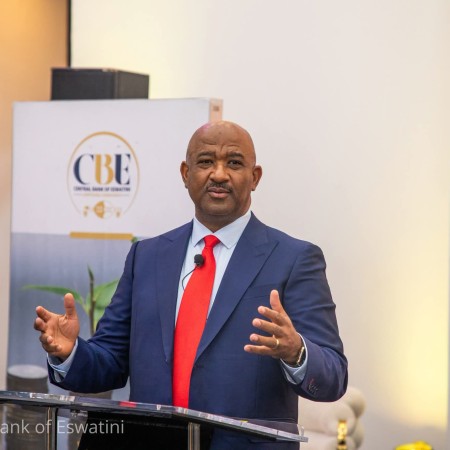
In a strongly worded statement issued this week, Central Bank Governor Dr. Phil Mnisi rejected suggestions that companies with foreign shareholding should be excluded from public procurement processes, arguing that such an approach would be inconsistent with the country’s legal framework, regional commitments and broader economic development strategy. The statement comes amid mounting public scrutiny over the awarding of the Central Bank’s headquarters project, which has become one of the largest construction contracts ever undertaken in the country.
While much of the public debate has focused on who won the tender, the Bank’s response reveals that the real issue extends far beyond a single construction project. At stake is the direction of Eswatini’s economic policy at a time when governments across Africa are increasingly attempting to strengthen domestic industries without undermining their attractiveness to foreign investors.
The Central Bank’s argument is rooted in a simple but important economic reality. Eswatini is a small, open economy that depends heavily on cross-border investment, trade and capital flows. In its statement, the Bank pointed to the Constitution, the Public Procurement Act, the Eswatini Investment Promotion Act and regional SADC investment commitments as the legal foundation for allowing all properly registered companies to compete for public contracts regardless of ownership structure. The Governor argued that excluding firms on the basis of foreign shareholding would violate principles of fairness, competition, and non-discrimination that underpin both domestic legislation and international investment agreements.
This position reflects a longstanding economic philosophy that has shaped investment policy throughout much of Southern Africa. Policymakers have traditionally viewed foreign direct investment not merely as a source of capital but also as a mechanism for importing technology, management expertise, specialized skills and access to international markets. From this perspective, restricting foreign participation in major projects may provide short-term political satisfaction but could ultimately reduce competition, increase project costs and weaken investor confidence.
The Central Bank was particularly explicit about this concern. It warned that narratives promoting the exclusion of foreign-linked companies risk creating uncertainty about Eswatini’s investment environment and could send signals that are inconsistent with the country’s commitment to a predictable and rules-based economy. Such concerns are not insignificant. Investor confidence is often influenced less by the outcome of individual procurement decisions than by perceptions regarding policy stability and regulatory certainty. Once investors begin to question whether commercial opportunities will be determined by transparent rules or shifting political sentiment, investment decisions can quickly be redirected elsewhere.
Yet the controversy has also exposed legitimate frustrations within the local business community. For many emaSwati entrepreneurs and contractors, major infrastructure projects represent rare opportunities to build capacity, accumulate capital and compete at a higher level. When billion-emalangeni contracts appear to be dominated by firms with foreign backing, questions inevitably arise about whether local businesses are receiving meaningful opportunities to participate in the country’s economic transformation.
the Central Bank sought to address this criticism by highlighting measures it had already incorporated into the tender process. According to the statement, bidders were required to include a minimum 30 percent shareholding by local construction firms, a threshold the Bank refused to lower despite requests from some contractors to reduce it to 10 percent. The Governor presented this requirement as evidence that the institution was actively pursuing local participation while maintaining a competitive procurement process.
However, the Bank’s disclosure that the three largest locally registered contractors participating in the tender all partnered with foreign firms may prove to be one of the most revealing aspects of the entire debate. Rather than demonstrating a conflict between local and foreign interests, it suggests that major projects in Eswatini increasingly require collaboration between domestic companies and international partners. This reflects the reality that large-scale infrastructure developments often demand financial resources, specialized engineering capabilities and project management expertise that may not yet be fully available within the local market.
The statement also challenged a common assumption underlying criticism of foreign-linked projects: that contract awards automatically translate into large-scale capital outflows. The Bank noted that the contract is denominated in emalangeni and that payments are made through local banking institutions. It further argued that funds leaving the country are largely associated with the importation of equipment, materials and specialized expertise, activities that many local businesses themselves undertake. To reinforce this point, the Bank cited Eswatini’s broader economic structure, noting the country’s heavy reliance on imports from South Africa and the significant role of cross-border trade in everyday commercial activity.
This observation touches on a deeper economic challenge confronting Eswatini. The country has long sought to expand local industrial capacity and reduce dependency on imports, yet achieving these goals requires investment, technology transfer and business growth that often depend on foreign partnerships. The result is an unavoidable tension between economic nationalism and economic pragmatism. Policymakers must simultaneously promote citizen empowerment while preserving the openness necessary to attract capital and expertise.

What emerges from the Central Bank’s statement is therefore not simply a defense of a procurement decision, but a broader defense of Eswatini’s current development model. The institution is effectively arguing that local empowerment should be pursued through targeted policy instruments such as local content requirements, capacity-building initiatives and empowerment programs rather than through the exclusion of foreign investors from competitive markets.
Whether that argument convinces the public remains to be seen. The debate surrounding the Central Bank project has revealed growing expectations that major national investments should produce visible and measurable benefits for local businesses. The Bank’s position underscores the reality that we cannot separate economic development in a small economy from international capital, regional integration and foreign expertise.
Ultimately, the controversy surrounding the E2.79 billion headquarters project may be remembered less for who won the contract and more for the policy debate it has triggered. As Eswatini pursues ambitious infrastructure and industrialization goals, the country will increasingly face a difficult balancing act: creating meaningful opportunities for local enterprises while maintaining the investment climate necessary to finance growth. The Central Bank’s statement suggests that, for now, policymakers believe those objectives are best achieved through partnership rather than protectionism. The challenge will ensure that such partnerships deliver tangible economic gains that ordinary emaSwati businesses can see and feel.