






By: Nkosiyabusa Nsibande
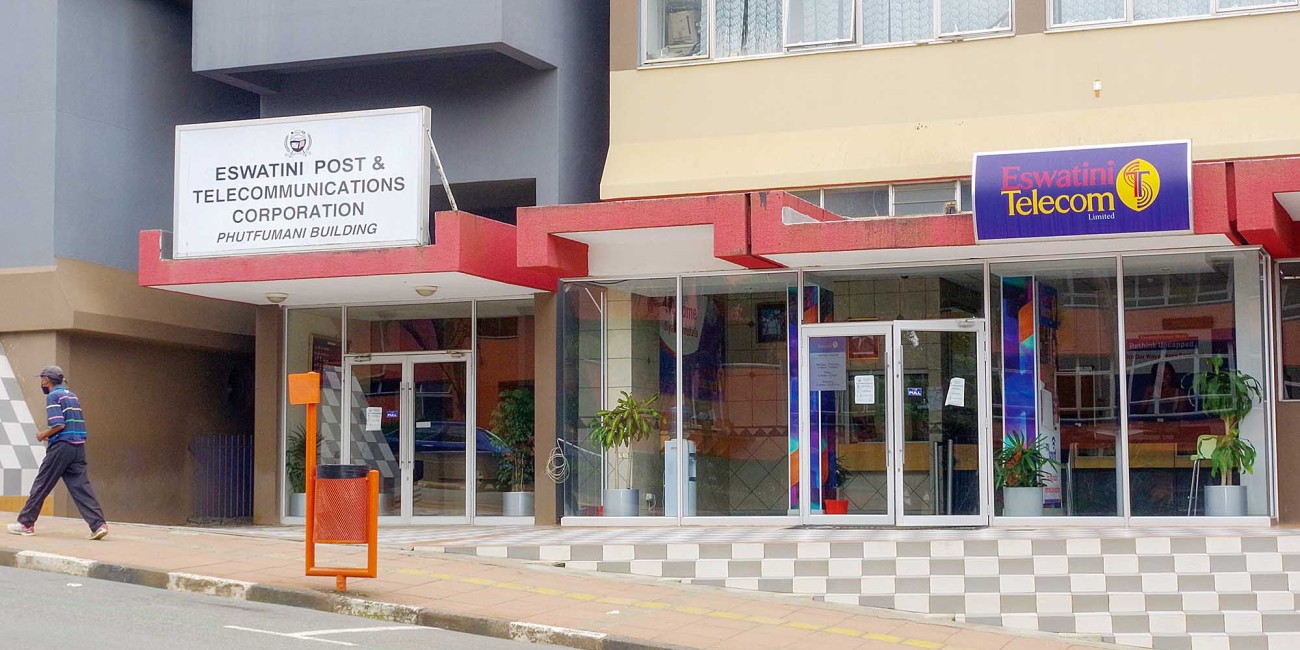
The government has placed a US$26 million which is approximately (E455 Million) sovereign guarantee behind the financial restructuring of Eswatini Posts and Telecommunications Corporation (EPTC), creating a contingent obligation for the state as the telecommunications company moves to address its financial position and transition away from its legacy defined-benefit pension scheme.
The guarantee forms part of the broader Digital Eswatini financing package presented to Parliament by Finance Minister Neal Rijkenberg, but unlike the US$19.3 million sovereign IBRD loan and US$19.7 million IDA credit contracted directly by the government, the EPTC facility will not immediately increase the country’s recorded public debt. Instead, it creates a potential liability that could ultimately fall on the government if EPTC fails to meet its obligations.
Rijkenberg told Parliament that “the government guarantee covers the full loan obligations of EPTC to IBRD, up to a maximum of 26 million US dollars” under loan number K0160 SZ. The guarantee is therefore capped, but its fiscal significance extends beyond the headline amount because the guaranteed obligation is secured against the state’s finances if EPTC is unable to service the debt.

The terms provide for EPTC to begin repayment in June 2034, with semi-annual installments running through December 2051. The structure gives the corporation an approximately eight-year grace period from the signing of the agreement before repayments begin, providing time for the financial stabilization program to take effect before the principal repayment burden becomes fully active.
The facility carries interest at the applicable reference rate plus a variable spread, alongside a 0.25% front-end fee and a 0.25% annual commitment charge on the undrawn balance. The long repayment horizon reduces the immediate cash-flow pressure on EPTC, but leaves the company with a debt obligation extending well into the 2050s.
For the government, the more important issue is what happens if the turnaround program fails to generate sufficient cash flow. Rijkenberg said the US$26 million would be “recognized as a contingent liability and shall not form part of the direct stock of debt unless the guarantee is called.” This treatment means the obligation does not currently inflate the headline public debt ratio, but it remains a potential claim on public resources.
The minister said the purpose of the financing was not simply to provide EPTC with additional borrowing capacity, but to address structural weaknesses within the corporation. The US$26 million facility will support its financial stabilization and transition from a legacy defined-benefit pension fund to a modern defined-contribution pension scheme, which the government considers necessary to strengthen the company’s long-term operational viability.

That makes the performance of EPTC’s turnaround program central to the government’s fiscal risk. If the corporation successfully services the loan from its own resources, the sovereign guarantee may never crystallize as a direct budgetary cost. If it cannot, however, the state would be exposed to payments under the guarantee, subject to the US$26 million ceiling and the conditions governing claims.
Rijkenberg sought to emphasize that distinction in Parliament, saying that “provided that EPDC duly fulfills these obligations, the guarantee shall not be called upon and no additional burden will be imposed on the consolidated fund.” The statement reflects the government’s expectation that the restructuring will restore the corporation’s capacity to meet its obligations rather than transfer them to taxpayers.
The guarantee also contains a defined legal ceiling. Rijkenberg said, “No claims under the guarantee shall be honored beyond the 26 million US dollars,” while claims cannot be submitted indefinitely after the underlying loan agreement terminates or expires. This limits the state’s maximum exposure under the guarantee, although the timing and circumstances under which a claim could arise remain important for public-finance management.

The pension component is significant because the borrowing is being used alongside a structural change in EPTC’s retirement obligations. Moving from a defined-benefit scheme to a defined-contribution arrangement changes the nature of the company’s future pension exposure and is intended to reduce the pressure associated with legacy obligations. The financial impact, however, will depend on the liabilities accumulated under the existing scheme and the precise funding arrangements for the transition.
The government is effectively relying on the restructuring to turn EPTC from a potential fiscal risk into a stronger participant in the country’s digital infrastructure program. Rijkenberg described the recapitalization as “critical to resolve EPTC’s operational viability,” positioning the corporation’s financial recovery as an important foundation for the wider Digital Eswatini project.
The distinction between direct debt and contingent liabilities is therefore crucial when assessing the government’s borrowing position. While the US$26 million does not immediately appear in the direct public debt stock, the state has nevertheless committed its financial backing to the facility. A guarantee that is never called carries a different fiscal outcome from one that eventually requires the government to make payments, making EPTC’s financial performance a matter of public finance interest.

The risk comes against a broader debt position that the government itself acknowledged is changing. Riekenberg said public debt stood at E36.03 billion, or 40.33% of GDP, at 31 March 2025, excluding arrears and contingent liabilities, while noting that more recent figures were being updated. The US$39 million in direct World Bank borrowing is expected to take the debt stock to approximately 41.13% of GDP at full disbursement.
Government is also pointing to the scheduled repayment of 18 existing external loans over the next five years as part of its assessment of the country’s fiscal space. Rijkenberg argued that these maturities would progressively reduce existing obligations and that the new financing instruments would therefore not place “disproportionate pressure on the expenditure portfolio.”
For EPTC, however, the next eight years will be important. The corporation has a period before principal repayments begin to execute its turnaround, restructure its pension arrangements, and strengthen its financial position. The success or failure of that process will determine whether the US$26 million remains an EPTC obligation or eventually becomes a call on the sovereign balance sheet.
The transaction therefore gives EPTC time to repair its finances, but it also gives the government a sizeable contingent exposure to monitor. The immediate accounting treatment may keep the US$26 million outside direct public debt, yet the obligation remains financially relevant because the Consolidated Fund ultimately stands behind the guarantee. For investors, taxpayers, and policymakers, EPTC’s ability to convert the financing into sustainable operating capacity will be as important as the digital infrastructure the broader project is designed to deliver.


Other Articles