






By: Nkosiyabusa Nsibande
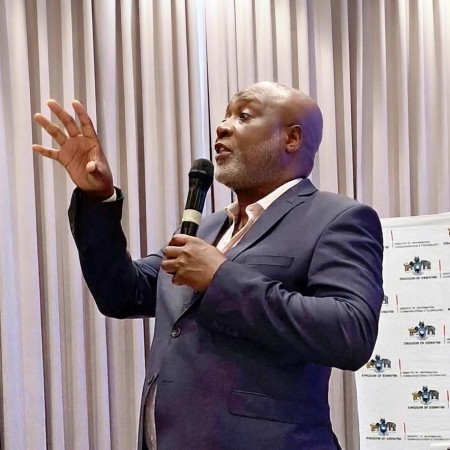
Prime Minister Russell Mmiso Dlamini has declared that his administration’s disruptive approach to government is intended to challenge institutional inefficiencies rather than create disorder, placing administrative reform at the center of Eswatini’s ambition to accelerate economic growth through tourism.
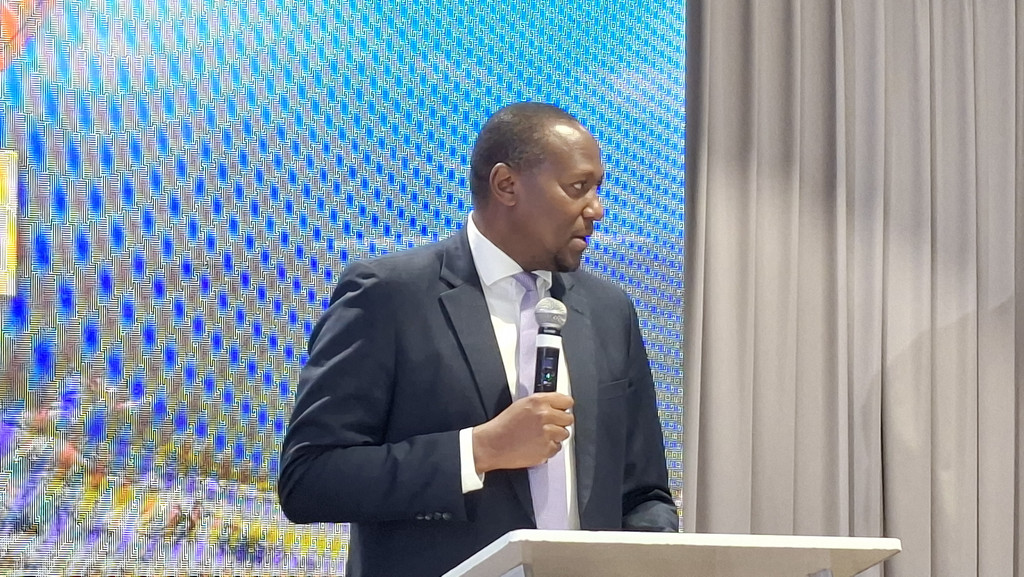
Speaking at the 2nd Annual Tourism Nkwe Conference 2026 at the Hilton Garden Inn Hotel this morning, Dlamini said he had been deliberate in embracing the description of his governing style as “disruptive leadership,” arguing that the term reflects a willingness to challenge systems that have become barriers to economic participation. “I embrace that description without apology,” he said, before drawing a distinction between disruption and instability. “Disruption, in my understanding, is not disorder – it is the refusal to let outdated systems, slow processes, and comfortable habits stand in the way of emaSwati.”
The Prime Minister’s argument places government efficiency within a broader economic context, particularly because administrative processes increasingly determine the cost, speed, and accessibility of doing business. For tourism operators, these processes can affect everything from the movement of visitors and payment for services to licensing, transport, and access to government platforms. Dlamini therefore framed institutional reform not simply as an administrative concern but as part of the country’s competitiveness as a tourism and investment destination.
He was particularly direct about the consequences of systems that fail to serve their intended users. “Where a system serves only itself and not the people, it must be disrupted,” Dlamini said. “Where a process protects inefficiency rather than the traveller, the investor, or the small entrepreneur, it must be disrupted.” The statement effectively places public-sector performance under an economic test: whether a government process facilitates productive activity or imposes friction on those expected to generate it.
That approach is significant for small businesses, which often have less financial and administrative capacity to absorb delays than larger companies. A prolonged approval process, unreliable digital platform, or regulatory requirement can represent more than an inconvenience for a small operator; it can translate into lost sales, delayed investment, or additional operating costs. The Prime Minister’s emphasis on the “small entrepreneur,” therefore, broadens the disruption agenda beyond major tourism establishments and towards the smaller enterprises that participate in the sector.
Dlamini linked this philosophy to the Government’s wider economic ambitions, reaffirming that the target of double-digit annual GDP growth remains unchanged and that tourism is expected to be one of the engines driving that expansion. He said the Government’s commitment to the Nkwe Programme of Action and the Grand Plan for National Transformation “remains undiminished,” placing tourism reform within a much larger program of economic transformation.
The leadership test, however, will be whether disruption produces measurable changes rather than simply stronger rhetoric around reform. The Prime Minister acknowledged that several systems still require intervention, including the e-visa platform, transport regulation, and payment infrastructure. His remarks suggest that the administration increasingly intends to measure its performance by whether longstanding operational problems are actually removed.
This was particularly evident when he addressed the e-visa system. Although he said the platform had modernized the process through which visitors access Eswatini, he acknowledged industry concerns over reliability, payment processing, and turnaround times. He specifically referred to processing delays during peak periods such as Umhlanga, payment failures, and the lack of a manual fallback system, saying that “a visa system that frustrates the very visitors we are courting is a contradiction we cannot sustain.”
For business, that statement carries a broader implication reform is ultimately judged at the point where a policy meets the customer, investor, or entrepreneur. A sophisticated policy framework has limited economic value if its implementation creates delays and uncertainty for the people expected to use it.
Dlamini consequently called for a more execution-focused approach across the public sector, saying the objective was not criticism “for its own sake” but the discipline to identify what is failing and the willingness to change it quickly. “It is about the discipline to look honestly at what is not working, and the courage to change it quickly rather than manage it slowly,” he said. He extended that standard to every Ministry, parastatal and partner involved in the sector.
The message to the tourism industry is therefore less about disruption as a leadership slogan and more about the economic consequences of institutional inertia. As Eswatini pursues higher growth, the Prime Minister is arguing that the government itself must become more responsive to the commercial realities facing businesses.
The measure of that approach will ultimately be practical. Dlamini challenged the conference to return next year with evidence not only of what had been discussed but also of “what we disrupted, fixed, and delivered.” For the business community, that creates a clear benchmark: whether the disruption translates into faster processes, more reliable systems, and fewer institutional obstacles between Eswatini’s tourism potential and the businesses attempting to commercialize it.