






By: Nkosiyabusa Nsibande
International arrivals rose from roughly 964,000 in 2024 to approximately 1.037 million in 2025, with a further 8% gain to 562,000 recorded by mid-2026, even as the Eswatini Tourism Authority moves to align its strategy with national development goals and puts a firmer number on tourism’s true economic worth.
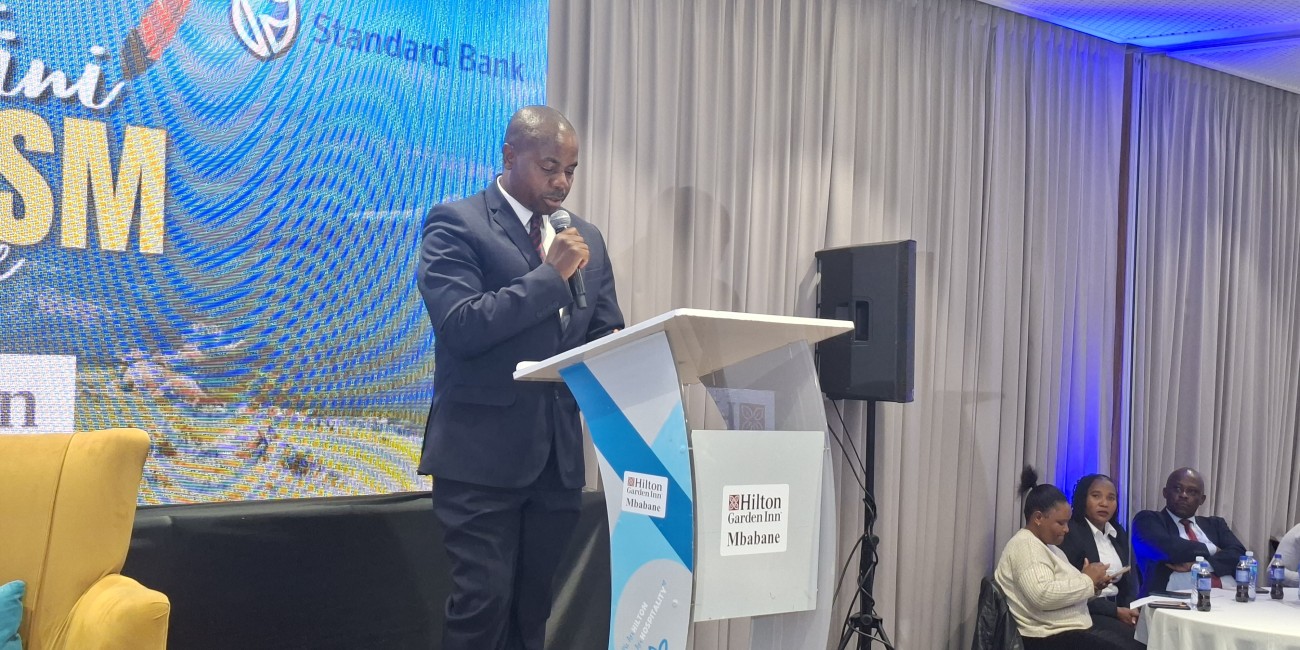
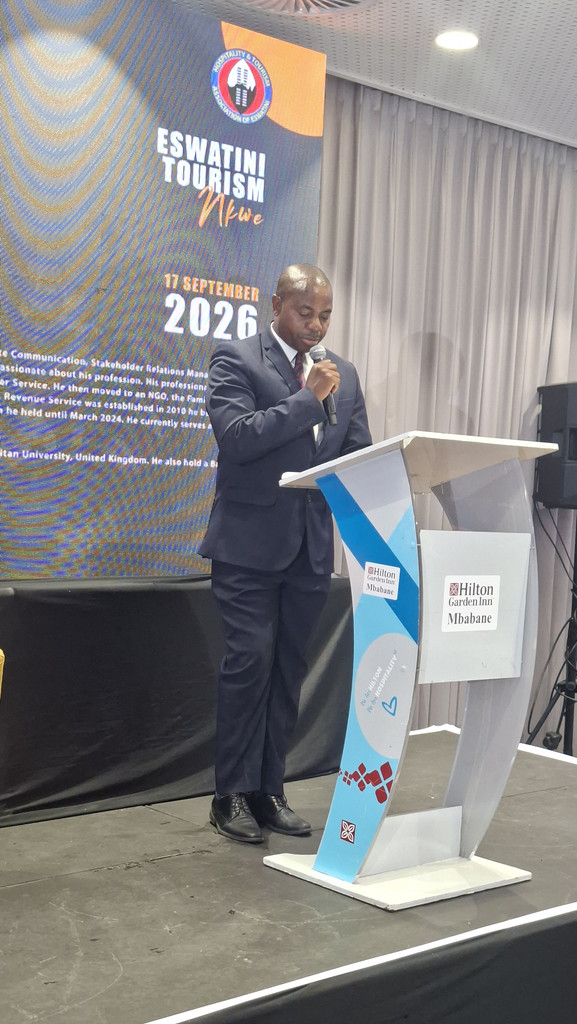
Eswatini’s tourism industry is showing renewed momentum, with international arrivals rising from roughly 964,000 in 2024 to approximately 1.037 million in 2025, even as the sector continues to work its way back to pre-pandemic levels. The figures were shared by Vusie N. Dlamini, Chief Executive Officer of the Eswatini Tourism Authority (ETA), during his remarks at the second edition of Tourism Nkwe, held at the Hilton Hotel in Mbabane. Speaking before the Right Honorable Prime Minister and members of the Hospitality and Tourism Association of Eswatini, Dlamini framed the recovery as encouraging but incomplete, noting that the sector “continues to recover, though still below the pre-COVID numbers.”
The upward trend has held even against a difficult global backdrop. Rising oil prices have pushed up the cost of international travel over the past year, a development that has weighed particularly heavily on visitor numbers from European markets, long one of Eswatini’s more reliable source regions. Despite that pressure, Dlamini reported that mid-year arrivals for 2026 stood at roughly 562,000 by June, representing an 8% increase and suggesting that demand for the destination has proven more resilient than the broader travel-cost environment might have implied. He attributed much of that resilience to the country’s calendar of cultural events, singling out Incwala, Buganu, and Bushfire as gatherings that have “strongly supported” the arrivals figures by drawing visitors even as macroeconomic headwinds persisted elsewhere.
Behind the arrivals numbers, the ETA has also been working through a more structural exercise: a review of its own organizational strategy for the 2026 to 2030 period. According to Dlamini, the Authority’s Board of Directors has produced a revised Strategic Plan intended to bring the organization’s ambitions in line with what it can realistically deliver, while sharpening how that delivery is tracked. The plan, he said, aims to “align strategic ambition with institutional capacity, strengthen implementation discipline, and shift the Authority from an activity-driven approach towards a results, outcomes, and impact-oriented model.” For an institution whose performance is ultimately judged on visitor numbers and revenue rather than activity counts, that shift in orientation is a meaningful one, and it signals a tourism authority looking to be measured less by what it does and more by what those efforts actually produce.

That new plan does not sit apart from the wider machinery of government. Dlamini was explicit in tying the ETA’s revised objectives to the national development agenda and to Government’s own Plan of Action (POA), which he described as the vehicle that “translates Government’s priorities and policy commitments into actionable programs and measurable outcomes that must be attained by Government institutions and agencies.” By aligning its strategic objectives, programs, and interventions with that broader framework, the Authority is positioning tourism policy not as a standalone portfolio but as one strand within a coordinated push toward national economic outcomes, with its mandate, resources, and performance all directed toward the same set of government-wide targets.
Perhaps the most consequential item in Dlamini’s remarks for investors and policymakers alike was his update on efforts to properly quantify tourism’s contribution to the economy. The ETA, working with key partners, is implementing the Tourism Satellite Accounts (TSA), a statistical framework endorsed by the United Nations that is designed to measure tourism’s contribution to Gross Domestic Product with far greater precision than arrival counts alone can offer. Dlamini was careful to note that the exercise goes well beyond counting visitors at the border, stressing the importance of understanding “whether this translates into longer stays, increased occupancy, higher visitor spend, investment, employment, and wide economic contribution.” Once operational, the TSA framework would give Eswatini a clearer, internationally comparable picture of tourism’s true weight in the economy, data that could prove valuable to both government budget planners and private investors weighing opportunities in the sector. Dlamini indicated that further detail on the initiative would follow in due course, closing his remarks with thanks to the gathering for its attention.
Taken together, the CEO’s address paints a picture of a tourism authority trying to do two things simultaneously: sustain a fragile but real recovery in visitor numbers against a backdrop of costlier global travel, and build the institutional and statistical infrastructure needed to demonstrate, in hard economic terms, exactly what that recovery is worth to the country.


Other Articles