







By: Nkosiyabusa Nsibande
The Eswatini Copyright and Neighbouring Rights Society (ESWACOS) has officially opened applications for the Fund for Creativity and Artist Development, the first operational funding window under the E100,000 Creative Industries Development Fund (CIDF) established by Government to support the country’s creative sector.
The fund was announced by Commerce, Industry and Trade Minister Manqoba Khumalo during World Book and Copyright Day celebrations, where Government pledged E200,000 towards the development of Eswatini’s creative economy. Of that amount, E100,000 was allocated to establish the Creative Industries Development Fund through ESWACOS, while a further E100,000 was earmarked for a national short film competition. The latest call for applications marks the first direct disbursement of funding to creators under the initiative.
According to ESWACOS, successful applicants may receive grants of up to E5,000 to support the creation, production and promotion of new copyright works. Eligible projects include music recording, music video production, book publishing, marketing campaigns, digital distribution and professional development activities linked to creative production.
The programme is exclusively targeted at ESWACOS members in good standing and is designed to finance new creative projects rather than completed works. Applicants are required to submit project proposals, budgets and implementation timelines demonstrating how the funding will contribute to the development of new copyright-protected content.
Moving Creativity From Passion To Enterprise
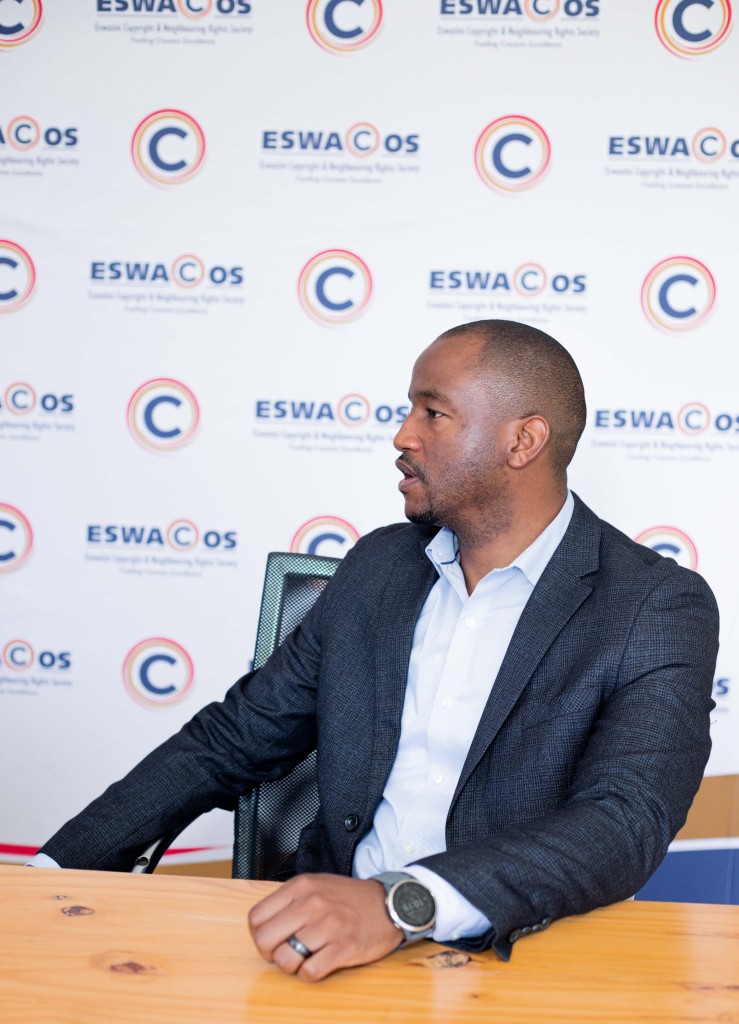
The fund comes at a time when Government is increasingly positioning creative industries as part of Eswatini’s broader economic diversification strategy.
Earlier this year, the Ministry of Commerce, Industry and Trade urged artists and creatives to shift from viewing their work purely as artistic expression and instead approach it as a commercial enterprise capable of generating income, intellectual property and sustainable livelihoods. Government has emphasised the importance of copyright protection, branding and commercialisation as key building blocks for a more competitive creative economy.
This policy direction aligns with broader government efforts to diversify economic growth beyond traditional sectors by developing industries such as tourism, culture and the creative economy. Government has identified these sectors as potential contributors to employment creation and economic expansion.
Addressing a Financing Gap
From a financial perspective, the CIDF seeks to address one of the most persistent challenges facing creatives: access to capital.
Unlike conventional businesses, many artists struggle to secure financing for recording costs, video production, publishing, marketing and distribution because creative projects often lack traditional collateral requirements demanded by financial institutions. Under the ESWACOS programme, grant funding may be used for studio recording, video production, editing, mastering, publishing support, artwork design, digital distribution and promotional activities.
While individual grants are capped at E5,000, the funding could provide critical seed capital for emerging creators seeking to commercialise their work and generate future royalty income.
The emphasis on new works is particularly significant because it encourages the creation of fresh intellectual property assets that can potentially generate long-term economic returns through royalties, licensing agreements and digital distribution revenues. Completed projects and previously released works do not qualify for support.
Accountability and Industry Development
ESWACOS has also built accountability measures into the programme. Successful beneficiaries will be required to submit activity and financial reports, provide evidence that projects have been completed and ensure supported works are properly registered where applicable.
Applications will be assessed on artistic merit, project feasibility, budget credibility and the potential contribution of the proposed work to both the applicant’s career and the wider creative sector. Youth, women and underrepresented groups will also receive consideration during the assessment process.
For Eswatini’s creative sector, the significance of the CIDF extends beyond the value of individual grants. The initiative represents one of the clearest attempts yet to formalise public investment in intellectual property creation and creative entrepreneurship.
The long-term test will be whether the E100,000 fund can help transform creative talent into commercially viable businesses capable of generating sustainable income, royalties and employment opportunities within Eswatini’s growing creative economy.
Applications close on June 30, with successful beneficiaries expected to be announced on July 17. Projects funded under the programme must be completed by August 21.