







By: Nkosiyabusa Nsibande
Eswatini’s aquaculture sector is being positioned as a strategic investment frontier following the rollout of a E22 million aquaculture development program aimed at reducing the country’s heavy dependence on imported fish and creating new commercial opportunities for local producers. When food security, import substitution, and rural enterprise development are increasingly shaping national economic policy, the sector’s growth potential is becoming difficult for investors and agricultural entrepreneurs to ignore.
The Ministry of Agriculture, working in partnership with the Taiwan Technical Mission, recently intensified capacity-building efforts by training fish farmers from Maguga and Mnjoli Dams at the Malkerns Aquaculture Centre. The training focused on cage culture production techniques, fish health management, feeding systems, harvesting practices, and aquaculture business management. While the technical aspects of the program are important, the broader economic significance lies in its intention to transform fish farming from a subsistence activity into a commercially viable industry capable of contributing meaningfully to national output.
The figures underlying the project reveal the scale of the opportunity. Eswatini consumes approximately 5,025 tonnes of fish every year, yet domestic production currently stands at only 165 tonnes. This leaves a deficit of nearly 4,860 tonnes, forcing the country to rely on imports for more than 90 percent of its fish consumption. Such a gap represents a substantial leakage of capital from the domestic economy and simultaneously highlights an underserved market that local producers might supply.

For investors and agribusiness operators, the numbers point to a market with significant room for expansion. If local production can be scaled successfully, they could retain millions of emalangeni currently spent on imported fish within the national economy, supporting local businesses, creating employment opportunities, and strengthening agricultural value chains. Beyond primary production, growth in aquaculture has the potential to stimulate activity in feed manufacturing, cold-chain logistics, processing, transportation, and retail distribution.
The second phase of the aquaculture project seeks to accelerate that transformation through the distribution of more than one million fingerlings and the expansion of cage culture systems across the country. The strategy is designed not only to increase production volumes but also to improve productivity and profitability among farmers by equipping them with the technical and business skills necessary to operate on a commercial scale.
Principal Secretary in the Ministry of Agriculture, Sydney Simelane, encouraged farmers to recognize the commercial value of the sector and take advantage of rising demand for fish products. His remarks reflected the government’s broader objective of positioning aquaculture as a sustainable income-generating enterprise capable of contributing to economic diversification and reducing pressure on food imports.
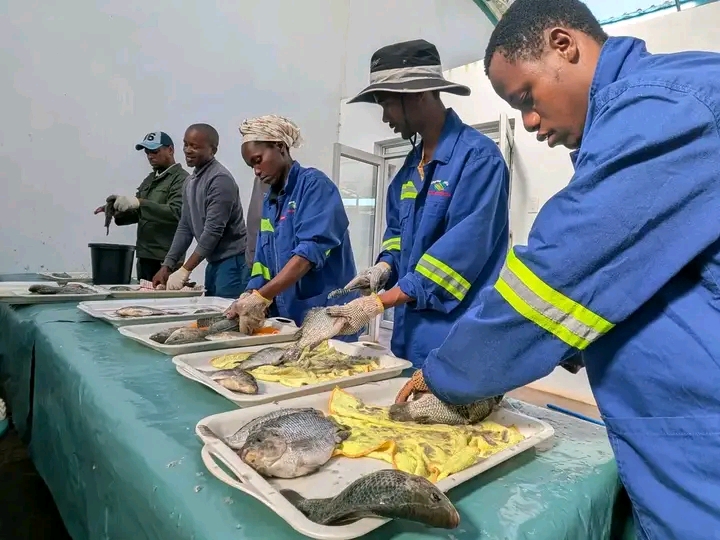
The Taiwan Technical Mission also reaffirmed its commitment to supporting the sector’s development. Acting Chief Cheng emphasized that the partnership would continue to provide technical expertise, knowledge transfer, and collaborative support aimed at strengthening the industry’s foundations. Such international cooperation is expected to play a critical role in helping local farmers adopt modern production systems and improve operational efficiency.
From a financial perspective, the aquaculture initiative aligns closely with national efforts to strengthen domestic production and reduce reliance on imported goods. Import substitution remains one of the most effective mechanisms for improving economic resilience, particularly in sectors where local demand already exists, but domestic supply remains limited. With fish consumption continuing to outpace production by a wide margin, aquaculture presents a rare opportunity where market demand is already established and growth potential is measurable.
Should the program achieve its objectives, the benefits could extend well beyond food production. Increased local fish output would improve household incomes, support rural economic development, and contribute to broader agricultural commercialization efforts. More importantly, it could help transform a sector that has traditionally operated on the margins of the economy into a meaningful contributor to national growth, investment, and job creation.
For Eswatini, the E22 million aquaculture project is therefore more than an agricultural intervention. It is an investment in building a domestic industry capable of capturing a market currently dominated by imports, while creating a foundation for long-term economic value within the country’s food production system.