





By: Nkosiyabusa Nsibande
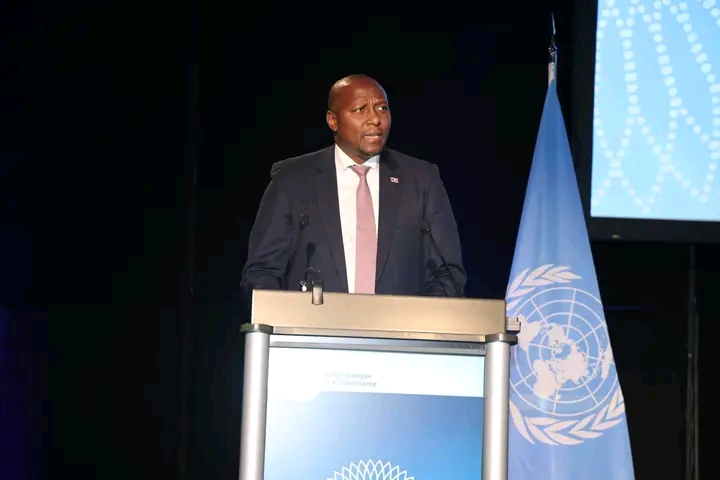
Artificial intelligence is rapidly becoming one of the world’s most influential economic drivers, reshaping industries, labor markets, and investment flows. For Eswatini, however, the conversation is extending beyond technological advancement to include economic sovereignty, human capital development, and sustainable growth. Addressing the Global Dialogue on AI Governance 2026 in Geneva on behalf of His Majesty King Mswati III, Prime Minister Russell Mmiso Dlamini presented a vision that places AI at the centre of the country’s long-term economic transformation while cautioning against an unequal digital future.
The Prime Minister clarified that Eswatini views artificial intelligence as an economic enabler capable of strengthening productivity across multiple sectors. He argued digital technologies should improve the delivery of public services while supporting industries that are critical to national development. “Technology must serve people,” he said, adding that AI should “improve daily life, expand opportunity, support the digitization of essential public services, and strengthen the institutions that serve our citizens.” He further noted that the technology must contribute to “food security, healthcare, education, public administration, climate resilience, job creation, and sustainable economic growth.”
For investors and business leaders, the speech signals that Eswatini is laying the policy foundations for participation in the global digital economy rather than waiting to adopt technologies developed elsewhere. Dlamini warned that smaller developing economies should not become passive consumers of foreign-built AI systems that cannot reflect their own economic priorities and realities. Instead, he called for greater investment in sovereign digital capabilities, including local innovation ecosystems, research institutions, computing infrastructure, trusted data systems, and digital literacy programs. His assertion that “equitable growth in AI requires equitable capacitation” reflects a broader economic argument that access to digital infrastructure and skills will increasingly determine a country’s competitiveness in attracting investment and creating high-value employment.
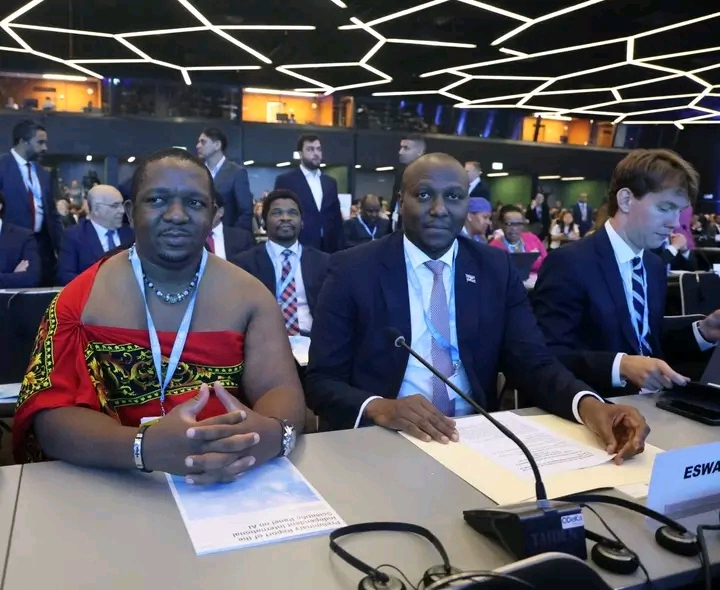
The Prime Minister also highlighted the country’s ongoing investments under its National Fourth Industrial Revolution Strategy, indicating that the government is already directing resources towards preparing the workforce for the next generation of industries. According to Dlamini, Eswatini is investing in coding, data science, and artificial intelligence training for young people while strengthening specialized expertise through national institutions of learning. These initiatives, he explained, should ensure that automation complements rather than replaces human labor. “These efforts are guided by the conviction that automation must enhance human potential without undermining dignity, employment, social cohesion, or cultural identity,” he said.
Beyond economic opportunity, the Prime Minister devoted significant attention to governance, arguing that investor confidence in AI-driven economies will depend on robust regulatory frameworks. He stressed that innovation cannot flourish where public trust is absent, calling for AI systems that uphold transparency, accountability, fairness, and respect for human rights. “Human judgment, responsibility, and oversight must remain at the center,” he said, while rejecting any approach that would allow artificial intelligence systems to regulate themselves or evolve beyond effective human supervision.
Dlamini further argued that enforceable legal frameworks will become increasingly important as digital economies expand. He maintained that voluntary principles alone would not be sufficient to govern rapidly evolving technologies, calling instead for regulations that are auditable, enforceable, and supported by international cooperation. Such frameworks, he said, should strengthen privacy protections, cybersecurity, data protection, and the resilience of critical information infrastructure. For businesses seeking to invest in digital markets, these measures are essential components of a predictable and secure investment environment capable of supporting innovation without exposing economies to unnecessary risks.
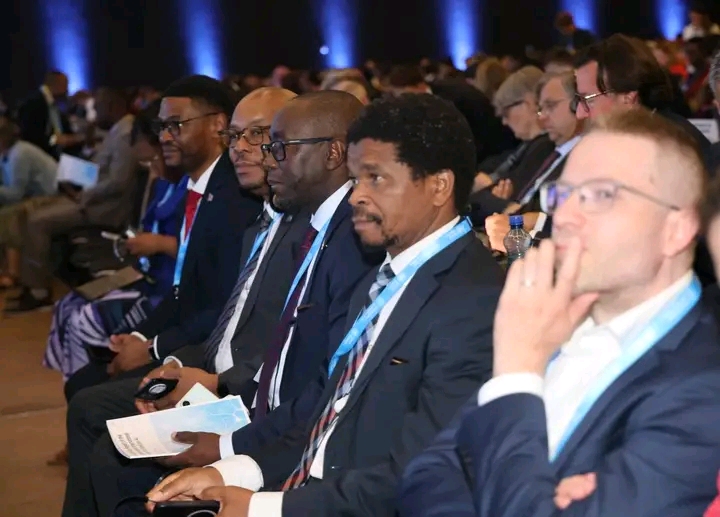
The Prime Minister also urged global institutions to ensure that developing countries have an equal voice in shaping international AI standards. He welcomed ongoing work through the United Nations, UNESCO, and the African Union, arguing that governance systems must recognize varying levels of technological readiness while remaining inclusive of smaller economies. Such an approach, he suggested, would enable countries like Eswatini to participate in the global digital economy instead of merely adapting to rules established elsewhere.
Concluding his address, Dlamini reminded delegates that its contribution to people’s lives should ultimately measure the success of artificial intelligence rather than technological sophistication. “The promise of AI will not be measured by the sophistication of machines alone,” he said. “It will be measured by whether a farmer can access better climate information, whether a child can learn safely, whether a patient can receive better care, whether public services become more accessible, and whether nations can innovate without surrendering their values or sovereignty.” That vision aligns closely with Eswatini’s broader ambition of leveraging digital transformation to unlock productivity, expand economic participation, and create inclusive prosperity while safeguarding national interests.