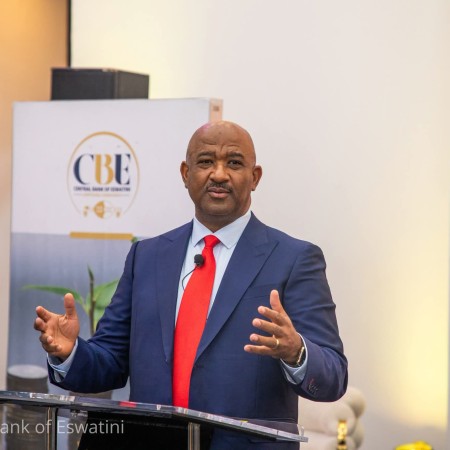







By: Nkosiyabusa Nsibande
The Eswatini Competition Commission’s approval of merger and acquisition transactions worth more than E4.96 billion during the first quarter of the 2026/27 financial year says as much about the country’s investment climate as it does about regulatory oversight. While merger approvals are often viewed as administrative procedures, they increasingly serve as indicators of investor confidence, corporate expansion, and the pace at which capital moves through the economy.
The figures reveal that most of the investment activity originated from international transactions. Four of the six mergers approved between April and June carried a combined transaction value of approximately E4.85 billion, while the two domestic transactions were valued at E110 million. Although the disparity highlights Eswatini’s continued dependence on foreign capital for large-scale corporate activity, it also demonstrates that international investors continue to view the country as a viable gateway into Southern Africa despite increasingly competitive regional markets.
For investors, the value of competition regulation extends far beyond compliance. A predictable merger approval framework reduces regulatory uncertainty, shortens transaction timelines, and provides greater confidence for companies considering acquisitions or strategic partnerships. Capital tends to flow towards markets where investors understand the rules and regulatory institutions apply them consistently rather than arbitrarily.

The composition of the approved transactions is equally significant. Investment flowed into fast-moving consumer goods, agriculture and forestry, sectors that collectively underpin consumer spending, food security, manufacturing supply chains and export earnings. Expansion within these industries has the potential to stimulate employment, improve productivity, and encourage further downstream investment in logistics, processing, and retail distribution.
Competition authorities are frequently perceived as institutions that prevent monopolies. In reality, their broader economic role is to ensure that investment strengthens markets rather than weakens them. Mergers that improve efficiency while preserving competition allow businesses to achieve economies of scale without reducing consumer choice or suppressing smaller competitors. That balance ultimately supports healthier long-term economic growth.
The Commission’s review process also protects the broader investment ecosystem. Poorly structured acquisitions can concentrate excessive market power, discourage entrepreneurship, and limit innovation. By assessing the competitive effects before transactions proceed, regulators reduce these risks while signaling to investors that Eswatini remains committed to maintaining transparent and competitive markets.
The E4.96 billion approved in one quarter reflects corporate confidence, continued interest in cross-border investment, and the growing importance of competition policy as part of Eswatini’s wider economic development strategy. As regional investment competition intensifies under the African Continental Free Trade Area, institutions capable of balancing investment promotion with market fairness will become increasingly important in determining where businesses choose to deploy capital.