



By: Nkosiyabusa Nsibande
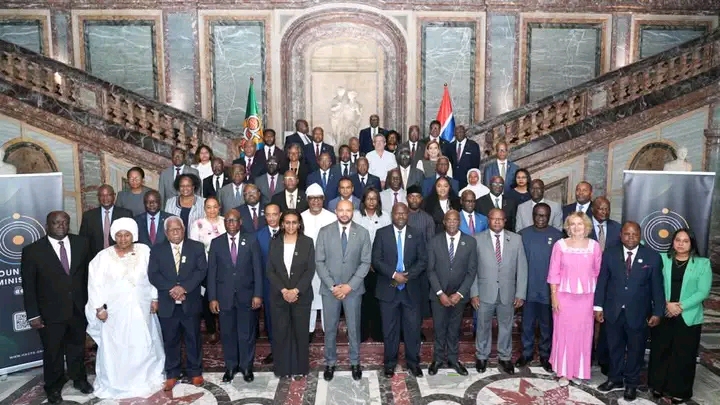
Communiqués and ceremonial photographs often judge international diplomacy. The greater economic value, however, usually lies in the commercial relationships that begin behind closed doors. Eswatini’s participation in the 121st Session of the Organization of African, Caribbean and Pacific States (OACPS) Council of Ministers in Brussels reflected this reality. What appeared to be a routine ministerial gathering was, in practice, an exercise in economic diplomacy aimed at broadening trade relationships, strengthening investment partnerships, and raising the country’s profile within one of the world’s largest cooperation blocs linking Africa, the Caribbean, and the Pacific.
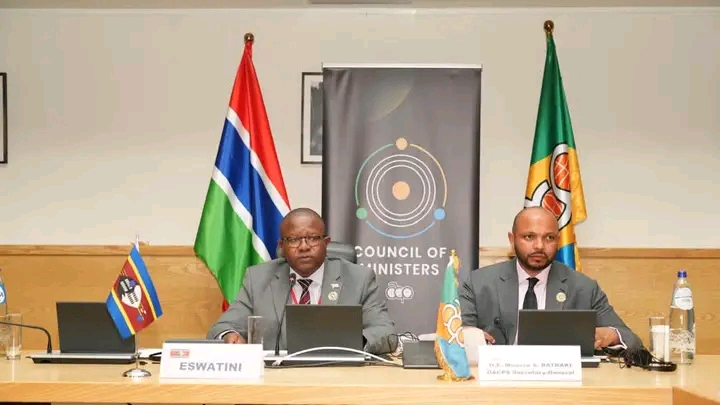
Leading Eswatini’s delegation, the Minister of Commerce, Industry and Trade, Manqoba Khumalo, carried a mandate that extended beyond representing national interests. Acting on behalf of His Majesty King Mswati III in his capacity as OACPS Champion for Resource Mobilization, the Minister encouraged member states to make voluntary financial contributions to secure the organization’s long-term sustainability. Although such discussions may appear administrative, they speak to a broader economic question confronting many multilateral institutions: whether they possess the financial independence needed to shape development priorities without overreliance on external partners.
For smaller economies such as Eswatini, that question has practical consequences. Financially stronger regional organizations are better positioned to coordinate development programs, negotiate collectively with international institutions, and mobilize resources for infrastructure, trade facilitation, and industrial development. These are investments that individual countries often struggle to finance on their own, making effective multilateral institutions an increasingly important component of national economic strategy rather than simply of diplomatic architecture.
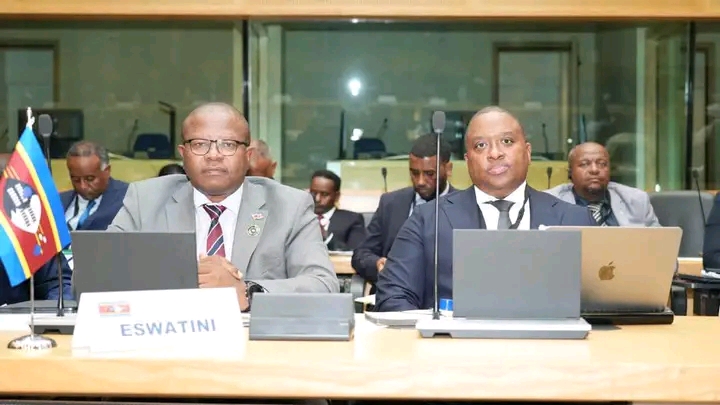
Alongside the formal council proceedings, the Minister held bilateral meetings with counterparts from Chad, Uganda and Ethiopia. Such engagements increasingly serve as commercial diplomacy, where governments seek to establish relationships that later translate into trade agreements, investment flows, and business partnerships. The discussions centered on expanding trade opportunities, strengthening agricultural cooperation, and identifying areas for broader economic collaboration between the participating countries.
The meeting with Chad produced the clearest immediate outcome. The country pledged approximately US$1 million as a voluntary contribution towards the OACPS, while both governments agreed to formally establish diplomatic relations during the United Nations General Assembly in September 2026. Although diplomatic recognition is often viewed as symbolic, it creates the institutional framework that makes future trade negotiations, investment promotion activities, and economic cooperation agreements considerably easier to pursue.
The broader commercial implications extend beyond Chad. Uganda and Ethiopia represent some of Africa’s larger and faster-growing consumer markets, with expanding manufacturing industries, agricultural value chains and infrastructure investment programs. As the implementation of the African Continental Free Trade Area gathers pace, cultivating bilateral relationships with these economies positions Eswatini to participate more effectively in regional supply chains that are gradually reshaping African commerce.
Agricultural cooperation featured prominently during the discussions, reflecting the sector’s enduring importance to Eswatini’s economy. Agriculture remains central to export earnings, employment, and agro-processing activity. Partnerships that facilitate technology transfer, improve production methods and widen market access offer the prospect of moving beyond commodity exports towards higher-value agricultural products, strengthening both export competitiveness and rural incomes over the longer term.
The Brussels meetings also illustrate a wider shift in how countries compete for investment. Fiscal incentives and industrial parks remain important, but they are increasingly complemented by sustained economic diplomacy. Relationships established through multilateral institutions often determine which countries businesses consider when evaluating new export markets, manufacturing locations, or strategic investment destinations. Investment decisions are rarely shaped by incentives alone; confidence, political relationships, and institutional engagement frequently matter as much.
Eswatini’s expanding leadership role within the OACPS therefore carries significance beyond diplomatic prestige. By taking responsibility for advancing the organization’s resource mobilization agenda, the country is increasing its visibility among governments, development finance institutions and international partners engaged across the African, Caribbean and Pacific regions. That prominence strengthens Eswatini’s ability to contribute to regional economic discussions while reinforcing its reputation as an active participant in shaping international economic cooperation rather than simply responding to it.
For investors and businesses, the Brussels engagements offer a reminder that economic strategy is no longer confined to domestic policy. Trade relationships, development finance and investment opportunities are increasingly forged through diplomatic networks that extend well beyond national borders. Eswatini’s approach suggests that it recognizes this shift. By using its position within the OACPS to strengthen commercial ties and expand economic partnerships, the Kingdom is seeking to convert diplomatic influence into long-term economic advantage, an objective whose returns may ultimately be measured not in conference declarations but in future trade, investment and private-sector growth.