




By: Nkosiyabusa Nsibande
Nearly E9.85 million has been ring-fenced to finance the future of Eswatini’s pig industry after the Republic of China (Taiwan) officially concluded the Pig Industry Enhancement Project (PIEP) Phase II, creating a rare example of a donor-funded agricultural program that leaves behind not only infrastructure and technical expertise but also a dedicated financial reserve to sustain operations after external funding ends.
The E9,848,401.18 remaining in the project’s bank account will finance operations at the Mpisi Pig Breeding and Nucleus Farm, covering farm maintenance, breeding programs, genetic improvement initiatives, and other production activities as responsibility shifts fully to the Ministry of Agriculture. Rather than marking the end of financial support, the handover establishes a transition from donor financing to locally managed capital, providing the industry with working capital to sustain productivity gains achieved over the past five years.
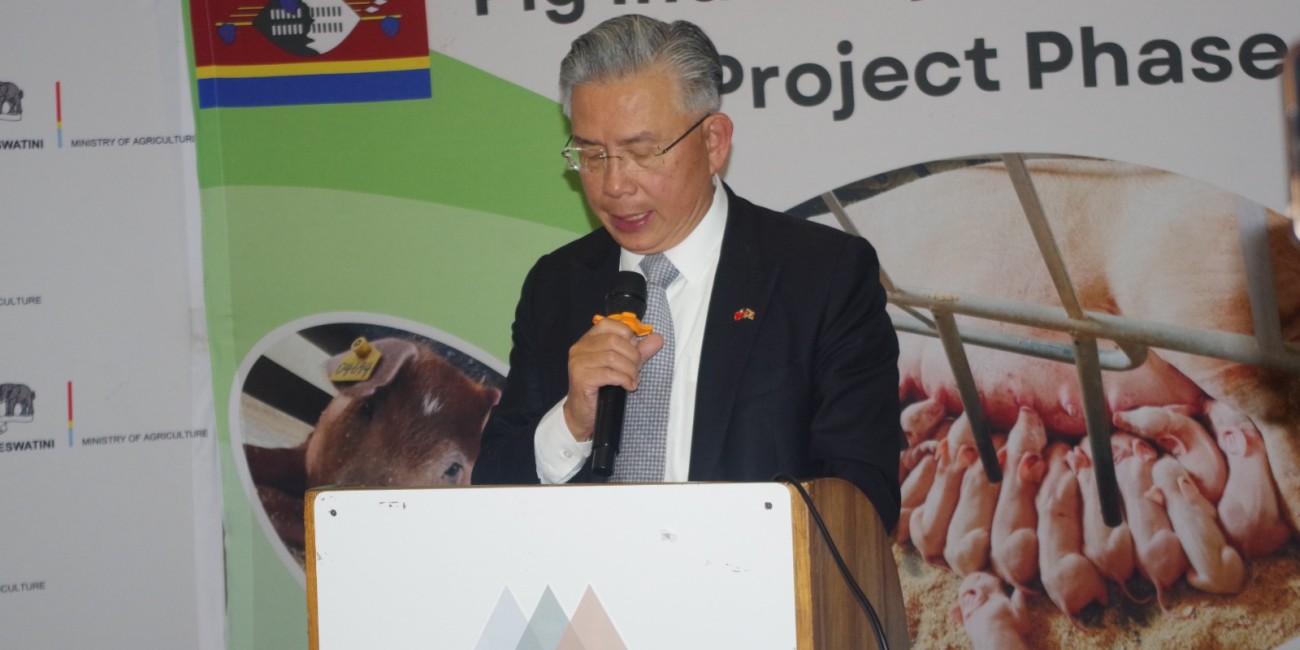
Speaking during the official closing ceremony at Mountain View Hotel on Friday, Republic of China (Taiwan) Ambassador Jeremy H.S. Liang said sustainability had been deliberately built into the project from the outset, ensuring that the industry’s progress would not stall once international funding ended.
“Although direct support from the International Cooperation and Development Fund (Taiwan ICDF) is coming to an end, the project has strategically accumulated financial resources to support the continued operation of the Mpisi Pig Breeding and Nucleus Farm. At the close of the project, approximately E9,848,401.18 remains in the project bank account. These funds have been reserved to support farm operations, maintenance, genetic improvement activities, and other key production functions, ensuring a smooth transition to full local ownership and management,” Liang said.
The reserve fund represents one of the most commercially significant outcomes of the program because it addresses one of the biggest weaknesses associated with donor-funded development projects: the collapse of operations after external financing ends. Instead of handing over infrastructure without resources to maintain it, the project transfers both productive assets and financial capital, allowing the Ministry of Agriculture to continue improving pig genetics and production capacity without immediately seeking new funding.
Liang said the financial reserve builds on years of investment that have fundamentally reshaped Eswatini’s pork industry through improved breeding stock, modern reproductive technology, farmer training, and institutional development. According to the Ambassador, Taiwan’s objective extended beyond increasing pig numbers to creating a commercially competitive livestock industry capable of sustaining itself through improved productivity and stronger value chains.
“The project has transformed the pig industry in Eswatini through the introduction of improved breeding stock, the establishment of the country’s pig artificial insemination center, the transfer of modern breeding technologies, and extensive capacity-building programs,” Liang said.
He noted that over 2,200 farmers received technical training covering breeding, nutrition, animal health, and farm management. Local pork production increased from less than 800 tonnes annually a decade ago to approximately 2,424 tonnes. Annual slaughter numbers also climbed to more than 41,000 pigs, enabling Eswatini to eliminate dependence on imported fresh pork and retain more value within the domestic agricultural economy.

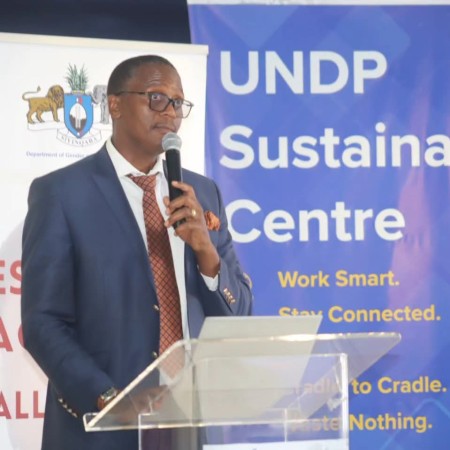
For the Ministry of Agriculture, however, the financial legacy is expected to underpin the next phase of industry expansion rather than simply preserving existing production levels. Minister Mandla Tshawuka said the completed project had demonstrated that strategic investment in agricultural productivity can generate measurable economic returns through higher production, stronger farmer incomes, and reduced import dependence.
According to Tshawuka, national pork production increased from 1,903 metric tonnes in 2020 to over 2,423.75 metric tonnes in 2025, while farmer income almost doubled from E71.6 million to E131 million during the same period. Those gains, he said, were driven by investments in improved genetics, artificial insemination, farmer training, market development, and modern production systems that collectively strengthened the competitiveness of the local pork industry.
The Minister said the project’s conclusion should not be viewed as the end of government support but as beginning a new commercial phase in which the industry shifts its focus from increasing production to creating higher-value products that generate greater economic returns.
“Another important area requiring attention is value addition and processing… This is a business opportunity. From now on, it is imperative to invest in pork processing, product diversification, branding, and packaging to maximize returns to farmers and contribute more effectively to economic growth,” Tshawuka said.
He said the government will now transition the initiative into the Pig Industry Enhancement Program, with priorities including expanding cold-chain infrastructure through a sustainable user-pay model, strengthening farmer organizations, scaling up artificial insemination and genetic improvement, and positioning local producers to access regional export markets. The program will also promote investment in pork processing and packaging to capture greater value from every animal produced, rather than exporting value through imported processed meat products.
From a public finance perspective, the handover illustrates how development assistance can evolve into productive national assets when projects are designed around financial sustainability rather than perpetual donor dependence. Instead of closing with depleted resources, the Pig Industry Enhancement Project leaves behind operational capital, modern breeding infrastructure, trained producers, and commercially viable production systems that together provide the foundation for continued industry growth under local ownership.
For Eswatini, the real measure of the project’s success will no longer be the amount of donor funding invested, but how effectively the E9.85 million reserve, combined with the productive assets transferred to the government, is leveraged to build a competitive pork industry capable of generating higher farmer incomes, attracting private investment, and expanding into regional markets long after donor support has ended.