





By: Nkosiyabusa Nsibande
Fiscal Recovery Gives Way to a New Economic Challenge
Eswatini has spent the better part of the last five years rebuilding confidence in its public finances through a programme of fiscal consolidation that has reshaped the country’s economic standing. Budget deficits have narrowed, debt growth has been brought under greater control, and investor confidence has gradually improved following years of fiscal uncertainty. These gains have strengthened government’s credibility with development partners, financial institutions and private investors while creating a more stable platform for economic growth.
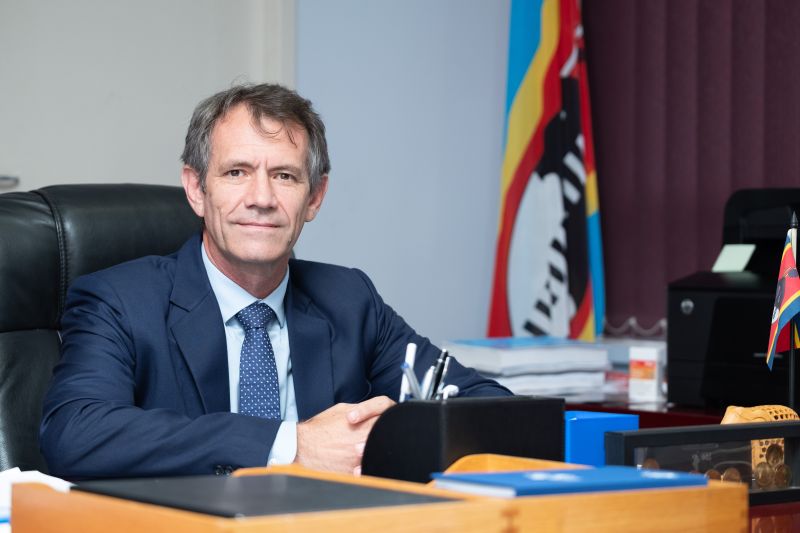
However, according to Minister for Finance Neal Rijkenberg during the Ministry of Finance’s Finance in Focus programme, the country’s economic priorities are now evolving beyond fiscal recovery. While preserving sound public finances remains a priority, government must simultaneously finance strategic investments capable of sustaining higher economic growth, creating employment and improving national competitiveness. This transition presents a more complex policy challenge, requiring government to stimulate development without undermining the fiscal discipline that has restored confidence in Eswatini’s economy.
For businesses and investors, this marks an important shift. The conversation is no longer centred on whether government can stabilise public finances, but whether it can maintain fiscal credibility while expanding investment in infrastructure and productive sectors that support long-term economic transformation.
From Fiscal Consolidation to Economic Expansion
According to Minister Rijkenberg, Eswatini entered the COVID-19 period after nearly two decades of subdued economic performance, with annual growth averaging about two percent. Such growth was insufficient to absorb new entrants into the labour market, stimulate significant private investment or generate the revenue needed to finance expanding public services. Weak economic growth was accompanied by persistent concerns regarding government expenditure, fiscal deficits and the country’s heavy dependence on revenue from the Southern African Customs Union (SACU).
To reverse this trajectory, government embarked on a series of fiscal reforms designed to restore macroeconomic stability. These included containing expenditure, improving financial management and slowing the growth of the public sector wage bill through a prolonged recruitment freeze. According to the Minister, these measures reduced the wage bill from approximately 42 percent of total government expenditure to about 32 percent before the recent salary review adjusted it to around 33 percent.
The reforms also contributed to a substantial improvement in the country’s fiscal position. Minister Rijkenberg explained that the budget deficit declined from approximately 7.5 percent of Gross Domestic Product (GDP) to close to two percent, while public debt stabilised at around 40 percent of GDP during the consolidation period. Government further established the SACU Stabilisation Fund, which now holds approximately E1.5 billion to cushion the national budget against fluctuations in customs revenue.
Collectively, these reforms have strengthened Eswatini’s macroeconomic fundamentals while signalling to investors that government is committed to prudent fiscal management.
Why Fiscal Discipline Matters Beyond Government
One of the most significant messages emerging from the Minister’s presentation is that sound fiscal management extends well beyond balancing government accounts. According to Rijkenberg, improved fiscal discipline has enhanced Eswatini’s standing among international financial institutions, resulting in greater willingness by lenders to finance both public and private sector investment.
For the business community, this has important implications. Countries that demonstrate fiscal discipline generally enjoy stronger investor confidence, improved sovereign creditworthiness and lower financing costs. Commercial banks and development finance institutions are often more willing to extend credit when macroeconomic risks are well managed, creating a more favourable environment for private investment and business expansion.

Minister Rijkenberg noted that these improvements have coincided with stronger economic growth following the pandemic, with the economy recording average growth of around five percent in recent years. While several factors have contributed to this recovery, improved fiscal credibility has played an important role in strengthening business confidence and expanding access to investment capital.
The broader lesson is that prudent public finance management serves as a catalyst for private sector development. When government finances are stable, businesses are better positioned to plan long-term investments, financial markets become more predictable and investor confidence is strengthened.
Debt Levels Are Rising Again
Despite the progress achieved through fiscal consolidation, government now faces renewed pressure from rising borrowing requirements. According to Minister Rijkenberg, public debt has increased from around 40 percent of GDP to approximately 45 percent and could approach 50 percent during the current financial year.
Unlike previous borrowing that was largely driven by widening fiscal deficits, the Minister explained that current debt accumulation reflects deliberate investment decisions intended to support economic development and address outstanding financial obligations. Among these commitments is the implementation of the public service salary review, which is expected to increase government expenditure significantly. Government has also borrowed to settle arrears owed to suppliers, strengthen the country’s Strategic Fuel Reserve and finance completion of key national infrastructure projects, including the International Convention Centre.
While these investments may generate long-term economic benefits, they also increase pressure on government finances. Rising debt inevitably translates into higher debt servicing costs, reducing the fiscal space available for future development spending if economic growth does not keep pace. For investors and financial markets, the sustainability of this borrowing will depend largely on whether these expenditures generate measurable economic returns through higher productivity, stronger private sector investment and increased government revenue.
The challenge facing policymakers is therefore not simply to borrow responsibly, but to ensure that every additional lilangeni of debt contributes meaningfully to expanding the country’s productive capacity.

Private Capital Expected to Play a Larger Role
Recognising the limitations of relying solely on public borrowing, government is increasingly positioning the private sector as a key partner in financing future development. According to Minister Rijkenberg, greater emphasis will be placed on Public-Private Partnerships (PPPs), build-operate-transfer models and commercially sustainable state-owned enterprises capable of attracting private investment while reducing pressure on the national balance sheet.
This represents an important policy direction for Eswatini’s financial sector. If implemented effectively, these financing models could unlock significant infrastructure investment without placing excessive strain on government debt levels. They also present opportunities for commercial banks, pension funds, institutional investors and international development finance institutions to participate in projects that generate both economic and financial returns.
However, attracting private capital will require more than policy commitments. Investors will continue to assess the quality of project preparation, regulatory certainty, governance standards and government’s ability to maintain macroeconomic stability. Fiscal credibility remains one of the country’s strongest investment assets, and preserving that credibility will be essential if private capital is to play a larger role in financing development.

Analysis
The latest macro-fiscal outlook demonstrates that Eswatini has entered a new phase of economic management. The country has made measurable progress in restoring fiscal stability and rebuilding investor confidence after years of economic strain. These achievements have strengthened the foundation upon which government now seeks to accelerate growth, modernise infrastructure and stimulate greater private sector participation.
Yet the next phase of the country’s economic journey may prove even more demanding than the last. Rising debt levels, increasing expenditure commitments and ambitious development objectives will require disciplined fiscal management and careful investment decisions. Sustainable economic growth will depend not only on government’s ability to mobilise finance but also on ensuring that borrowed resources translate into productive investments capable of expanding the economy and strengthening future public finances.
For Eswatini’s business community, the macro-fiscal outlook presents both opportunity and responsibility. A stable fiscal environment creates favourable conditions for investment, while greater private sector participation in national development could unlock new commercial opportunities. Maintaining that momentum, however, will require continued policy consistency, prudent debt management and an unwavering commitment to fiscal discipline.

Other Articles

Russia Expands Diplomatic Presence in Africa
Why Young People Cannot Ignore Global Economics