






By: Nkosiyabusa Nsibande
The renewed partnership between the Office of the Ombudsman of Financial Services (OFS) and the Federation of Organizations of Disabled Persons in Eswatini (FODSWA) signals a shift in how financial inclusion is being approached in Eswatini, placing consumer protection, financial literacy, and accessible dispute resolution at the centre of the country’s financial services agenda.
The two organizations on Tuesday re-signed a Memorandum of Understanding (MoU) in Mbabane, reaffirming their commitment to ensuring that persons with disabilities are not excluded from financial education, consumer awareness programmes or mechanisms designed to resolve disputes between consumers and financial institutions. While the agreement builds on an existing collaboration, it introduces a stronger emphasis on making financial information accessible and ensuring that vulnerable consumers are equipped to understand and defend their rights within the financial system.
For the financial services sector, the renewed agreement comes at a time when consumer protection is increasingly recognized as a pillar of financial sector stability. Expanding access to banking, insurance, and other financial products has little value if consumers are unable to understand the products they use, identify unfair treatment, or access effective channels for resolving disputes. The partnership therefore reflects a broader understanding that financial inclusion extends beyond account ownership to encompass equal access to information, education, and justice.
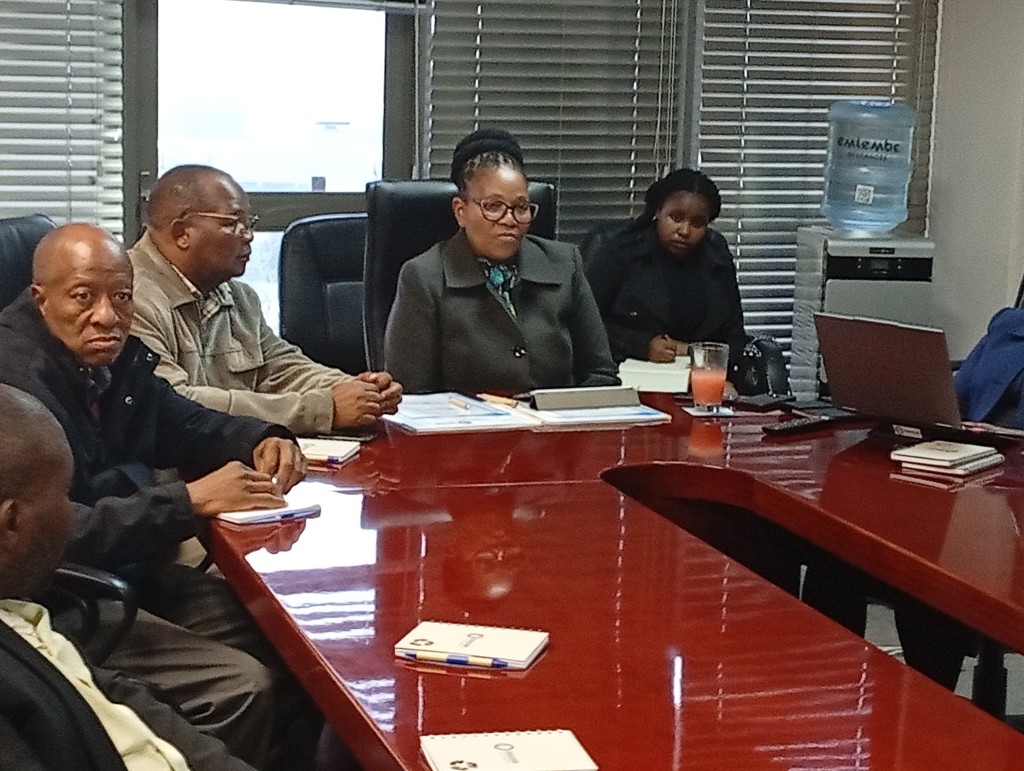
Speaking during the signing ceremony, Ombudsman of Financial Services Nondumiso Simelane said the agreement represented far more than a procedural exercise, describing it as a renewed commitment to ensuring that financial consumer protection reaches every segment of society.
“Today marks a significant milestone for the Office of the Ombudsman of Financial Services. As we gather to re-sign this Memorandum of Understanding with the Federation of Organizations for Persons with Disabilities in Eswatini, we are not just signing a legal document. We are renewing a promise—a promise of access to consumer protection through a free and less formal dispute resolution process. Financial literacy in Eswatini belongs to every person, without exception,” she said.
Simelane noted that the effectiveness of consumer protection depends not only on the existence of legal rights but also on whether those rights can be exercised in practice. She acknowledged that conventional financial education programmes and complaint handling processes have historically failed to accommodate many people living with disabilities, limiting their ability to participate fully in the financial system.
“At the core of the OFS mandate is a simple truth: every financial services consumer deserves or has a right to protection through a fair hearing. But such a right is only real if it is accessible. For too long, traditional financial systems and consumer education have inadvertently left behind our brothers and sisters with disabilities. If a consumer cannot read our educational materials, or if our complaint processes do not accommodate their special needs, then we are not fully fulfilling our mandate,” she said.
The Ombudsman stressed that genuine financial inclusion requires institutions to move beyond universal approaches that assume all consumers have identical needs. Instead, she said, the renewed agreement commits the OFS to introducing practical measures that improve accessibility, including translating educational and informational material into Braille, distributing consumer education resources through FODSWA’s nationwide networks, and continuously identifying opportunities to remove physical, digital, and communication barriers that prevent consumers from accessing financial services and complaint mechanisms. According to Simelane, these initiatives are intended to strengthen consumer confidence while reducing the vulnerability of persons with disabilities to financial exploitation and unfair treatment. She argued that empowering consumers with financial knowledge ultimately contributes to a healthier financial ecosystem where individuals are able to make informed decisions and participate more meaningfully in economic activity.
“When we empower a member of FODSWA with consumer awareness, we protect them from financial exploitation; we help them make informed decisions and build their confidence to fully participate in our economy,” she said.
FODSWA Acting Chairperson Elliot Shongwe said the renewed partnership establishes a stronger institutional framework for fairness within the financial services sector while recognizing that financial disputes can be intimidating for many consumers, particularly those living with disabilities.
“The signing of the Memorandum of Understanding represents a powerful alignment of purpose. As FODSWA, we realize that an equitable financial ecosystem relies heavily on the consumer and provider having trusted relationships,” Shongwe said.

He added that the federation would work alongside the OFS to strengthen awareness of financial rights while supporting efforts to make dispute resolution processes easier to understand and access. “We are building a structural framework where fairness is not just an idea but a day-to-day operating reality. The complexity of financial disputes is often straining to the ordinary citizen, but through this MoU we pledge to help bridge the gap, ensuring that dispute resolution mechanisms are less formal and easy to grasp for everyone regardless of their background,” he said.
Shongwe further said the partnership would focus on educating FODSWA’s constituencies while promoting good practice across the financial services industry. He also welcomed the Ombudsman’s commitment to impartiality in resolving complaints and said protecting the privacy of persons living with disabilities would remain a priority under the partnership.
From a financial sector perspective, the renewed agreement reinforces the growing importance of consumer-centric regulation as Eswatini continues to pursue broader financial inclusion objectives. Accessible financial literacy programmes, inclusive complaint handling systems, and trusted dispute resolution mechanisms contribute to greater confidence in formal financial institutions, helping to reduce exclusion while supporting sustainable participation in banking, insurance, and other financial services. By embedding accessibility into consumer protection frameworks, the OFS and FODSWA are positioning financial inclusion as both a social responsibility and an essential component of a resilient and equitable financial system.