






By: Nkosiyabusa Nsibande
Corporate investment in sport continues to emerge as an important driver of economic activity in Eswatini, with FNB Eswatini announcing a E2.5 million sponsorship package for this year’s FNB Eswatini Challenge. The tournament will be held at the Ezulwini Country Club from 13 to 15 August, bringing together leading professional golfers for three days of competition while creating business opportunities that extend well beyond the fairways.
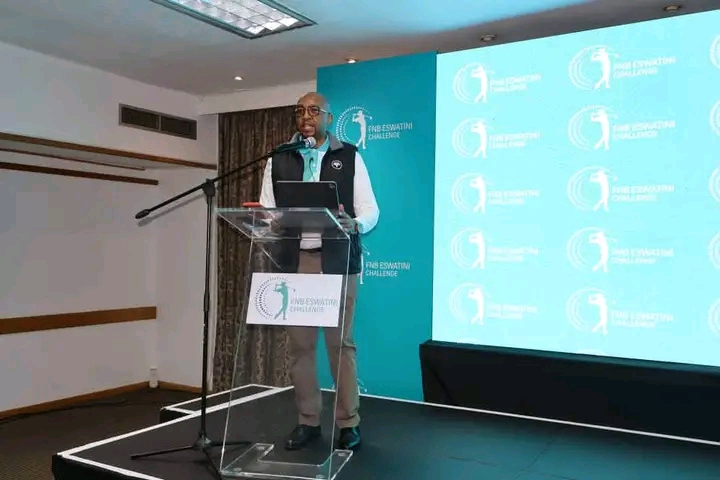
The sponsorship was unveiled by Thokozani ‘TK’ Dlamini, who reaffirmed the bank’s commitment to investing in initiatives that contribute to national development through sport, tourism, and economic participation.
“We are proud to commit E2.5 million towards this year’s FNB Eswatini Challenge. This tournament has become an important platform for showcasing Eswatini while creating opportunities for athletes, businesses, and communities,” Dlamini said.
While the tournament will attract elite golfing talent, its economic significance lies in the broader value chain it activates. Major sporting events generate spending across accommodation establishments, restaurants, transport operators, retailers, and small businesses that provide goods and services throughout the tournament period. Visiting players, officials, sponsors, and spectators contribute directly to local economic activity, creating additional revenue streams for businesses operating within the hospitality and tourism sectors.
For FNB Eswatini, the sponsorship also represents a strategic business investment rather than a conventional marketing exercise. Financial institutions increasingly use high-profile sporting platforms to strengthen brand equity, deepen customer engagement, and reinforce long-term relationships with corporate clients and affluent consumers. Golf, in particular, provides an environment where business leaders, investors, and decision-makers interact, making such tournaments valuable networking platforms alongside their sporting appeal.
The investment also reflects the increasing role of environmental, Social, and governance (ESG) principles within corporate strategy. Supporting sports enables companies to demonstrate their commitment to community development while contributing to sectors capable of generating measurable economic returns. As businesses place greater emphasis on sustainable social investment, sponsorships of this nature are increasingly evaluated not only by media exposure but also by their wider contribution to economic growth.

“The FNB Eswatini Challenge continues to be an important event on the country’s sporting calendar, and we remain committed to supporting initiatives that create lasting value for Eswatini,” Dlamini said.
The tournament is expected to enhance Eswatini’s profile as a destination capable of hosting international-standard sporting events. Successful delivery of competitions of this scale strengthens investor confidence in the country’s event-hosting capabilities while supporting the government’s broader ambitions to expand sports tourism as a contributor to economic growth.
As competition begins at the Ezulwini Country Club in August, the E2.5 million commitment underscores a wider trend in corporate Eswatini: strategic sponsorship is increasingly being viewed as an investment in economic ecosystems rather than simply an expenditure on advertising. For the banking sector, supporting flagship national events has become another avenue for driving economic participation while reinforcing corporate leadership in national development.

Other Articles

The Economics of Success: Money, Habits, and Growth