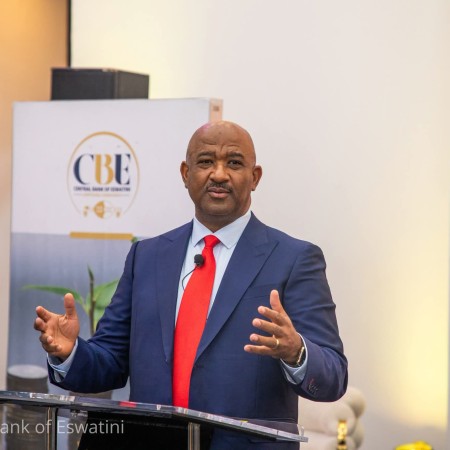







By: Owen N. Tsabedze
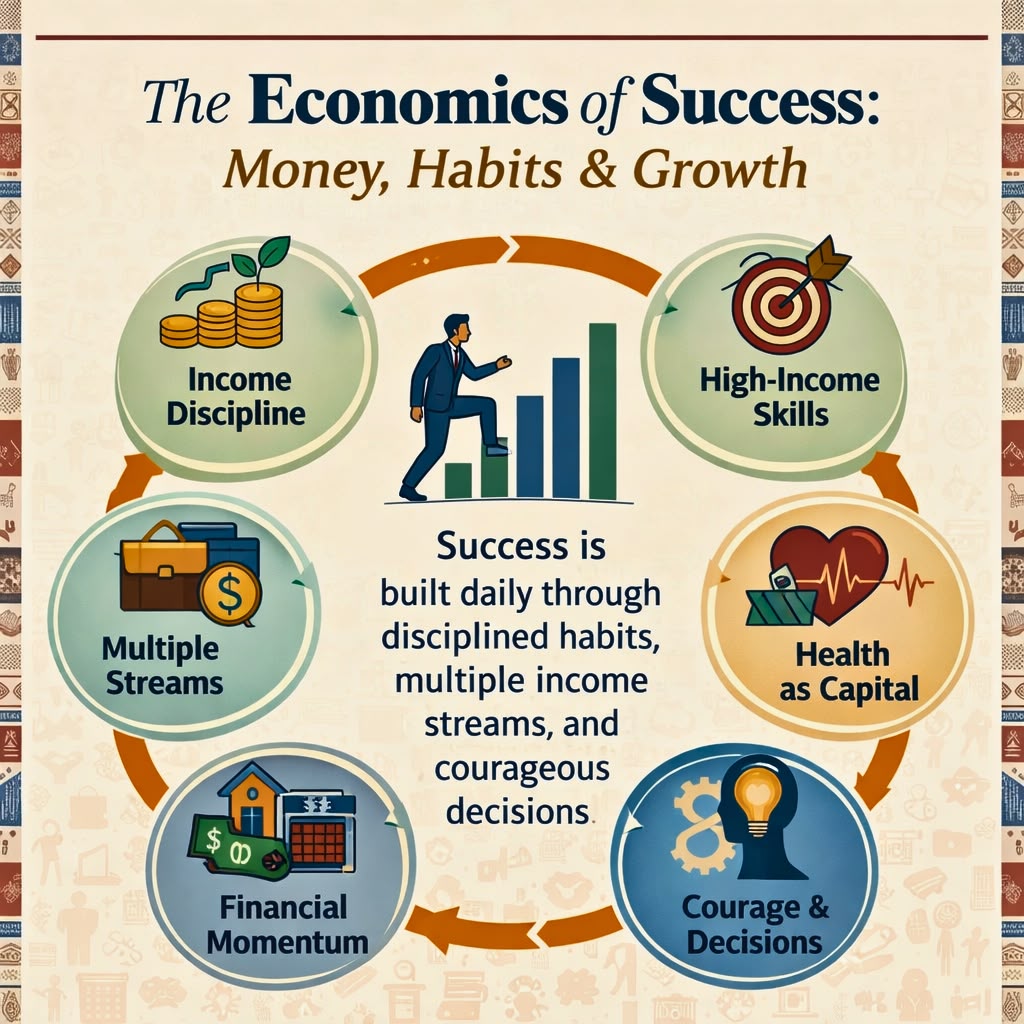
Financial stability and personal success are not accidents. They result from deliberate choices, disciplined habits, and courageous decisions. In 2026, surveys show 88 percent of adults worldwide report financial stress, while in Eswatini, 34.2 percent of the labor force is unemployed, and 53.5 percent of households live below the lower-middle-income poverty line. The truth is simple: your future is built daily, through the way you manage money, time, health, and character.
1. Income Discipline
Multiply every time your income increases. The quickest way to destroy financial progress is to raise expenses with every salary increment. Upgrade your assets first. Quiet financial discipline will always beat loud financial insecurity.
• Eswatini context: Inflation slowed to 1.6 percent in March 2026, down from 3.8 percent the year before. Disciplined households can preserve purchasing power by investing rather than inflating lifestyles.
2. Master High-Income Skills
Financial stability requires more than waiting for annual salary increments. Master one high-income skill: selling, negotiating, or creating value. Selling is not just for business owners; it is the skill that closes deals, attracts clients, and creates opportunities.
• Global insight: High-income skills such as digital marketing, coding, and financial consulting are projected to grow by 15 to 20 percent annually in demand.
3. Build Multiple Income Streams
One income is survival; and multiple incomes create stability. Use your salary to fund another income stream, investments, rental property, digital products, or a business. Own something that pays you monthly, so you do not rely solely on money that comes when you work.
• Eswatini reality: With unemployment at 34.2 percent, relying on one salary is risky. Diversification is survival.
4. Financial Momentum
Save enough to cover at least six months of essential expenses. This cushion gives freedom to make wise decisions instead of desperate ones.
• Global data: Only 47 percent of households worldwide can cover a $1,000 emergency expense.
• Eswatini households: Many rely on SACCOs and stokvels, but savings rates remain low due to high dependency ratios.
5. Protect Your Reputation
A trusted name attracts opportunities that money cannot buy. Your character is a financial asset. Guard it carefully. Reputation compounds faster than interest.
6. Time Economics
Most people do not lose their future between 9 a.m. and 5 p.m. They lose it between 6 p.m. and bedtime. Evenings decide tomorrow. Stay active for 30 to 60 minutes after work and invest that time in productive activities that can increase your income. One year of consistent evening engagement can transform your financial life.
• Global time-use studies: Adults spend nearly three hours daily on leisure and media consumption. Redirecting even one hour toward productive work can transform financial outcomes.
7. Habits Versus Excuses
Excuses protect pride but destroy futures. “I will start next month” or “I am too busy” are costly lies. Progress begins the moment excuses end. Every successful person reaches a point where they stop explaining why they cannot and start acting on why they must.
8. Health as Capital
Many sacrifice health by chasing success. Poor sleep, a bad diet, and constant stress eventually demand repayment. Without good health, success becomes harder to enjoy. Your body carries your dreams; take care of it before it demands your full attention.
• Eswatini healthcare: Out-of-pocket expenditure accounts for 10.4 percent of total health spending, making prevention far cheaper than a cure.
9. Fear and Decision-Making
Fear of failure, rejection, or criticism has buried more dreams than lack of talent ever has. Courage does not mean fear disappears; it means refusing to let fear author your life.
10. Consumption Versus Creation
Hours disappear, scrolling, binge-watching, or gossiping. Consumption feels relaxing but steals ambition. Those who change their lives spend more time creating value than consuming distractions.
11. Environmental Economics
Toxic friendships, unhealthy relationships, and negative workplaces convince people that the average is acceptable. Breakthroughs often begin with changing your environment.
12. Comparison Trap
Comparison blinds progress. Every journey is unique. Focus on becoming better than yesterday instead of trying to become someone else today.
13. The Show Lifestyle
Many remain financially strapped because they care more about looking wealthy than becoming wealthy. Borrowed money creates stress, not success. Quiet financial discipline beats performative insecurity.
• Eswatini note: With GDP per capita at US$4,927 (≈E92,000), chasing appearances instead of building assets keeps households trapped in debt.
14. Learning from Mistakes
Mistakes are not the problem, repetition is. Every setback contains a lesson, but only if you are humble enough to learn. Pride keeps people stuck; and wisdom moves them forward.
15. The Myth of Perfect Timing
Waiting for the “perfect time” kills dreams. Success belongs to those who begin despite uncertainty, not after it disappears.
Case Study: Nomsa’s Household
Nomsa, a 38‑year‑old mother of two in Mbabane, works as a bank clerk earning E15,000 per month. Her husband, a mechanic, now earns a steady E20,000 per month, while Nomsa’s side business selling handmade crafts adds another E3,000 monthly. Together, their household income totals E38,000 per month.
To protect their household, they joined a SACCO, saving E2,500 monthly. In addition, they contribute 10 percent of their income (E3,800) each month toward an emergency fund. Over two years, this disciplined saving will grow to about E91,200, equal to three months of living expenses.
When her husband fell ill last year, their medical aid was exhausted, but the emergency fund stepped in to cover the remaining bills. Without‑of‑pocket healthcare costs in Eswatini accounting for 10.4 percent of household spending, this cushion prevented debt and financial distress.
Nomsa’s story shows how multiple income streams, disciplined savings, and health awareness can shield a family from financial shocks. It is a living example of the principles outlined in this article—proof that success is built daily, even in challenging economic conditions.
Final Thought
Your greatest competition is not another person. It is the version of yourself that keeps choosing comfort over growth. Beat that man, and there is very little in this world that can stop you. Victories are won within long before they are seen outside.