





By: Nkosiyabusa Nsibande
Eswatini’s search for new sources of growth, employment and entrepreneurship is increasingly extending beyond traditional sectors and into the digital economy, where policymakers believe content creators could become a new generation of entrepreneurs, exporters and small-business owners.
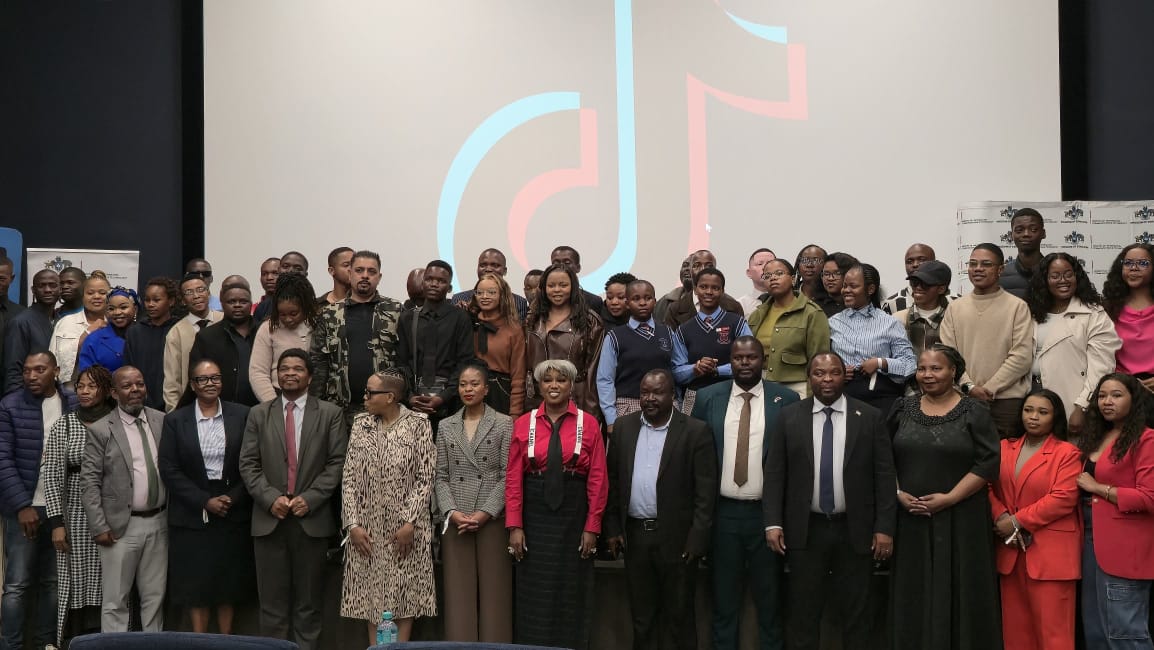
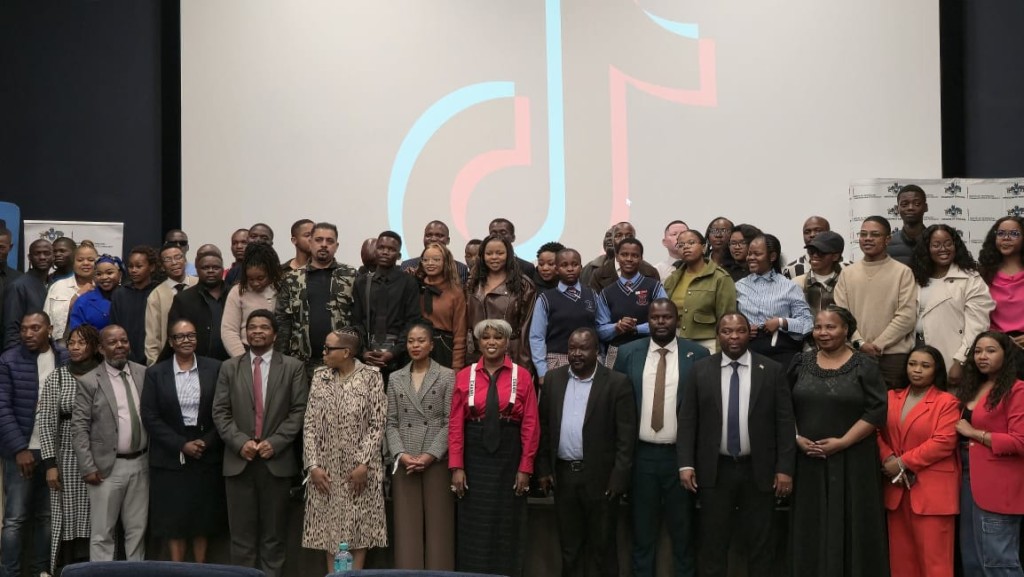
That vision was evident at the TikTok Content Monetization Workshop held in Ezulwini, where government officials, regulators, digital creators and private-sector stakeholders gathered to discuss how emaSwati can capture greater value from the rapidly expanding global creator economy. While the workshop focused on content monetization, the broader discussion revealed a growing policy recognition that digital entrepreneurship could become an important contributor to job creation, income generation and economic diversification.
At the centre of the conversation was a fundamental shift in how content creation is being viewed. Once regarded primarily as a form of entertainment or social engagement, content creation is increasingly being recognized as a legitimate economic activity capable of generating income, supporting businesses and creating employment opportunities.
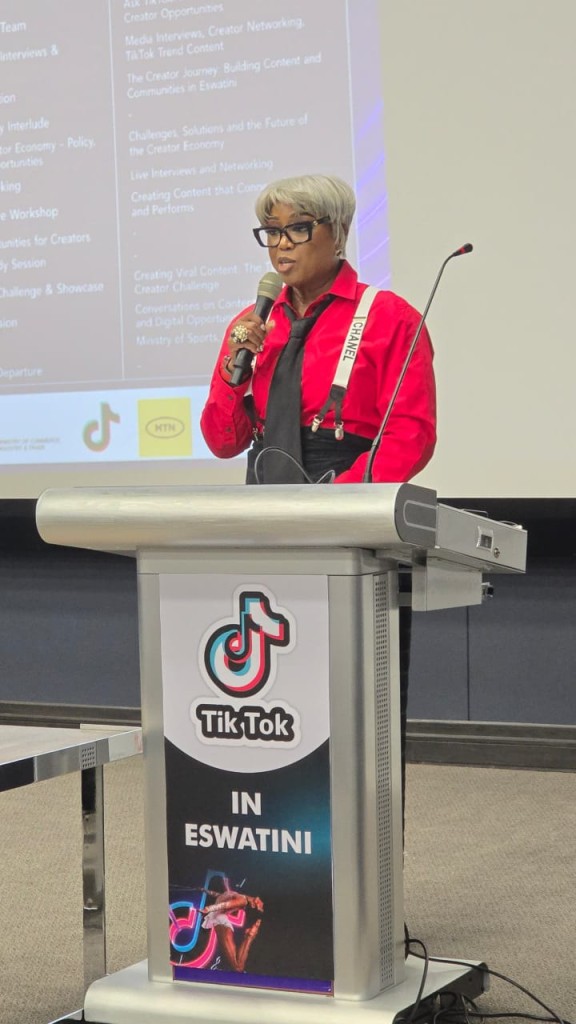
Addressing participants, Principal Secretary in the Ministry of Information, Communications and Technology, Ntokozo Dlamini, argued that technological advancements have fundamentally altered the opportunities available to young people. He described the smartphone as “the most powerful economic asset any generation has ever known,” noting that thousands of young emaSwati are already using mobile technology, connectivity and creativity to reach international audiences, build businesses and showcase Eswatini to the world.
His remarks reflect a broader reality emerging across global markets. Digital platforms have lowered many of the traditional barriers to entrepreneurship by allowing individuals to create products, build audiences and generate revenue without the significant capital investments typically associated with conventional businesses. For a country grappling with youth unemployment, this presents a potentially scalable pathway into self-employment, enterprise development and income generation.
Dlamini said government has already established a Content Monetization Task Team comprising stakeholders from government, the financial sector, telecommunications companies, regulators and the private sector. The initiative is intended to address barriers that continue to prevent local creators from fully participating in the global digital economy and earning income through international digital platforms.
The intervention acknowledges growing frustration among creators who have successfully built online audiences but remain unable to access many of the monetization opportunities available in other markets. Addressing the issue directly, Dlamini acknowledged that one of the most pressing questions among creators is when monetization will become a practical reality in Eswatini.
“I want to assure you that this is a priority for Government,” he said, adding that authorities are engaging partners, exploring solutions and working to create an environment in which creators can transform their passion into sustainable income streams. While he cautioned that meaningful progress would require collaboration, policy development and the establishment of appropriate systems, his remarks represent one of the clearest indications yet that government views creator monetization as an economic development issue rather than simply a platform-specific concern.
The policy focus is underpinned by growing digital adoption across the country. According to Dlamini, internet penetration in Eswatini has reached nearly 58 percent, while mobile connectivity stands at approximately 139 percent of the population. These figures suggest that a significant proportion of the population already possesses the basic infrastructure required to participate in online commerce, digital entrepreneurship and emerging forms of economic activity.
Government’s interest is also being driven by the scale of the global opportunity. Dlamini pointed to estimates valuing the creator economy at more than US$250 billion, noting that brands around the world are increasingly directing advertising and marketing budgets towards digital creators and online communities. In this environment, he argued, content creation should no longer be viewed solely through a social or entertainment lens.
“This means that content creation has simply moved from being just entertainment. It is business,” he said.
The statement captures a growing understanding among policymakers that content creation can generate value far beyond individual earnings. Digital content has the potential to promote tourism, showcase local products, elevate cultural exports and create new channels through which Eswatini can engage international markets.
Dlamini emphasized this point by noting that every creator who earns income through digital platforms is effectively participating in the global economy. He further argued that content showcasing the country’s attractions, culture and talent serves as a powerful form of international marketing, positioning creators as informal ambassadors capable of expanding Eswatini’s visibility beyond its borders.
The economic potential identified by government was echoed by Acting Chief Executive Officer of the Eswatini Communications Commission (ESCCOM), Mvilawemphi Dlamini, who linked the growth of the creator economy directly to the country’s employment challenge.
Speaking at the workshop, he said Eswatini must continue identifying and unlocking new economic opportunities capable of improving livelihoods and creating sustainable employment. He argued that digital platforms have emerged as one such opportunity, enabling millions of people worldwide to earn income through content creation, brand partnerships, affiliate marketing, live streaming and e-commerce.
“Content creation is no longer simply about entertainment. It is a legitimate economic activity capable of generating income, creating jobs, promoting businesses and contributing meaningfully to economic growth,” he said.
The significance of that statement extends beyond the creator economy itself. It reflects an evolving regulatory perspective in which creators are increasingly viewed as economic participants whose activities contribute to enterprise development, job creation and national economic output.
However, both officials acknowledged that meaningful participation in the creator economy depends heavily on access to reliable and affordable digital infrastructure.
According to ESCCOM, mobile penetration has surpassed 149 subscriptions per 100 inhabitants, while continued investments in fourth-generation networks and selected fifth-generation deployments are expanding digital capacity across the country. These developments are particularly important for creators, whose ability to produce, distribute and monetize content depends largely on the quality and reliability of connectivity.
For creators, stronger networks do more than improve communication. They enable higher-quality content production, facilitate real-time audience engagement, support live-streaming activities and provide access to increasingly sophisticated digital tools and global marketplaces.
As Mvilawemphi Dlamini observed, “stronger networks translate directly into greater opportunities to compete in the global digital marketplace.”
Yet infrastructure alone is unlikely to unlock the sector’s full potential. ESCCOM stressed that affordability remains equally important, particularly in an environment where data costs can determine whether aspiring creators are able to consistently produce and distribute content. The regulator said it continues to work with industry stakeholders to promote affordable access to communications services and expand participation in digital platforms.
Beyond infrastructure and monetization, the workshop also sought to broaden perceptions of who can benefit from the creator economy. While influencer culture often dominates public discussions, regulators emphasized that future opportunities extend well beyond entertainment. Educators, entrepreneurs, professionals, innovators and subject-matter experts all have the potential to build audiences, share knowledge, market services and create economic value through digital platforms.
For Eswatini, the creator economy represents more than a social media trend. It is increasingly being viewed as a new category of enterprise development capable of producing exportable digital products, services and intellectual property. The sector offers an opportunity to leverage creativity and technology to create businesses that can reach global markets without the logistical constraints associated with traditional exports.
The challenge now lies in translating policy commitments into practical outcomes. While government, regulators and industry stakeholders appear aligned on the opportunity, the success of their efforts will ultimately be measured by whether local creators are able to convert digital influence into sustainable businesses and long-term economic value.
If the barriers to monetization are successfully addressed, the creator economy could emerge as one of the country’s most accessible pathways into entrepreneurship, particularly for a generation that is already connected, digitally aware and eager to participate in the global marketplace.