







By: Nkosiyabusa Nsibande
For many small businesses in Eswatini, the challenge has never been producing goods. The real obstacle has been convincing formal retailers, wholesalers, and consumers that those products consistently meet recognized quality and safety standards. Without certification, even well-made products often remain confined to informal markets where growth opportunities are limited and profit margins are thin. This quality gap has prevented countless entrepreneurs from supplying supermarkets, institutional buyers, and export markets despite a strong demand for locally manufactured goods.
It is this structural challenge that the Ministry of Commerce, Industry, and Trade is attempting to solve through the Ingelo Certification Scheme, whose latest milestone saw the official launch and handover of production cottages in Lugongolweni. Rather than viewing the project simply as another infrastructure program, the government is positioning it as an investment in productive capacity, enterprise competitiveness, and long-term industrial development.
Speaking during the launch, Minister of Commerce, Industry, and Trade Manqoba Khumalo said the initiative was established with a clear commercial objective. “Its purpose was clear: to support MSMEs to meet quality and standards requirements, improve their production systems, and access formal markets,” he said.

That statement reflects an important shift in enterprise development policy. Instead of focusing exclusively on financing small businesses, Government is increasingly investing in the systems that determine whether businesses can compete in high-value markets. For manufacturers, certification has become as valuable as access to capital because retailers and institutional buyers are demanding evidence that products are manufactured under controlled, hygienic, and traceable conditions.
The newly constructed production cottages are therefore designed to function in commercial production environments rather than simple workspaces. They provide entrepreneurs with facilities where they can strengthen production processes, improve hygiene standards, implement quality controls, enhance packaging, and develop traceability systems required by modern retail supply chains. According to the Minister, these are precisely the standards expected by both retailers and consumers.
For financial markets, this has broader implications than product quality alone. Businesses operating under recognized quality management systems generally present lower operational risks, experience fewer product failures, and are better positioned to secure long-term supply contracts. Such characteristics improve the commercial viability of MSMEs, making them more attractive to investors, lenders, and development finance institutions.
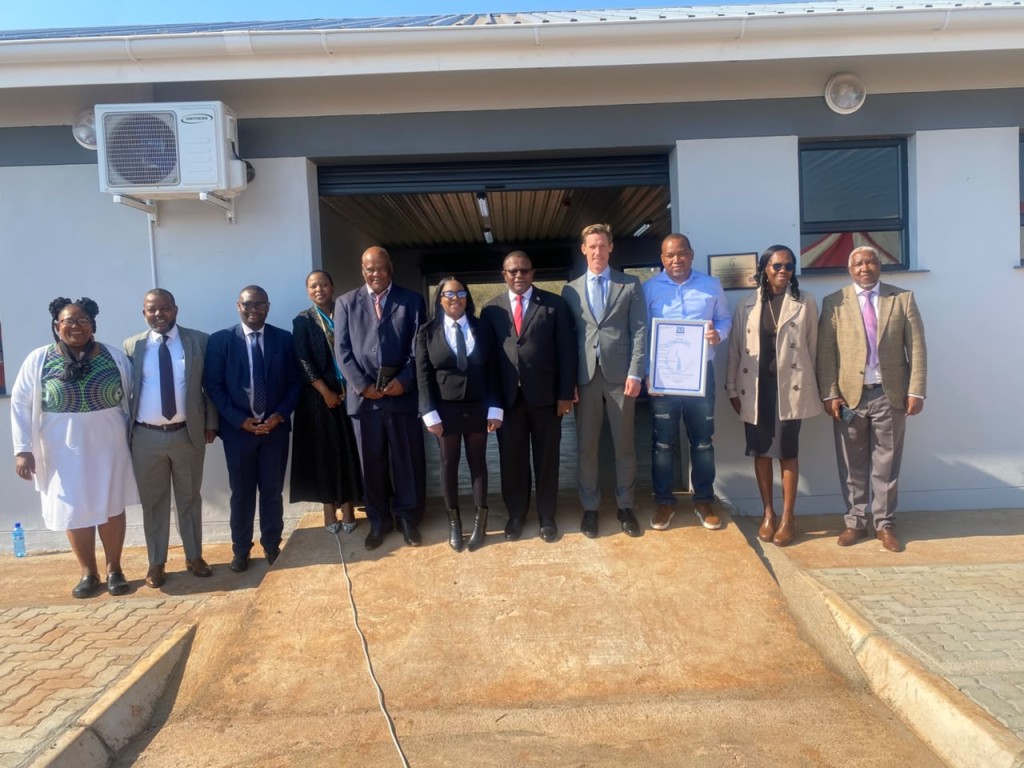
Minister Khumalo cautioned that certification should not be viewed as a once-off achievement but as an ongoing business discipline. “The Ingelo approach recognizes that certification is not an event but a process,” he said, adding that entrepreneurs require technical guidance, appropriate facilities, training, and sound management systems before they can consistently produce market-ready goods.
An equally significant feature of the program is its rotating production model. Rather than allocating facilities permanently to a single business, each beneficiary will occupy the production cottage for a specified period before another qualifying enterprise is selected. This allows one public investment to benefit multiple entrepreneurs over time while expanding the number of certified businesses emerging from the same community.
From an economic development perspective, the rotation model improves the return on public infrastructure investment. Instead of creating isolated success stories, Government aims to establish a continuous pipeline of enterprises capable of entering formal markets, increasing productive capacity across rural communities.

The Minister also challenged the private sector to play a greater role in strengthening domestic value chains by purchasing certified local products. “When we create space on our shelves for quality local products, we support jobs, households, innovation, and community-based economic growth. Local enterprise can only grow when production support is matched by market access,” he said.
That message places responsibility not only on entrepreneurs but also on retailers, distributors, and procurement managers. Certification alone cannot stimulate industrial growth if locally manufactured products continue to struggle for shelf space against imported alternatives. Expanding market access remains essential if Eswatini is to keep more value within its domestic economy while reducing dependence on imports.
The initiative has also been strengthened through collaboration between Government institutions and international development partners. The Eswatini Standards Authority (ESWASA) is leading quality assurance and certification efforts, while SEDCO continues providing enterprise development support. The United Nations Development Programme (UNDP) has complemented these efforts by financing technical expertise that assists entrepreneurs in establishing quality management systems and preparing for certification.
The practical outcomes of the program are already becoming visible. During the ceremony, Government officially handed over the first production cottage to Titselo Temaswati, owned by dried fruit producer Lungelo Maziya. The event also marked awarding the first Ingelo Certification to Tsawela Honey after the company successfully implemented a quality management system, documented its production processes, and passed laboratory testing confirming that its honey complied with recognized safety standards for human consumption.
For Eswatini’s industrial strategy, these first beneficiaries represent more than individual business success. They provide proof that community-based enterprises can transition from informal production into standards-driven manufacturing capable of supplying formal retail markets. Minister Khumalo believes that this transformation supports wider national economic priorities.
“The Ingelo Certification Scheme directly supports Government’s priorities on industrialization, MSME development, job creation, and inclusive economic growth. By investing in standards-based production at the community level, we are laying a stronger foundation for local products to compete in formal markets and, in time, beyond our borders,” he said.
For Eswatini’s economy, the long-term significance of the program lies not in the construction of production cottages themselves, but in creating a stronger ecosystem where quality, certification, and market confidence become catalysts for enterprise growth. If more MSMEs successfully obtain recognized certification and secure sustainable retail partnerships, the country stands to benefit from stronger local manufacturing, broader employment opportunities, and a more resilient industrial base capable of competing both domestically and internationally.