






By: Nkosiyabusa Nsibande
The national consultation process to define the Made in Eswatini® certification has formally concluded, marking a key step toward establishing a structured framework that will determine how local origin, value addition, and economic contribution are measured within the Kingdom’s productive economy.
The consultation, conducted between 5 May and 25 June 2026, attracted participation from 312 stakeholders, including consumers, manufacturers, producers, retailers, policymakers, entrepreneurs, development partners, media representatives, and broader business community actors. While the number reflects a relatively contained consultation sample, its significance lies in its cross-sector composition, designed to capture both supply-side production realities and demand-side expectations regarding what constitutes locally made goods and services in Eswatini.
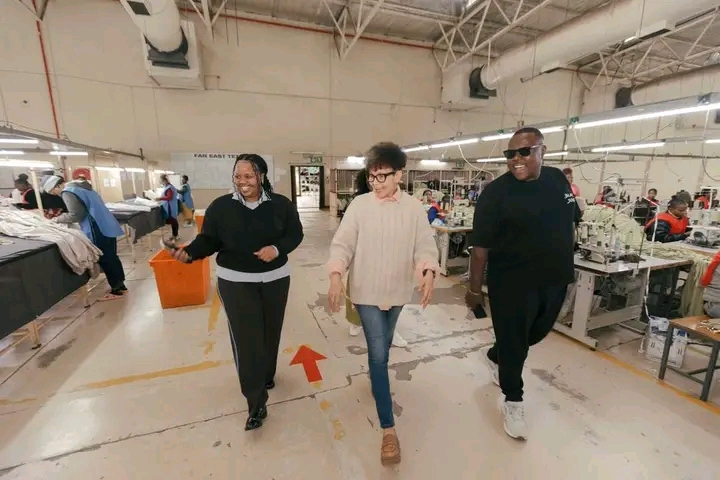
Following the closure of the consultation, Her Royal Highness Princess Sakhizwe embarked on a targeted consultative tour of key industrial and manufacturing sites, including Ngwenya Glass, Lemanti Manufacturers, Far East Textiles, and Exipro. These engagements provided direct exposure to production processes, labor conditions, supply chain structures, innovation capacity, and skills development dynamics within Eswatini’s industrial base, grounding the policy discussion in operational realities rather than theoretical definitions.

The emerging framework represents a notable shift in policy orientation, moving beyond a narrow geographic interpretation of origin toward a broader value-based certification model. Under the proposed definition, eligibility for the Made in Eswatini® mark will incorporate multiple economic indicators, including employment creation, skills development, manufacturing capability, ethical business practices, innovation input, and measurable local value contribution. This approach positions the certification not merely as a label of origin, but as an indicator of economic participation within the domestic production ecosystem.
Speaking on behalf of A Peculiar People, Chairman Melusi Zox Dlamini emphasized that the consultation process confirmed the need for a definition anchored in tangible economic contribution rather than symbolic identification. “Our engagements across the country have reaffirmed that Made in Eswatini® must stand for genuine local economic contribution. It should recognize businesses that create jobs, invest in local skills, uphold ethical and sustainable business practices, and contribute meaningfully to Eswatini’s productive capacity,” Dlamini said.
He further noted that the framework has been intentionally designed to reflect the diversity of Eswatini’s economy, spanning manufacturing, agriculture, tourism, textiles, hospitality, technology, crafts, food production, and small enterprises. This inclusivity is particularly significant in a context where small and medium-sized enterprises form a substantial share of economic activity, often operating outside formal certification systems despite their contribution to employment and local value chains.
A key structural feature of the proposed framework is the introduction of a four-tier classification system. This will distinguish between products that are fully made in Eswatini, goods that are substantially transformed or value-added locally, services and experiences primarily delivered within the country, and imported goods that are only repackaged or branded locally and therefore excluded from certification. The classification system introduces a more granular approach to defining local content, with potential implications for procurement policy, retail labeling, and consumer decision-making.
Her Royal Highness Princess Sakhizwe underscored the importance of credibility and inclusivity in the framework’s design, noting that the definition must reflect “the value created by our entrepreneurs towards the local economy.” Her remarks reflect a central policy balancing act between ensuring broad participation across sectors while maintaining strict standards that preserve the integrity of the certification mark.
The consultation findings are scheduled for formal publication on 10 July 2026, which will provide a consolidated analysis of stakeholder inputs and inform the finalization of the definition framework. This rapid sequencing between consultation closure and publication suggests an accelerated policy process aimed at maintaining stakeholder engagement momentum while transitioning toward implementation.
From an economic perspective, the Made in Eswatini® initiative carries implications beyond branding, potentially functioning as a market signaling mechanism that influences consumer behavior, procurement preferences, and business competitiveness. However, its long-term impact will depend on enforcement strength, verification systems, and the ability of local enterprises, particularly SMEs, to meet certification requirements without undue compliance burdens.
With input from 312 stakeholders and direct validation through four industrial site visits, the framework is now entering its final design phase, shifting the national conversation from what qualifies as “Made in Eswatini” toward how economic value created within the country will be measured, recognized, and protected in practice.