





By: Nkosiyabusa Nsibande
Eswatini’s decision to postpone the 2026 Eswatini Investment Conference has temporarily interrupted what had become one of the country’s biggest investment promotion exercises of the year. While the announcement may disappoint businesses that had already planned their participation, the postponement is being presented as a scheduling adjustment rather than a change in the country’s economic priorities.
The Ministry of Commerce, Industry, and Trade announced that the conference, which had been scheduled for 29 July 2026, has been postponed. A new date will be communicated later, with the government apologising for the inconvenience while thanking investors, business leaders, and stakeholders for their continued commitment to investing in the Kingdom.
The significance lies beyond the revised calendar. Investment conferences are not networking events; they are platforms through which governments compete for scarce international capital. Their success is measured by the quality of investors they attract, the investment commitments secured, and the long-term commercial relationships they establish.
The postponement comes after months of extensive preparations by the Eswatini Investment Promotion Authority (EIPA), which had already embarked on regional investment roadshows and international promotional campaigns designed to attract investors from across Southern Africa and beyond. Recent engagements in Zimbabwe, among other markets, were intended to build momentum towards what was expected to be a significantly larger conference than last year’s edition.
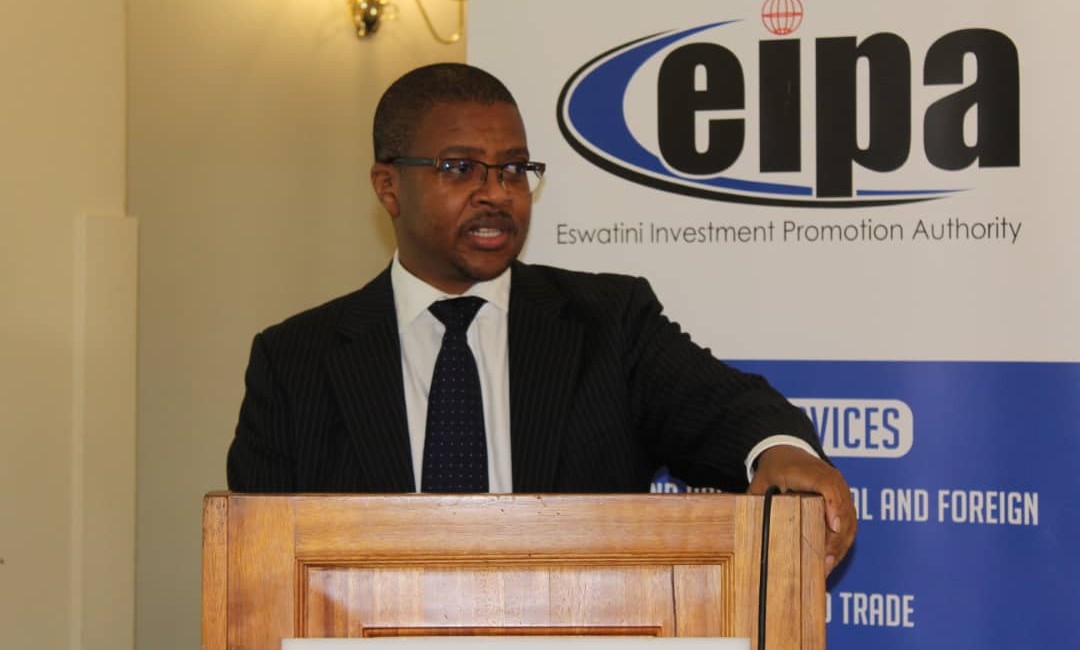
EIPA Chief Executive Officer Sibani Mngomezulu has consistently positioned the conference as more than a ceremonial gathering. During previous promotional activities, he described it as “a platform where vision meets opportunity and ideas are transformed into reality,” emphasising its role in connecting investors with commercially viable projects across priority sectors of the economy.

Earlier this year, Mngomezulu also explained why organisers had already adjusted the conference schedule once before, noting that the event had been elevated to Head of State level. “The Eswatini Investment Conference will now be held from July 29 to 31, 2026. This adjustment allows us to better position the conference for maximum impact, improved coordination, and greater participation from our international partners and investors.”
He further explained that the elevation of the conference reflected its growing strategic importance to the country’s investment agenda, saying the organisers had received notification that the event would be held at the level of His Majesty King Mswati III, requiring adjustments to the programme and protocol arrangements.
From a financial perspective, the postponement is unlikely to materially alter Eswatini’s investment proposition. Investors generally assess countries on factors such as macroeconomic stability, policy consistency, regulatory certainty, infrastructure, market access, and expected returns. While conferences provide visibility and facilitate negotiations, investment decisions are ultimately driven by fundamentals rather than event schedules.

Indeed, EIPA has repeatedly stated that this year’s conference was designed to improve on the inaugural edition by addressing logistical shortcomings while attracting a broader pool of institutional investors, financiers, development partners, and multinational corporations. Lessons from the first conference informed expanded planning, with organizers promising a larger and better coordinated investment platform.
The timing of the postponement nevertheless creates practical implications for businesses. Companies that had budgeted for exhibition space, international travel, accommodation, and business development activities may now incur additional costs associated with revised travel arrangements. Foreign delegates who had aligned regional investment visits around the conference will also need certainty on the new dates to maintain their participation schedules.
However, the government’s communication has sought to reassure investors that the conference remains firmly on the national economic agenda. Rather than signaling diminished commitment, the message emphasises continued engagement with both domestic and international investors while preparations continue for the rescheduled event.
That reassurance matters because Eswatini has increasingly positioned investment promotion as a central pillar of its economic growth strategy. Recent messaging from EIPA has highlighted ambitions to build on the strong investment commitments announced during the inaugural conference while attracting additional capital into manufacturing, agribusiness, renewable energy, tourism, mining, logistics, and technology. Organisers have previously indicated that the conference forms part of the government’s broader strategy to accelerate industrialisation, create employment, and expand private sector investment.
For the financial community, the postponement therefore changes the timing, but not necessarily the investment case. If anything, the additional preparation period could provide organisers with an opportunity to strengthen investor participation, finalise more bankable projects, and ensure that when the conference eventually takes place, it delivers stronger commercial outcomes.
Ultimately, international investors rarely judge a destination by whether a conference proceeds exactly as scheduled. They judge it by whether governments maintain policy consistency, honor investment commitments, and create an environment where capital can generate sustainable returns. The coming weeks will therefore be less about the revised conference date and more about whether Eswatini continues demonstrating that its investment pipeline remains active, credible, and open for business.