





By: Nkosiyabusa Nsibande
For many small businesses, the greatest financial risk does not begin with a lack of revenue. It can begin with how the money generated by the business is managed. Mixing personal and business funds, withdrawing cash without a defined remuneration structure, and treating turnover as disposable income can weaken an enterprise long before its owner recognizes that the business itself is financially distressed. These are among the practical financial issues that the LaunchPad Business Conference intends to bring into the entrepreneurship conversation when it takes place in Eswatini.
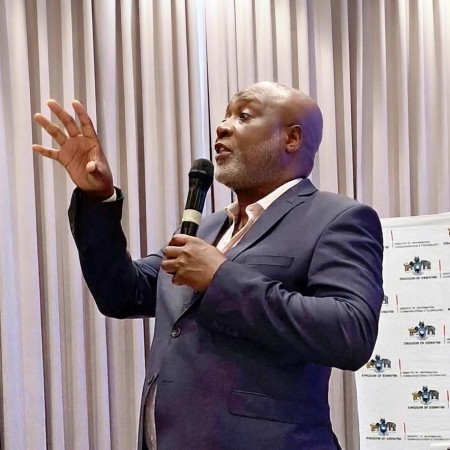
Vivianne Dumas, director of the LaunchPad Business Conference, said the program has deliberately been designed to extend beyond conventional business motivation by addressing the financial behavior of entrepreneurs and professionals. “Financial literacy is right up there,” Dumas said, explaining that participants will be encouraged to understand the importance of separating business money from personal money. The program will teach entrepreneurs that “you do business with business and then you do personal with personal,” while also encouraging business owners to pay themselves rather than repeatedly drawing money directly from the business.
That distinction is fundamental to understanding the financial health of an enterprise. A business may appear busy because money is continuously entering its bank account, but high sales do not necessarily mean high profitability. Once personal withdrawals, operating expenses, debt repayments, taxes, and reinvestment requirements are accounted for, the amount genuinely available to the owner can be substantially lower than the headline revenue suggests. Establishing clear boundaries between the owner and the enterprise allows financial performance to be measured more accurately and makes it easier to determine whether the business can actually support growth.

The conference is also positioning wealth creation as a subject that extends beyond earning an income. Dumas said participants would be taught “how wealth is created, not necessarily just making money, but literally investments and responsible financial decisions.” That approach shifts the discussion from short-term cash generation towards the accumulation and preservation of assets, requiring entrepreneurs to consider what happens to surplus income once immediate business obligations have been met.
For business owners, this distinction can influence decisions about reinvestment, savings, and external investment. An entrepreneur who understands the difference between consumption and asset accumulation is better placed to decide whether excess cash should remain within the business, be used to acquire productive assets, reduce expensive debt, or be directed towards investments outside the operating company. The objective is not simply to make more money, but to develop a financial structure in which income can progressively translate into wealth.
The program will bring these issues into a broader conversation about leadership and personal development. Dumas described the conference as holistic, with discussions expected to cover “emotional wealth, physical wealth, and financial wealth.” The underlying argument is that financial decisions are not made in isolation from the individual running the business. Financial discipline, leadership, accountability, and personal purpose can influence how entrepreneurs respond to risk, debt, opportunity, and growth.

This is particularly relevant to micro, small, and medium-sized enterprises, where the boundary between the owner and the business is often less formal than it is in larger corporations. In a small enterprise, the owner may be the chief executive, salesperson, financial manager, and primary shareholder at the same time. Without clear systems, business revenue can quickly become indistinguishable from household income, making it difficult to establish whether the enterprise is actually generating a return on the capital invested in it.
LaunchPad is also seeking to move entrepreneurs away from operating in isolation. Dumas said participants would be encouraged to “collaborate with one another in order to grow their business, to be able to use the community around them, and not necessarily be a silo.” From a financial perspective, collaboration can reduce costs, create access to new markets, and allow smaller businesses to combine capabilities that they may not possess individually.
The conference will further use breakout sessions to give participants an opportunity to interrogate specific business problems rather than simply listen to presentations. Dumas said attendees would be able to ask questions and receive answers to their particular circumstances, with facilitators drawn from the fields in which they work. “They’re not getting knowledge, just general knowledge,” she said. “They’re getting knowledge from those that are in that actual field of area of expertise.”

That practitioner-led approach is important for entrepreneurs dealing with financial products and investment decisions, where generic advice can have limited value. Understanding how a bank evaluates a borrower, how an investment works, or how technology can alter a business model requires exposure to the actual mechanisms behind those sectors. The conference therefore creates an interface between entrepreneurs and professionals whose experience can help translate broad financial concepts into business decisions.
The speaker lineup is expected to reinforce that approach, with keynote participation including Sbu Leope WeNkosi, Senator Sylvia Mthethwa, Gciniwe Fakudze, Viviane Dumas in her capacity as Conference Director, Honourable Minister Manqoba Khumalo, and Thamsanqa Sibandze. Alongside Dumas in her capacity as conference director. Their participation brings together perspectives from business, leadership, public life, and entrepreneurship, while the program will also feature facilitators working in specific areas such as banking, investments and artificial intelligence.
The AI component is particularly relevant as technology increasingly affects how businesses acquire customers, automate processes, analyze information, and compete. For small businesses operating under financial constraints, technology can become an important productivity question: whether an investment in a digital tool reduces operating costs, expands revenue, or simply creates another expense. Bringing technology into the same conversation as finance allows entrepreneurs to assess innovation not only by its novelty but also by its economic value.

The conference’s emphasis on practical financial education also gives it relevance beyond existing business owners. Dumas said the program is intended to expose people from communities to an environment in which they can understand what it is like to be in a room with established business figures. The intention is to broaden access to business knowledge and demonstrate that entrepreneurship involves more than informal hustle; it requires systems, financial controls, market knowledge, and a willingness to make accountable decisions.
This becomes particularly significant when considered alongside the conference’s approach to unemployment. Rather than making unemployment statistics the central theme, Dumas argued entrepreneurs should be trained to identify economic gaps and develop solutions around them. “It’s how can I be an employer in the country?” she said, contrasting that approach with simply asking how an individual can secure employment.
For the entrepreneur, identifying a market gap is ultimately a financial exercise, as much as a creative one. A gap only becomes a business opportunity when there is sufficient demand, an identifiable customer, and a price at which the product or service can be delivered profitably. Understanding those variables before committing capital can determine whether an idea becomes a viable enterprise or an expensive experiment.
The LaunchPad model therefore puts financial education closer to the center of entrepreneurship than it is often placed in public discussions about small business. Its message is that business growth requires more than access to money; entrepreneurs must understand how to control it, allocate it, invest it, and separate it from their personal finances. For Eswatini’s MSME sector, that distinction could be as important as access to capital itself.
The conference will consequently offer a different way of looking at business development, not simply how entrepreneurs can make money, but how they can build financially structured enterprises capable of preserving capital, generating returns, and creating long-term wealth. That is where entrepreneurship begins to move from survival activity into wealth creation.