






By: Nkosiyabusa Nsibande
The recycling industry is emerging as an increasingly important contributor to Eswatini’s economic diversification efforts, with Minister of Commerce, Industry and Trade Manqoba Khumalo highlighting its role in employment creation, export growth and environmental sustainability during the 20th anniversary celebrations of Eric Slabbert Agencies.
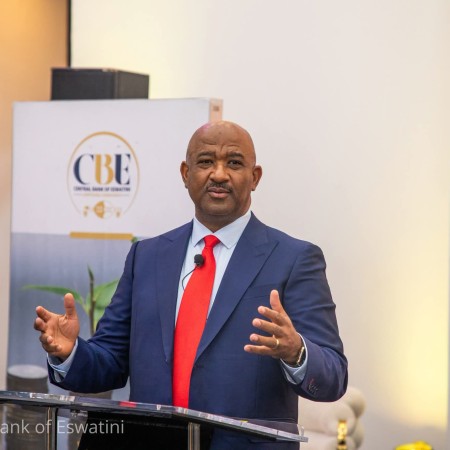
Speaking at the company’s Matsapha operations on Wednesday, Khumalo used the occasion to underscore the broader economic significance of businesses that transform waste into commercial products, arguing that such enterprises represent the type of innovation needed to strengthen the country’s industrial base while supporting inclusive economic growth.
The Minister described the company’s two-decade journey as a demonstration of how entrepreneurship, resilience, and long-term investment can generate lasting economic value. He noted that surviving and expanding over a 20-year period required businesses to navigate changing market conditions and economic challenges while continuously adapting to evolving opportunities.

“We have gathered here not only to mark 20 years of a successful business, but to celebrate a story of vision, determination, resilience, and the impact that one company can have on the lives of so many people,” Khumalo said.
The Minister pointed to the company’s employment footprint as evidence of its contribution to the domestic economy. Eric Slabbert Agencies currently employs 110 emaSwati workers while also maintaining an employee share ownership structure that gives staff a direct stake in the company’s success. According to Khumalo, approximately 20 percent of the business is owned by employees, a model he said reflects a commitment to economic inclusion and empowerment alongside profitability.
In an economy where job creation remains a key development priority, the Minister argued that employee participation in ownership structures provides an important mechanism for broadening wealth creation beyond traditional wage income. He said businesses that share value with their workforce help create a more inclusive growth model capable of generating long-term socio-economic benefits.
Beyond direct employment, Khumalo highlighted the company’s role in creating income-generating opportunities for ordinary citizens involved in collecting recyclable materials. He noted that the recycling value chain has enabled many households to earn supplementary income from materials that would otherwise be discarded, effectively transforming waste into an economic resource.
“For many people, waste is something to be discarded. For Eric Slabbert Agencies, waste represents opportunity,” he said. “What was once seen as trash has become cash. What was once considered waste has become a source of dignity and livelihood for many households.”
The remarks reflect a growing recognition of the circular economy as an emerging economic sector capable of generating employment while reducing environmental pressures. Across many developing economies, recycling businesses are increasingly being viewed as part of a broader industrial strategy that combines sustainability objectives with economic development outcomes.

Khumalo further noted that the company’s significance extends beyond local economic activity because of its contribution to export earnings. He described Eric Slabbert Agencies as a net exporter, emphasising that the business generates foreign currency inflows while demonstrating the ability of Eswatini-based enterprises to compete in regional and international markets.
The minister said, “The company contributes to industrial development, supports environmental sustainability, creates employment, and strengthens our economy through exports.” “As a net exporter, the company brings valuable foreign currency into Eswatini and demonstrates that local businesses can compete successfully in regional and international markets.”
Export-oriented businesses remain critical to Eswatini’s economic performance as the country seeks to strengthen foreign exchange reserves, reduce external vulnerabilities, and expand industrial production. Companies operating within export markets also contribute to productivity improvements by exposing local industries to international standards and competitive pressures.
Khumalo said the global shift towards sustainability and responsible resource management presents significant opportunities for businesses operating within recycling and waste recovery industries. As governments and corporations increasingly prioritise environmental performance, demand for recycled materials and circular economy solutions is expected to grow, creating new market opportunities for firms capable of supplying these products.
He indicated that the government intends to continue supporting businesses that align with national development objectives through investment, job creation, and industrial expansion. Such support, he said, forms part of a broader commitment to creating an enabling environment that encourages private sector growth and economic transformation.
“Our commitment remains steadfast: to work hand in hand with the private sector to create an enabling environment for businesses to grow, invest, create jobs, and contribute to national prosperity,” he said.
The Minister concluded by describing the company’s success as evidence of the importance of collaboration between government and the private sector in driving economic development. He argued that sustainable growth is achieved when businesses and policymakers work towards shared objectives centred on expanding economic opportunities and improving living standards.
O98As Eswatini continues to pursue industrialisation and economic diversification, the growth of enterprises such as Eric Slabbert Agencies may offer a practical example of how environmental sustainability, export development and inclusive wealth creation can converge within a single business model, generating benefits that extend well beyond the balance sheet.