





By: Nkosiyabusa Nsibande
Eswatini’s efforts to align national development priorities with global sustainability targets have entered a critical phase, with government planners and development stakeholders undertaking a comprehensive review of the country’s progress towards the Sustainable Development Goals (SDGs) as the 2030 deadline draws closer.
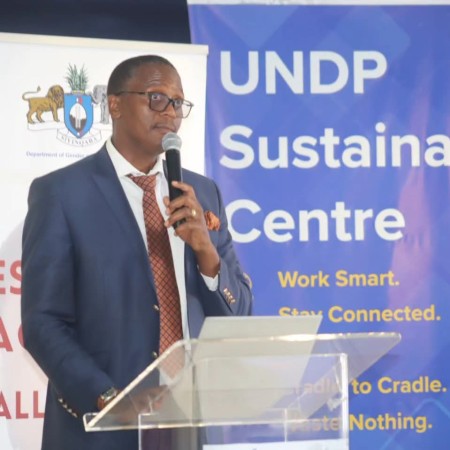
The Ministry of Economic Planning and Development’s Poverty Reduction Monitoring and Evaluation Unit convened the 2026 National Sustainable Development Goals Validation Workshop in Ezulwini this week, bringing together planners from across government institutions to scrutinize development indicators, validate data, and assess whether current interventions are delivering the intended economic and social outcomes.
While the workshop forms part of the country’s reporting obligations under the United Nations 2030 Agenda for Sustainable Development, discussions revealed a broader objective: ensuring that development spending, infrastructure investments and policy interventions are producing measurable economic returns and improving the quality of life for citizens.

Opening the workshop, Chief Economist Sfiso Mamba underscored the importance of collaborative engagement in validating the findings in the national SDG report. He urged participants to critically interrogate the data and contribute meaningfully to the review process to ensure that the final report accurately reflects the country’s development trajectory.
The validation exercise comes at a time when governments across the world are facing increasing pressure to demonstrate tangible progress towards sustainable development objectives amid constrained fiscal environments, climate-related challenges and growing demands for public services. For Eswatini, the process provides an opportunity not only to measure progress but also to identify areas where policy interventions may need to be recalibrated to accelerate economic growth and social development.
Principal Economist Lungile Mndzebele noted that the SDGs remain an important framework for measuring national progress across a wide range of economic, environmental, and social indicators. She reminded participants that Eswatini, as a signatory to the United Nations development agenda, is expected to continuously monitor, evaluate, and report on the implementation of the 17 goals.
More importantly, she emphasised the need to move beyond compliance-driven reporting and focus on understanding the actual impact that SDG implementation has had on the country’s development outcomes. Such assessments have become increasingly important as governments seek evidence that public expenditure programmes and development projects are translating into sustainable economic gains.
The theme of this year’s review process, “Transformative, Equitable, Innovative and Coordinated Actions for the 2030 Agenda for Sustainable Development and its Sustainable Development Goals for a Sustainable Better Future for All,” reflects the growing recognition that achieving development targets will require stronger coordination between government institutions, development partners, and the private sector.
During the technical presentation of the report, Ministry of Economic Planning and Development official Thandazani Sibiya outlined the strategic role that SDG monitoring plays in supporting national development planning. He noted that the monitoring framework is designed to strengthen evidence-based decision-making, improve policy responsiveness, and enhance the well-being of Emaswati through more effective development interventions.
The findings presented during the workshop highlighted several areas that have direct implications for economic competitiveness and long-term growth. Among them were indicators relating to environmental sustainability, digital infrastructure and transport systems, all of which are increasingly recognised as key enablers of investment attraction and productivity growth.
Environmental sustainability emerged as a notable area of focus. According to the report, carbon dioxide emissions reached 2,276 kilotonnes in 2023, up slightly from 2,237 kilotonnes recorded in 2018. While the increase remains relatively modest, the figures underscore the challenge of balancing economic expansion with environmental protection as the country seeks to industrialise and expand productive sectors.
Government officials indicated that climate-related policy interventions continue to be guided by the National Climate Change Strategy and Action Plan, which aims to strengthen resilience while supporting sustainable economic development. Such initiatives are becoming increasingly important as investors, lenders, and international development institutions place greater emphasis on environmental performance when evaluating investment destinations and financing opportunities.
The workshop also highlighted ongoing investments in renewable energy infrastructure, including solar, biomass, and hydropower projects. These investments are strategically significant for Eswatini’s economic future, as they contribute not only to reducing greenhouse gas emissions but also to strengthening energy security and reducing vulnerability to external energy shocks.
Reliable and sustainable energy supplies have become a critical determinant of industrial competitiveness across the region. As such, the expansion of renewable generation capacity could improve the country’s attractiveness to investors seeking stable operating environments while supporting broader efforts to build a more resilient and diversified economy.

Beyond the environmental indicators, the review reinforced the importance of high-quality data in shaping economic policy. Accurate and credible statistics remain essential for assessing whether development programmes are delivering value for money, identifying emerging risks and directing limited public resources towards areas where they can generate the greatest impact.
The validation workshop therefore served as more than a technical review exercise. It represented a strategic checkpoint in Eswatini’s development journey, providing policymakers with an opportunity to assess whether the country remains on course to achieve its long-term development ambitions and where accelerated action may be required.
With less than five years remaining before the 2030 deadline, the findings are expected to inform future policy decisions, investment priorities and development planning processes. As economic pressures continue to evolve, the ability to translate development goals into measurable outcomes will be central to ensuring that growth remains inclusive, sustainable and capable of delivering meaningful improvements in the lives of Emaswati.