






By: Nkosiyabusa Nsibande
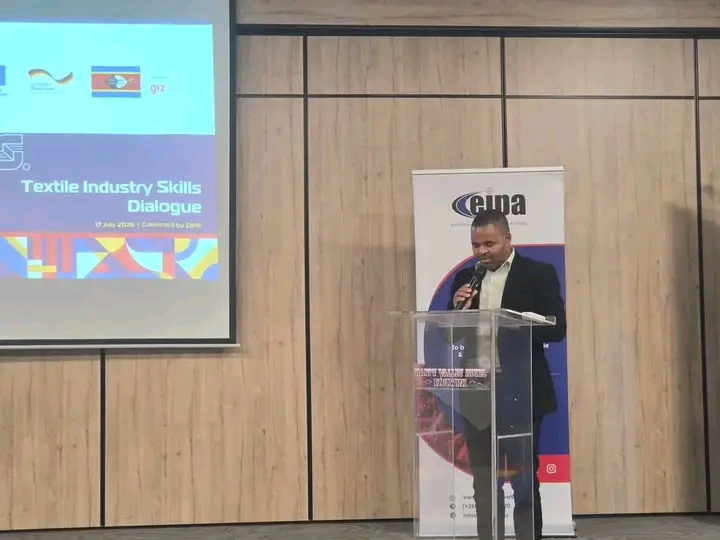
Eswatini’s textile and apparel industry is entering a new phase of development where attracting investment alone will no longer determine its competitiveness. As production capacity expands and regional trade opportunities widen, the availability of specialized technical skills is increasingly the factor that will determine whether the sector can sustain growth, improve productivity, and compete in African markets. Discussions held during the Textile Sector Skills Dialogue convened by the Eswatini Investment Promotion Authority (EIPA) and the Skills for Youth (S4Y) program illustrate that human capital has become one of the industry’s most important economic assets.
For investors, manufacturers, and policymakers, the challenge is no longer simply creating employment. The greater concern is whether the labor market can supply workers with the technical expertise required by modern manufacturing. The shortage of qualified industrial mechanists highlights a structural mismatch between industry demand and the current skills pipeline. While factories may continue to expand production, the absence of adequately trained technicians has the potential to increase operating costs, reduce production efficiency, and delay future investment decisions. Labor shortages in specialized occupations often force firms to spend more on recruitment, retraining, or importing expertise, all of which weaken profitability.
This makes workforce development an investment issue rather than merely an education concern. Manufacturing competitiveness increasingly depends on productivity, quality assurance, and operational efficiency. Industrial mechanics play a critical role in maintaining machinery, reducing equipment downtime, and supporting uninterrupted production. Every hour of machine inactivity represents lost output and reduced revenue. Developing a reliable supply of technically skilled workers, therefore, becomes an investment in productivity, stronger profit margins, and greater industrial resilience.
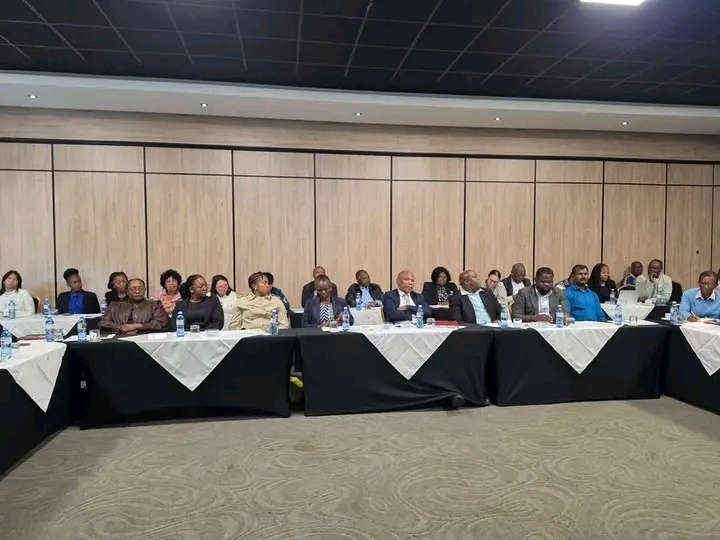
The agreement by industry stakeholders to establish a Sector Skills Technical Working Group could prove financially significant if it succeeds in aligning vocational training with actual business requirements. One of the recurring weaknesses in many developing economies is that educational institutions often produce graduates whose qualifications do not match private-sector needs. Closer collaboration among industry, government, and training institutions could reduce recruitment costs while improving the employability of young people entering the labor market. From a financial perspective, such alignment increases the efficiency of public spending on skills development while improving the returns on private-sector investment in human capital.
The dialogue also demonstrated that skills policy cannot be separated from trade policy. The African Continental Free Trade Area (AfCFTA) presents local textile manufacturers with access to significantly larger regional markets, but greater market access alone does not guarantee commercial success. Businesses seeking to export competitively must consistently meet production schedules, maintain product quality, and control manufacturing costs. These objectives depend as much on workforce capability as they do on trade agreements. Without sufficient technical expertise, firms may struggle to exploit export opportunities despite favorable market conditions fully.
Small and medium-sized enterprises operating within the textile value chain stand to benefit particularly from stronger technical capacity. Unlike larger manufacturers, SMEs generally have fewer financial resources to absorb production inefficiencies or prolonged equipment failures. Access to industry-relevant technical skills can improve operational performance, strengthen product quality, and increase their ability to integrate into regional supply chains. As these businesses become more competitive, they are better positioned to expand operations, create employment, and contribute more meaningfully to domestic economic activity.
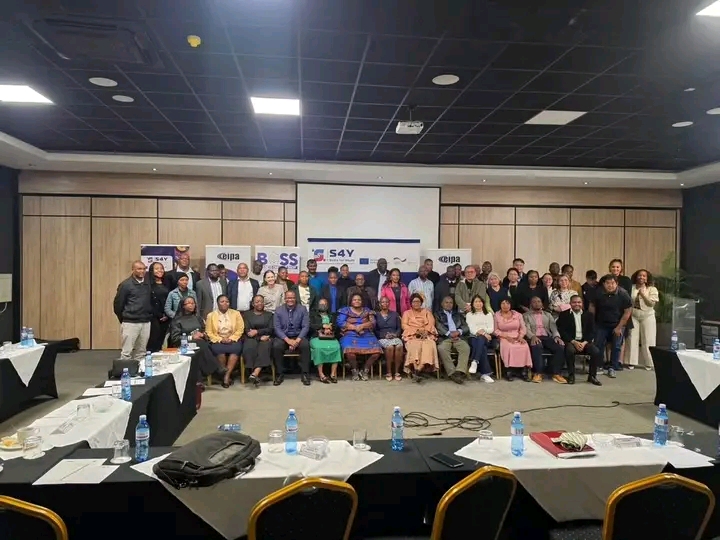
The participation of multiple government ministries, industry representatives, development partners and the European Union reflects growing recognition that industrial development requires coordinated policy rather than isolated interventions. Investment promotion, labor market development, education reform, and trade facilitation are becoming increasingly interconnected. Sustainable industrial growth depends not only on financial capital flowing into factories but also on the institutional capacity to produce the workforce required to support long-term expansion.
The Skills for Youth program, co-funded by the European Union and the German Federal Ministry for Economic Cooperation and Development (BMZ) and implemented by GIZ, provides an example of how development finance can support productive sectors beyond traditional infrastructure investments. Rather than focusing solely on physical assets, programs that strengthen workforce capability contribute to long-term economic productivity by increasing the value of human capital. Such investments often generate lasting returns through higher employment, improved industrial efficiency, and stronger export competitiveness.
For Eswatini, the Textile Sector Skills Dialogue sends a broader economic message. The country’s future manufacturing competitiveness will increasingly depend on the quality of its workforce rather than the availability of low-cost labor alone. As regional markets become more integrated and competition intensifies under the AfCFTA, investment in specialized technical skills may prove just as important as investment in factories themselves. For businesses, investors and policymakers, closing the industry’s skills gap is emerging not simply as an employment priority but as a strategic financial imperative capable of shaping the sector’s long-term growth trajectory.