






By: Nkosiyabusa Nsibande
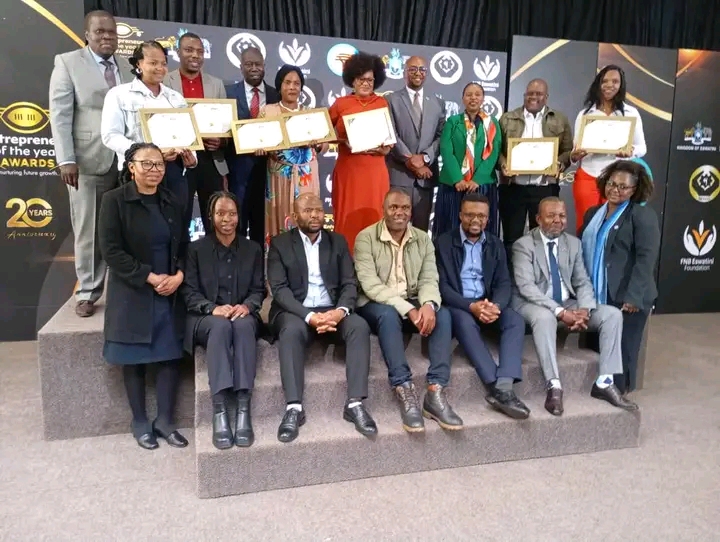
The Lubombo Regional Entrepreneurship of the Year Awards revealed more than individual business success stories. The figures emerging from this year’s competition offer a clearer picture of where entrepreneurial capital, productive investment and future economic growth are increasingly taking shape within Eswatini. With 87 businesses entering the regional competition, women accounting for 73 percent of participants and private sector partners committing more than E2 million towards enterprise development, the awards reflected an ecosystem that is steadily moving beyond celebrating entrepreneurship to financing it.
Agribusiness emerged as the strongest commercial signal during the regional awards after Eli Olivia Khoza, trading as Eli Olivia, secured the Regional Outstanding Agribusiness Award. Operating from Mpolonjeni in Siteki, the business has developed an agricultural model that combines livestock production, crop farming, and established market linkages to generate multiple income streams rather than relying on a single commodity.
The enterprise manages more than 100 heads of cattle for both dairy and beef production while cultivating dry maize and beans across 10 hectares of land. The maize serves a dual commercial purpose by supporting livestock feed requirements, while the crop itself contributes additional revenue through established buyers, including Swaziland Milling. This level of vertical integration reduces dependence on external feed purchases, lowers production costs, and improves overall operating margins, making the business more resilient to fluctuations in agricultural input prices.
Revenue diversification has also strengthened the business’s financial sustainability. Beef supplies are sold to established butcheries, including Beef Boys and Embhiveni, while fresh emasi reaches customers across the country. By serving multiple market segments simultaneously, the enterprise reduces concentration risk and creates a more stable cash flow throughout the production cycle. For agricultural businesses, diversified sales channels often provide greater protection against seasonal demand fluctuations and commodity price volatility.
From an investment perspective, Eli Olivia demonstrates the growing commercial potential of medium-scale agriculture in Eswatini. Rather than operating purely as a subsistence farm, the business functions as an integrated agribusiness capable of supplying formal retail markets, food processors, and household consumers. Such enterprises increasingly represent the type of productive assets capable of supporting employment creation, expanding domestic food production, and strengthening value chains within the agricultural economy.
Beyond the agribusiness category, the regional awards showcased a broader spread of entrepreneurial activity across sectors that contribute to domestic economic growth. Efence Investments received the Regional Outstanding Youth-Owned Business Award, MBT Farmers Trade was recognized as the leading woman-owned business, while Ncamis Hand Design secured the regional handcraft award. The Pastry Deluxe Restaurant emerged as the leading street vendor, with Jojo Grocery receiving recognition as the region’s outstanding start-up business. Collectively, these businesses illustrate the diversity of Eswatini’s MSME sector, spanning agriculture, retail, manufacturing, food services and creative industries.

Perhaps the most economically significant figure announced during the ceremony was Lubombo’s participation profile. Of the 87 applications received, nearly three-quarters came from women entrepreneurs, giving the region the highest level of female participation in the Kingdom. Beyond representing gender inclusion, the statistic points towards where entrepreneurial investment and enterprise ownership are increasingly concentrated. Greater participation by women-owned businesses expands the country’s productive base, broadens household income generation, and contributes to more inclusive economic development.
Addressing participants, the Minister responsible for Commerce emphasized that micro, small and medium enterprises remain the foundation of Eswatini’s economy and continue to play a central role in achieving citizen-led economic growth. The government’s policy direction is increasingly focused on creating an enabling business environment through reforms such as the Citizen Economic Empowerment Act, the implementation of the National MSME Policy 2024–2029, and initiatives including the Ingelo Certification Scheme. Together, these measures seek to improve business competitiveness, expand market access, and strengthen the long-term sustainability of local enterprises.
Equally significant is the level of private sector financial commitment supporting enterprise development. FNB Eswatini and the FNB Foundation have invested more than E2 million as Legacy Partner of the Entrepreneurship of the Year Awards, demonstrating how commercial finance is increasingly complementing public policy in developing the country’s entrepreneurial ecosystem. Additional support from partners including ENPF, Taiwan ICDF, FINCORP and Infinity Links reflects a growing recognition that sustainable enterprise growth requires coordinated investment from both public and private institutions.
For investors and policymakers, the Lubombo awards illustrate that entrepreneurship in Eswatini is gradually becoming a measurable economic asset rather than simply a social development objective. Businesses with diversified revenue streams, productive agricultural assets, and established commercial markets are building enterprises capable of generating recurring income, creating employment, and expanding domestic production. When combined with stronger policy support and increasing financial investment, these developments strengthen the foundations for a more resilient MSME sector capable of contributing meaningfully to national economic growth and the long-term ambition of building Liswati-owned billion-emalangeni enterprises.