






By: Nkosiyabusa Nsibande
The conclusion of Phase Two of the Pig Industry Enhancement Project marks more than the end of a five-year agricultural development programme. It represents one of Eswatini’s clearest examples of how targeted public investment, international development finance, and technical support can translate into measurable economic returns for small-scale farmers and the wider livestock value chain.
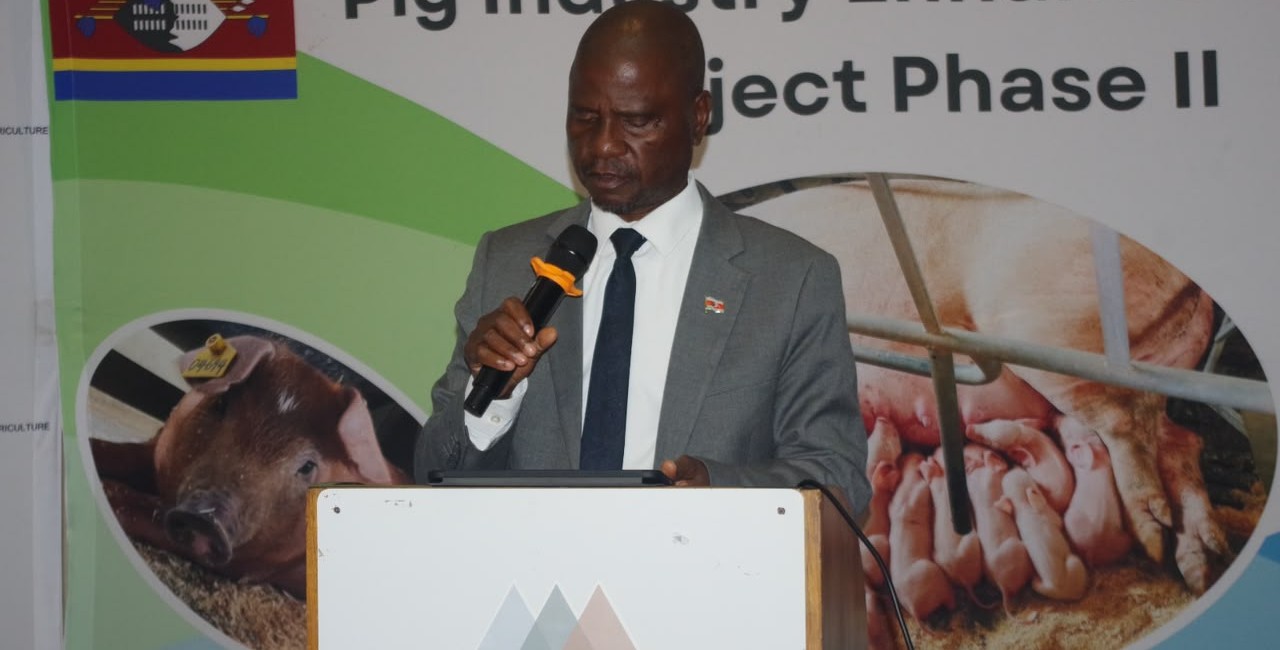
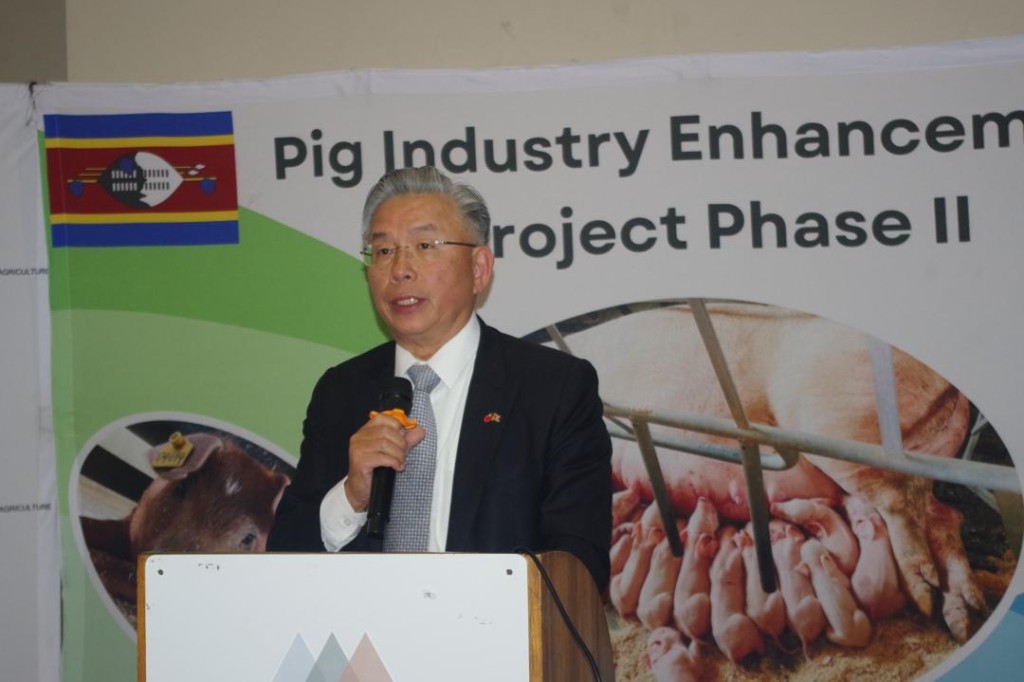
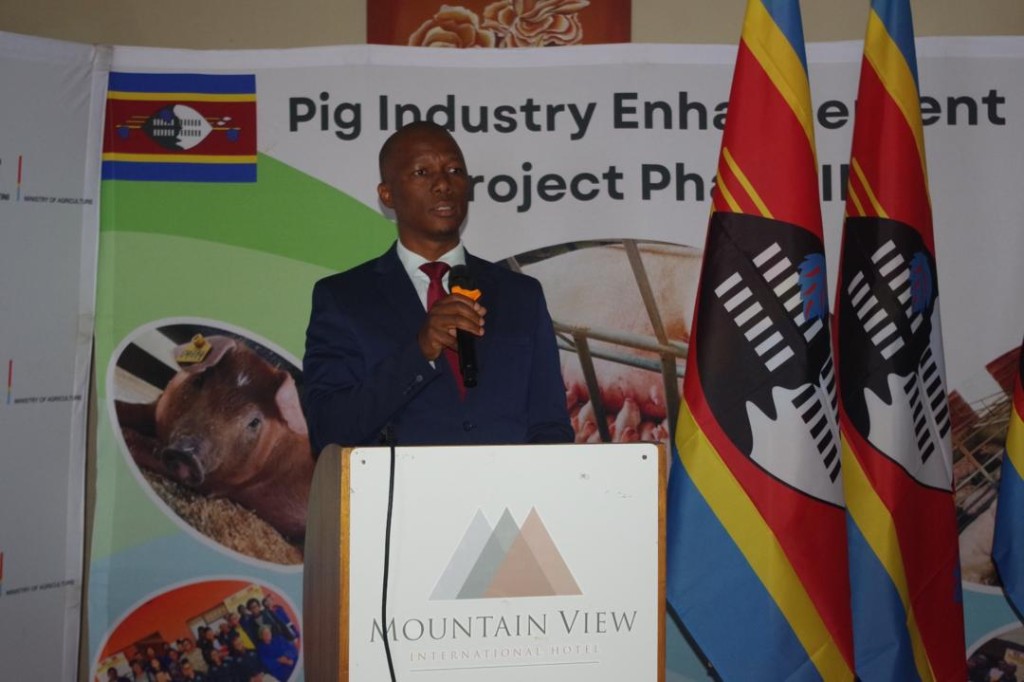
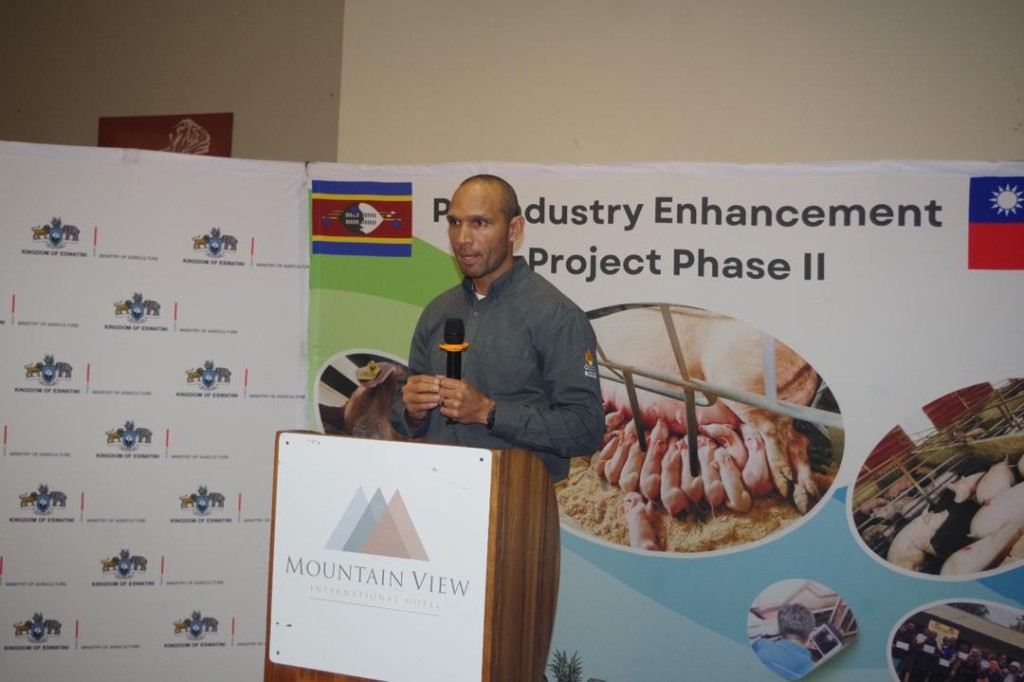
Officially closed on Friday by the Minister of Agriculture at Mountain View Hotel, the Governments of Eswatini and Taiwan jointly financed the project after its launch on 29 April 2021. While its initial objective focused on improving pig genetics and breeding capacity, the programme has ultimately evolved into a broader intervention aimed at commercializing pig production, strengthening rural incomes, and improving food security.
The financial outcomes illustrate the scale of the transformation. Before the project begun, the country’s pig industry generated approximately E72 million annually from pork production. By 2025, industry output had expanded to E131.8 million, representing an increase of almost 83 percent within five years. Such growth shows how productivity-focused investments can generate substantial value creation without necessarily requiring significant expansion in production land, instead relying on improved genetics, better management practices, and stronger market participation.
Much of that growth has been driven by significant improvements in breeding performance. During implementation, the project produced 256 purebred breeding sows while distributing 2,463 crossbred gilts to farmers across the country. In addition, 7,636 artificial insemination semen doses were supplied, allowing producers to improve herd quality, increase productivity, and accelerate genetic improvement at a relatively lower cost than traditional breeding systems.
These interventions have important commercial implications. Higher-quality breeding stock generally produces faster-growing animals, improved feed conversion ratios, and greater carcass yields, enabling farmers to generate higher revenues while reducing production inefficiencies. In a sector where margins are often squeezed by rising input costs, improvements in genetics provide one of the most sustainable pathways towards increasing profitability.
Equally significant has been the project’s investment in human capital. A total of 1,977 farmers received technical training covering breeding, herd management, and modern production practices, while 2,398 farmers were formally registered under the programme. The establishment of a database containing 837 registered pig production units also provides government and industry stakeholders with improved visibility over the sector, creating opportunities for more targeted policy interventions, disease surveillance, and future financing initiatives.
The expansion in producer participation demonstrates the growing commercial appeal of pig farming. In 2020, Eswatini had only 1,410 registered pig farmers. The substantial increase in farmer participation reflects rising confidence in pork production as a viable income-generating enterprise, particularly for rural households seeking to diversify agricultural earnings beyond traditional crop farming.
Beyond farm-level production, the project also invested in strengthening market infrastructure, recognizing that increased output must be supported by efficient value chains if farmers are to realize higher incomes. Investments in pork freezing facilities improve storage capacity and reduce post-slaughter losses, while the participation of five wholesalers expands formal market access for producers. These developments contribute towards improving price stability, reducing waste, and enhancing the industry’s ability to meet consumer demand throughout the year.
Regulatory improvements have also formed part of the sector’s development. The continued implementation of the Veterinary Public Health Act of 2013 strengthens food safety oversight and provides an important framework for improving slaughter standards, consumer confidence, and future opportunities for regional market integration.
Despite the project’s achievements, several structural challenges continue to constrain the industry’s long-term competitiveness. Rising feed costs remain the largest production expense for most pig farmers and continue to place pressure on operating margins. Market price volatility, seasonal oversupply, and persistent hygiene shortcomings at some slaughter facilities also reduce profitability and expose producers to financial uncertainty.
Addressing these bottlenecks will require coordinated investment beyond farm production. Greater private sector participation in feed manufacturing, expanded cold-chain infrastructure, improved processing capacity, and stronger market coordination could help stabilize producer prices while reducing seasonal fluctuations that frequently undermine farmer incomes.
The completion of the Pig Industry Enhancement Project therefore represents not an endpoint, but the foundation for a more commercially driven livestock industry. The measurable increase in sector revenues demonstrates that strategic investments in agricultural productivity can deliver tangible economic returns. The challenge for policymakers and industry stakeholders now lies in ensuring that the momentum generated over the past five years translates into sustained private investment, stronger value addition, and increased competitiveness for Eswatini’s growing pork industry.