





By: Nkosiyabusa Nsibande
Eswatini’s tourism growth strategy is facing a test that extends beyond visitor numbers and destination marketing, with Prime Minister Russell Mmiso Dlamini warning that incomplete economic data, outdated regulations, and payment-system constraints could obscure the real performance of the sector.
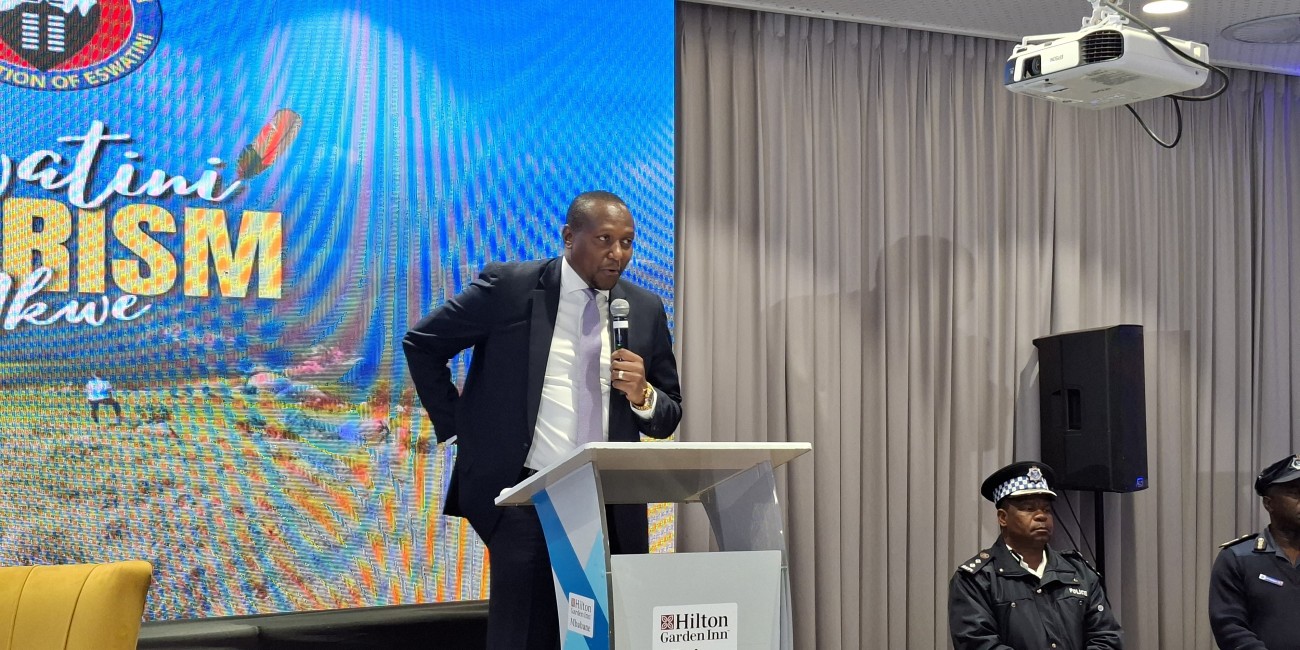
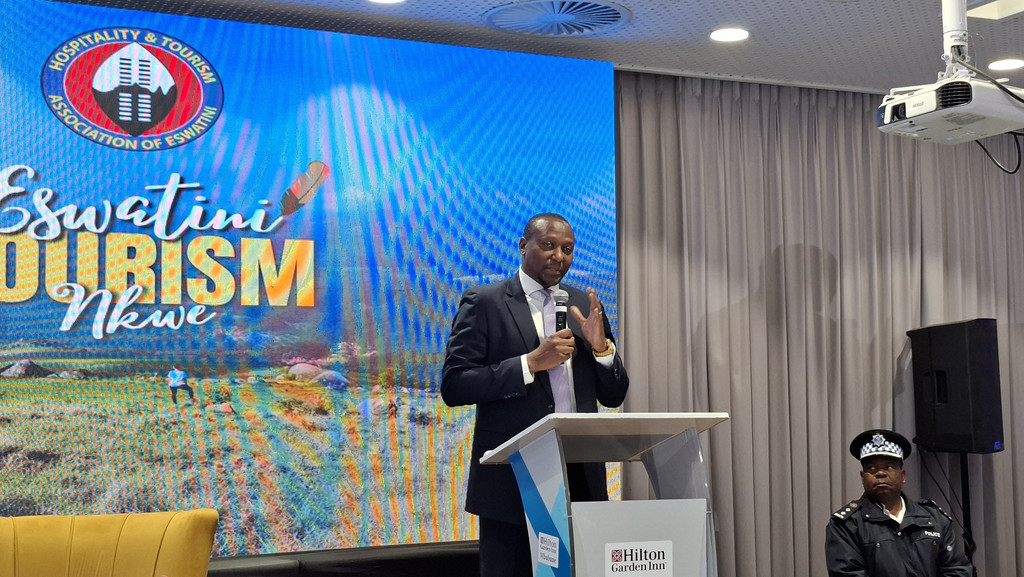
Addressing the 2nd Annual Tourism Nkwe Conference 2026, Dlamini placed particular emphasis on the quality of information used to assess tourism performance as the government develops its Tourism Satellite Account. He argued that economic growth cannot be meaningfully assessed if significant parts of the tourism economy remain outside the measurement framework.
“If our data does not yet fully capture the informal and small-operator side of this industry, then our public narrative of ‘growth’ risks obscuring the real conditions faced by the men and women who work in it every day,” Dlamini said.
The concern has direct commercial significance. Tourism is not confined to hotels, established travel companies, and formal attractions. A wider ecosystem of small operators participates in transporting visitors, selling goods, providing experiences, and delivering services around major tourism destinations. If economic measurement does not adequately capture that activity, policymakers, and investors may work with an incomplete picture of where value is being created and where businesses continue to face constraints.
Dlamini argued that the response should be to improve measurement before celebrating headline milestones. “Leadership demands that we fix the measurement before we celebrate the milestone,” he said. The emphasis shifts the discussion from tourism growth as a simple increase in activity towards the quality of the economic information underpinning policy decisions.
The Prime Minister also identified a regulatory mismatch between how tourism operates in practice and the framework governing the sector. E-hailing services and seven-seater vehicles, he noted, have become part of the way people actually move around the kingdom, while regulation has struggled to keep pace with those changes.
For businesses, the issue is one of regulatory responsiveness. New business models can emerge faster than legislation and administrative frameworks can accommodate them, creating uncertainty for operators and potentially limiting the development of services that visitors increasingly expect. Dlamini’s remarks suggest that regulation will need to respond to the market as it exists rather than exclusively to older models of how tourism, transport, and services were organized.
Perhaps the most commercially significant element of the Prime Minister’s remarks was his focus on moving money through the tourism economy. He identified the Eswatini Payment Switch as an example of the structural disruption required to reduce transaction friction for hospitality businesses, pointing to Fast Payments already flowing while Open Banking and Card, POS, and ATM Switching remain part of the development agenda.
He said the reforms create “a real opportunity for our hospitality businesses to finally process transactions, domestic and international, without the frictions of the past.” The significance extends beyond payment convenience because transaction infrastructure influences how quickly businesses receive money, how easily visitors can pay, and how efficiently companies manage transactions across different payment channels.
For hospitality businesses, reducing payment friction can have practical implications for revenue collection and customer experience. International visitors, in particular operate within payment systems that may differ from those traditionally used by local customers. A more integrated payment environment could therefore reduce points of friction between the visitor’s willingness to spend and the business’s ability to accept and process that spending.
Taken together, the Prime Minister’s comments point towards a broader definition of tourism infrastructure. Roads, accommodation, and attractions remain important, but so are digital visa platforms, transport regulation, reliable economic statistics, and payment systems. These less visible components determine how efficiently the tourism economy functions once visitors arrive and businesses begin converting demand into revenue.

Dlamini’s position is that reform should be driven by evidence of what is failing rather than by the preservation of existing administrative arrangements. He said the Government must have “the discipline to look at what is not working and the courage to change it quickly rather than manage it slowly.”
That places an important responsibility on both government and industry. Government must identify and remove institutional bottlenecks, while businesses have a role in supplying evidence of where systems are failing in practice. The Prime Minister explicitly acknowledged that industry had raised concerns about the e-visa system, illustrating how private-sector feedback can expose problems that may not be visible from within the government.
The economic question emerging from the conference is therefore not simply how many tourists Eswatini can attract, but how much economic value the country can efficiently capture from each visitor and how widely that value is distributed across the tourism supply chain. Accurate measurement, responsive regulation, and functioning payment infrastructure form part of that equation.
Dlamini closed by challenging participants to return to the next Tourism Nkwe Conference with evidence of implementation rather than another record of discussion. His call for stakeholders to report on “what we disrupted, fixed, and delivered” places execution alongside growth as the key measure of progress.

Other Articles