




By: FinGuard Editorial Team
Eswatini’s inflation rate may be moving in the right direction. Still, the latest Consumer Price Index (CPI) released by the Central Statistical Office (CSO) suggests that the financial pressure facing households has not disappeared. According to the CSO, annual inflation slowed to 2.6% in June 2026, marginally lower than the 2.7% recorded in May and below the 2.9% registered in June 2025. While the easing in headline inflation reflects improving price stability across the economy, the figures also reveal that the cost of essential household services continues to rise, placing sustained pressure on family budgets and business operating expenses.

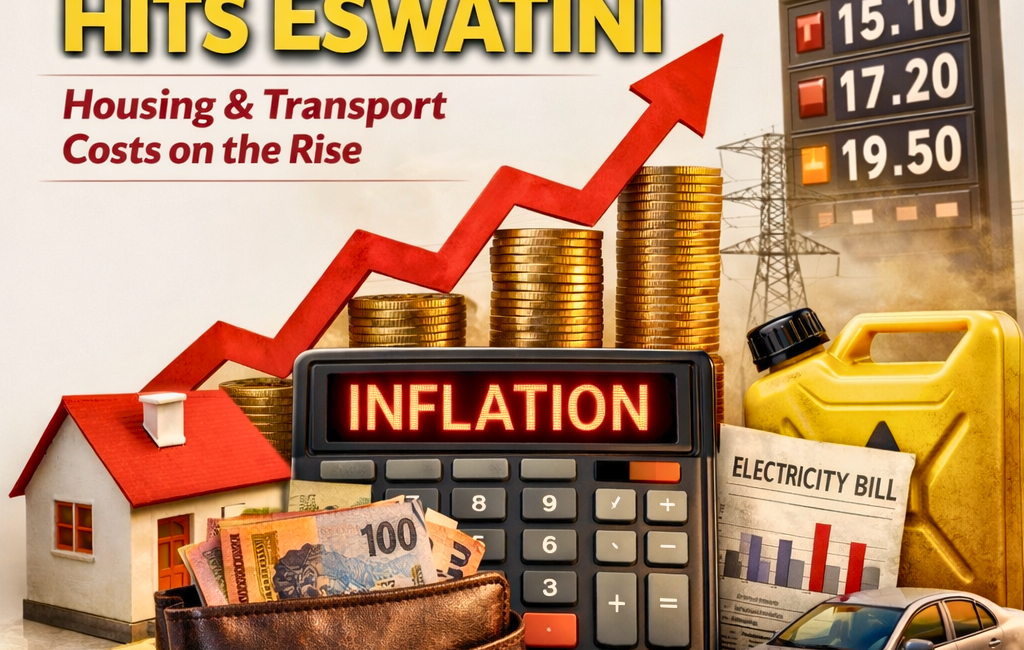
The composition of inflation is often more important than the headline number itself. The June CPI report shows that housing, water, electricity, gas, and other fuels recorded an annual inflation rate of 6.1%, making it the single largest contributor to overall inflation. The category alone accounted for 1.7 percentage points of the country’s 2.6% headline inflation rate, meaning that more than half of the increase in consumer prices stemmed from household utility costs. Since housing-related expenditure carries the largest weight in the CPI basket at 27.69%, increases in this category have a disproportionate effect on the overall cost of living.
The data further illustrates how energy costs continue to influence household finances. Electricity prices increased by 15.1% over the past year, while liquid fuels for domestic use surged by an even sharper 44.6%. Water supply charges also rose by 4.0% during the same period. These increases affect virtually every household, regardless of income, and leave consumers with less disposable income for savings, investment, or discretionary spending. For lower-income households, whose expenditure is concentrated on essential services, these cost increases have a much greater financial impact than the headline inflation figure alone would suggest.
Transport emerged as the second-largest driver of inflation. The category recorded annual inflation of 4.2%, contributing 0.7 percentage points to the overall inflation rate. While monthly transport inflation slowed significantly compared to May, fuel-related costs remained elevated. The operation of personal transport equipment increased by 16.4%, largely driven by a 26.5% increase in fuel and lubricant consumption for private vehicles. These figures demonstrate that fuel prices continue to filter through the broader economy by increasing commuting expenses for workers, raising logistics costs for businesses, and pushing up distribution costs across multiple sectors.
For businesses, these trends have important financial implications. Rising electricity and transport costs increase operating expenses for manufacturers, retailers, wholesalers, and service providers alike. Companies that rely heavily on refrigeration, production equipment, or road transport face higher input costs that may eventually be passed on to consumers through higher selling prices. Small and medium-sized enterprises are particularly exposed because they often operate with narrower profit margins and have less capacity to absorb sustained increases in utility and fuel costs without affecting profitability.
The inflation figures also provide insight into changing consumer behavior. As a larger share of household income is allocated to electricity, housing, and transport expenses, families are likely to reduce spending on discretionary goods and services. Retailers operating in non-essential sectors may therefore experience slower sales growth even when overall inflation appears relatively low. This shifting pattern of household spending becomes an important indicator for businesses planning inventory levels, pricing strategies, and investment decisions over the coming months.

One of the more encouraging developments in the June report is that inflation has become considerably more contained compared to previous years. Eswatini experienced average inflation of 5.0% in 2023, followed by 4.0% in 2024 and 3.1% in 2025. The latest reading of 2.6% therefore continues the broader downward trend, pointing to improving macroeconomic stability. Lower headline inflation generally supports consumer purchasing power, creates a more predictable environment for businesses, and reduces uncertainty for long-term investment planning.
However, the analytical data in the report also suggests that underlying inflationary pressures remain concentrated in regulated and administered prices. The CPI for administered prices increased by 8.8%, substantially higher than headline inflation, while the CPI for non-administered prices rose by only 0.9%. This indicates that much of the current inflation is driven by costs that households have limited ability to avoid or substitute for, including utilities and other regulated services. From a financial planning perspective, this distinction is significant because it limits the extent to which consumers can reduce expenditure by changing purchasing habits.
According to the Central Statistical Office, June’s inflation figures reflect an economy where broad price pressures are easing, yet essential living costs continue to rise faster than the overall average. For policymakers, the challenge will be to maintain price stability while ensuring that increases in energy and utility costs do not erode household purchasing power. For businesses, the figures reinforce the need to improve operational efficiency and manage rising input costs carefully. For households, the latest CPI serves as a reminder that even in a lower inflation environment, the financial burden of housing and transport remains one of the defining pressures on family budgets in Eswatini.