





By: Nkosiyabusa Nsibande
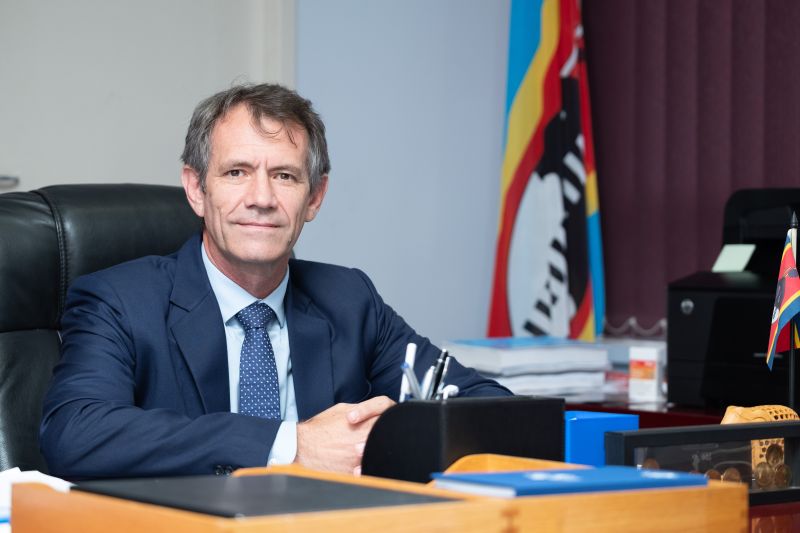
The Ministry of Finance has used its latest Finance in Focus briefing to deliver two messages that, although seemingly unrelated, are deeply connected from a financial perspective. On one hand, Government says it remains focused on accelerating economic activity, supporting private sector expansion, and creating employment opportunities for emaSwati. On the other hand, it has issued a strong warning against fraudulent investment advertisements circulating on social media that falsely use the identity of Finance Minister Neal Rijkenberg to lure unsuspecting members of the public into financial scams.
For financial markets, these are not separate issues. Economic growth depends not only on Government policy and private investment but also on public confidence in the financial system. When fraudulent schemes masquerade as legitimate investment opportunities endorsed by senior Government officials, they erode trust in formal financial markets. Victims often lose life savings, while potential investors become increasingly reluctant to participate in genuine investment products, ultimately slowing financial inclusion and reducing the flow of household capital into productive sectors of the economy.
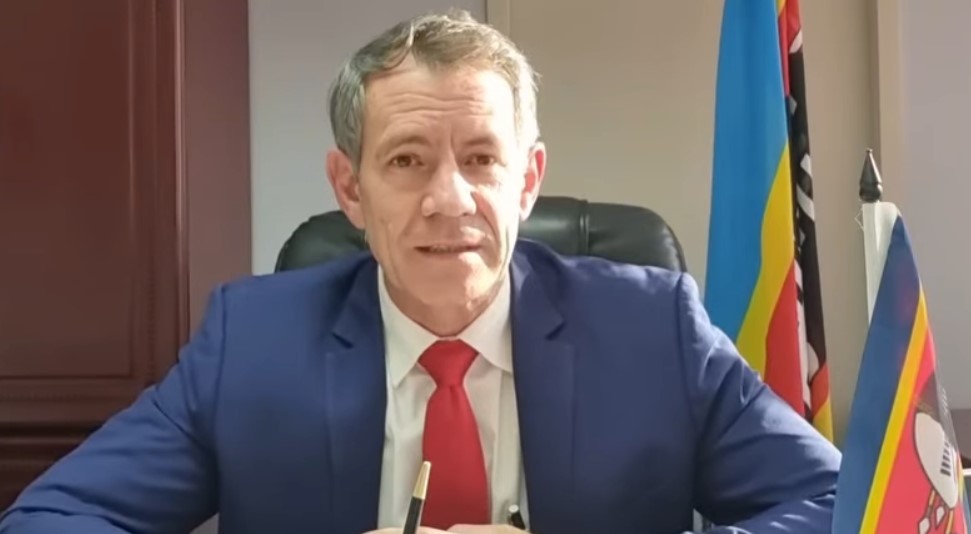
In the video briefing, Rijkenberg stressed that employment creation remains Government’s overriding priority because sustainable jobs provide the most effective pathway to reducing poverty and improving household incomes. He explained that Government continues implementing reforms designed to encourage investment and support business expansion, recognizing that the private sector remains the country’s primary engine for long-term employment creation. This aligns with the broader fiscal strategy outlined in the 2026/27 National Budget, which places economic growth and higher private investment at the centre of Government policy.
The Minister also provided an update on Government’s cash flow position, noting that Treasury continues to manage public finances while awaiting improved Southern African Customs Union (SACU) receipts expected during the financial year. For businesses that supply Government, cash flow management remains an important indicator because it influences the timing of payments, procurement activity, and broader liquidity within the domestic economy. A stable fiscal position also provides greater certainty for investors assessing Eswatini’s macroeconomic outlook.

However, it was the Minister’s warning on fraudulent investment advertisements that carries perhaps the most immediate relevance for consumers and investors. According to the Ministry, scammers have created fake advertisements and social media content using the Minister’s name, photographs and likeness to promote supposed investment opportunities promising attractive returns. Government made it clear that neither the Minister nor the Ministry is associated with these promotions and urged the public not to transfer money or disclose personal banking information in response to such advertisements.
The emergence of these scams reflects a growing challenge confronting financial authorities globally. Criminals increasingly exploit the credibility of public figures, financial institutions, and Government agencies to give fraudulent schemes an appearance of legitimacy. Social media platforms have significantly reduced the cost of reaching thousands of potential victims within minutes, allowing investment fraud to spread much faster than traditional scams. International research continues to show that online financial content often lacks adequate risk disclosures, creating an environment where inexperienced investors can easily confuse legitimate financial education with deceptive investment promotions.
For Eswatini, protecting consumers from investment fraud is more than a law enforcement issue. It is also a financial development priority. Government has invested considerable effort in expanding financial inclusion, strengthening digital payment infrastructure, and encouraging greater participation in formal financial services. These initiatives depend on public trust. If consumers repeatedly fall victim to scams disguised as investment opportunities, confidence in digital finance and legitimate investment products may weaken, undermining years of progress in financial sector development.

The Minister’s message , therefore ,serves as an important reminder that financial literacy remains one of the country’s strongest defenses against economic crime. Investors should verify investment opportunities through official Government communication channels, regulated financial institutions, and licensed investment providers before committing funds. High-return promises accompanied by pressure to act immediately, requests for upfront payments, or claims of Government endorsement without official confirmation should always be treated as warning signs.
As Eswatini continues pursuing higher economic growth, stronger employment creation, and improved fiscal stability, safeguarding confidence in the financial system will become increasingly important. A resilient economy requires not only sound fiscal management and investment-friendly policies, but also a financial environment in which households and businesses can distinguish genuine investment opportunities from costly deception. The Ministry’s latest warning underscores that protecting investor confidence is now an essential component of protecting economic growth itself.

Other Articles

Discipline, The Silent Architect of Success