






By: Nkosiyabusa Nsibande
Informal Sector Driving Growth
As Eswatini’s informal and small business sector continues to grow, financial service providers are increasingly becoming important drivers of economic activity by helping entrepreneurs access funding, move money easily and manage their finances more efficiently.
Licensed and Regulated Financial Services
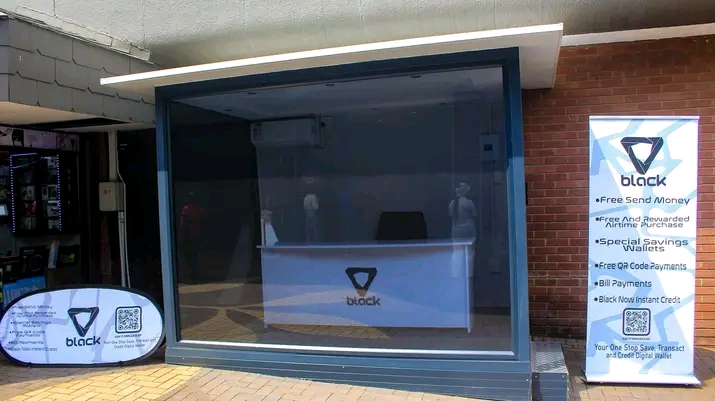
One of the companies positioning itself within this growing financial ecosystem is Black Informal Traders. The company is authorised and fully licensed by the Central Bank of Eswatini and Financial Services Regulatory Authority (FSRA) Eswatini, offering a range of financial services aimed at supporting emaSwati and small businesses.
Focus on Accessibility
Talking about the company’s operations, Black Informal Traders’ agent and sales representative said the business is focused on making financial services more accessible while also supporting the growth of SMEs and informal traders.
“We help people move money around easily and also pay their bills,” said the sales representative.
Loans for SMEs and Associations
Beyond money transfers and bill payments, the representative explained that the company also provides loans targeted at SMEs and associations operating within the informal and transport sectors.
“We also offer loans for SMEs, including the Kombi and Taxi Association, street vendors, small enterprises, associations and companies,” he said.
Addressing Financing Challenges
He noted that access to finance remains one of the biggest challenges facing small businesses in Eswatini, particularly informal traders who often struggle to secure funding from traditional financial institutions. The representative further explained that the company encourages a savings culture among customers through interest-bearing savings options.
“When you keep your money with us for six months, it comes back with a five percent interest, and for 12 months it comes back with a seven percent interest,” he said. He added that the company also offers airtime purchase rewards as part of its customer incentives.
Financial Inclusion as an Economic Pillar
The emergence of businesses such as Black Informal Traders reflects a wider shift within Eswatini’s economy, where financial inclusion and SME development are increasingly being recognised as important pillars of economic growth.
According to the Centre for Financial Inclusion Eswatini, one of its key objectives is to improve access to financial services and create a more inclusive financial system that contributes to sustaining livelihoods and economic participation.

SMEs at the Core of the Economy
Small and medium enterprises continue to play a major role within Eswatini’s economy. According to reports published by Inside Biz, more than 75 percent of Eswatini’s MSMEs remain informal, making access to financing and formal financial services one of the sector’s biggest obstacles.
Alternative Providers Closing the Gap
Financial experts argue that alternative financial service providers are increasingly helping close that gap by offering flexible and community-oriented financial solutions tailored for small businesses, traders and entrepreneurs.
Research by SEPARC also shows that informal businesses contribute significantly to employment and economic circulation in Eswatini, highlighting the importance of supporting SMEs with accessible financial tools and funding opportunities.
Building Sustainable Financial Futures
The growth of companies like Black Informal Traders therefore reflects more than just the expansion of financial services. It highlights the growing importance of financial inclusion, entrepreneurship and wealth-building within Eswatini’s economy, particularly for small businesses and informal traders seeking opportunities to grow and become financially sustainable.
Towards Broader Development
As digital transactions, savings products and SME financing continue to expand, financial service providers are increasingly becoming part of the country’s broader economic development efforts, helping emaSwati not only move money more easily, but also build businesses and improve their financial future.

Other Articles

Bushfire 2026: Where Culture Sparks Commerce