






By: Lungile Tsabedze
The Central Bank of Eswatini (CBE) has moved to defend the procurement process behind its E2.79 billion headquarters development project, arguing that excluding companies with foreign shareholding from public tenders would violate national laws, undermine investor confidence, and conflict with the country’s broader economic strategy.
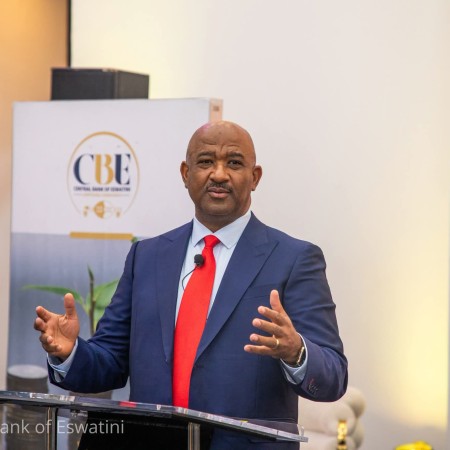
In a strongly worded media statement issued today, Central Bank Governor Dr. Phil Mnisi responded to growing public debate surrounding the award of the contract, which has attracted scrutiny over the participation of foreign-linked firms in one of the country’s largest infrastructure projects. The statement comes amid renewed discussion about the balance between citizen economic empowerment and maintaining an open investment environment capable of attracting capital, expertise, and competition.
According to the Central Bank, all legally registered companies operating within Eswatini may participate in public procurement processes regardless of their ownership structure, provided they comply with applicable legal and regulatory requirements.
“The exclusion of companies based on foreign participation outside any lawful directive would contravene the Public Procurement Act’s non-discrimination principles, Eswatini’s obligations under regional and international investment frameworks, and the Kingdom’s broader economic strategy of fostering an open, rules-based investment environment,” said the Governor. The bank cited several legal instruments underpinning its position, including the Constitution of the Kingdom of Eswatini, the Public Procurement Act, the Eswatini Investment Promotion Act, and regional agreements under the Southern African Development Community (SADC).
At the center of the debate is whether strategic public projects should prioritize local ownership above all other considerations or whether procurement decisions should primarily be guided by competitiveness, value for money, and technical capacity. The Central Bank maintains that economic empowerment objectives remain important but should be pursued through legally sanctioned mechanisms such as local content requirements, targeted empowerment programs, and capacity-building initiatives rather than the exclusion of foreign-invested firms.
The bank also sought to address concerns that the project could result in significant capital outflows from the domestic economy. According to the statement, the contract is denominated in Emalangeni, and all project payments are being made into local commercial bank accounts. Any funds leaving the country, the bank argued, would largely be linked to the procurement of specialized equipment, imported construction materials, and scarce technical expertise required to execute the project.
The Governor noted that this pattern is not unique to foreign-linked contractors, arguing that many locally owned companies routinely import goods and services as part of their normal business operations. In defending the integrity of the tender process, the Central Bank revealed that all bidders were required to meet a mandatory minimum threshold of 30 percent local construction ownership. The bank stated that firms that failed to satisfy this requirement were disqualified during the evaluation process.
According to the statement, local contractors had requested that the threshold be reduced to 10 percent during the bidding process, but the bank declined to preserve what it described as meaningful participation by EmaSwati-owned firms.
The bank further disclosed that the three highest-ranked contractors registered locally with the Construction Industry Council who participated in the tender process all partnered with foreign firms when submitting their bids. This revelation is likely to add a new dimension to the public debate, suggesting that foreign technical partnerships may already be deeply embedded within the country’s large-scale construction sector, particularly on projects requiring substantial capital, engineering expertise, and specialized capabilities.
The Central Bank also challenged reports regarding the value of the project, stating that the awarded contract amounts to E2.79 billion rather than the E2.9 billion figure widely reported in public discussions. Beyond defending a single procurement decision, the statement appears aimed at reassuring investors about Eswatini’s policy direction at a time when countries across the region are competing for foreign direct investment.
The bank warned that narratives advocating the exclusion of foreign-invested entities risk creating uncertainty around the country’s investment framework and could send signals that are inconsistent with Eswatini’s commitment to a stable and predictable business environment. “We remain committed to supporting the government’s objectives of inclusive growth, economic resilience, attraction of foreign direct investment, and sustainable development,” the Governor stated.
As scrutiny over the project continues, the debate is increasingly evolving beyond the Central Bank’s headquarters development itself and into a broader national conversation about procurement policy, localization, foreign investment, and the role of strategic partnerships in driving economic development. For policymakers, businesses, and investors alike, the controversy has highlighted a question that extends well beyond a single tender award: how Eswatini can strengthen citizen participation in major economic opportunities while preserving the competitiveness and investment certainty needed to support long-term growth.