


By: Nkosiyabusa Nsibande
Eswatini’s efforts to position itself as a competitive destination for investment and digital innovation received a boost this week as government leaders held high-level discussions with senior European Union officials aimed at deepening economic cooperation between the Kingdom and one of its most significant international partners.
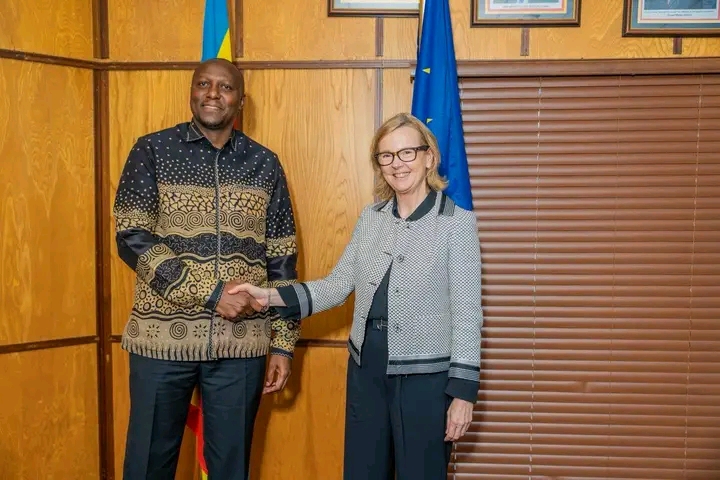
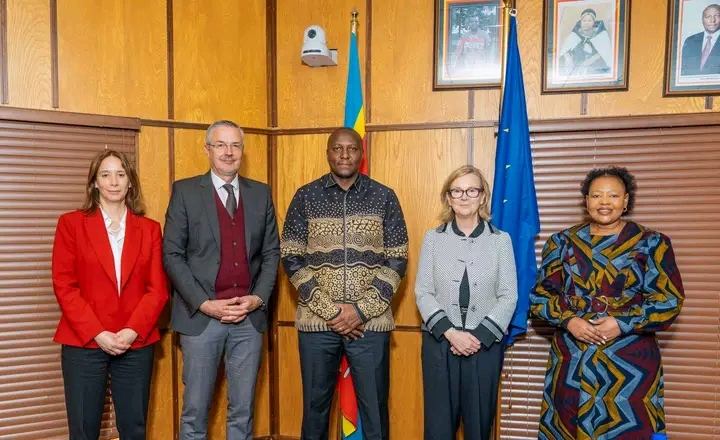
Prime Minister Russell Dlamini and Minister of Foreign Affairs and International Cooperation Pholile Shakantu met with Patricia Llombart Cussac, the European Union’s Managing Director for Africa, during her official visit to Eswatini. Accompanied by European Union Ambassador to Eswatini Karsten Mecklenburg, Llombart Cussac engaged government leaders on strengthening cooperation in line with the country’s development priorities and long-term economic ambitions.
The discussions extended beyond traditional diplomatic relations and focused on areas with direct implications for economic growth. Separate engagements with Minister of Commerce, Industry and Trade Manqoba Khumalo and Minister of Information, Communications and Technology Savannah Maziya placed trade, investment promotion and digital transformation at the centre of the dialogue, reflecting the growing importance of these sectors in Eswatini’s development agenda.
The visit comes at a time when the European Union is expanding its economic engagement across Africa through investment-led partnerships designed to stimulate industrialisation, strengthen private sector development and improve digital connectivity. For Eswatini, the engagement presents an opportunity to leverage one of the world’s largest economic blocs to support domestic growth objectives, attract capital and enhance competitiveness.
Trade remains one of the most important pillars of the relationship. Through the Southern African Development Community Economic Partnership Agreement, Eswatini enjoys preferential access to European markets, creating opportunities for local producers and exporters to expand their reach beyond the region. Increased engagement with European institutions could help unlock new opportunities for value-added exports while improving the country’s integration into global value chains.
The focus on investment is equally significant. As government intensifies efforts to attract foreign direct investment and stimulate private sector growth, closer cooperation with the European Union could strengthen investor confidence and facilitate access to development finance, technical expertise and strategic partnerships. Such support is increasingly important as Eswatini seeks to diversify its economy, create jobs and build resilience against external economic shocks.

Digital transformation emerged as another key area of interest during the discussions. Across Africa, the European Union has prioritised investments in digital infrastructure, innovation ecosystems and technology-driven economic development. For Eswatini, which has identified digitalisation as a critical enabler of economic growth, collaboration with European partners could accelerate efforts to modernise public services, expand digital access and create opportunities for technology-based enterprises.
According to information released by the European Union on its cooperation with Eswatini, the bloc remains committed to supporting sustainable economic development, private sector competitiveness and inclusive growth in the Kingdom. These priorities align closely with government’s own economic strategy, which seeks to foster industrial development, improve productivity and enhance the country’s attractiveness as an investment destination.
While no specific investment commitments were announced during the meetings, the engagements signal a continued strengthening of economic ties between Eswatini and the European Union. More importantly, they highlight a shared interest in using trade, investment and digital innovation as vehicles for economic transformation.
For the business community, the discussions offer a positive indication that Eswatini remains on the radar of major international partners seeking to expand economic cooperation in Africa. As competition for investment intensifies across the continent, sustained engagement with institutions such as the European Union could prove increasingly important in supporting the Kingdom’s ambitions for growth, job creation and long-term economic development.