





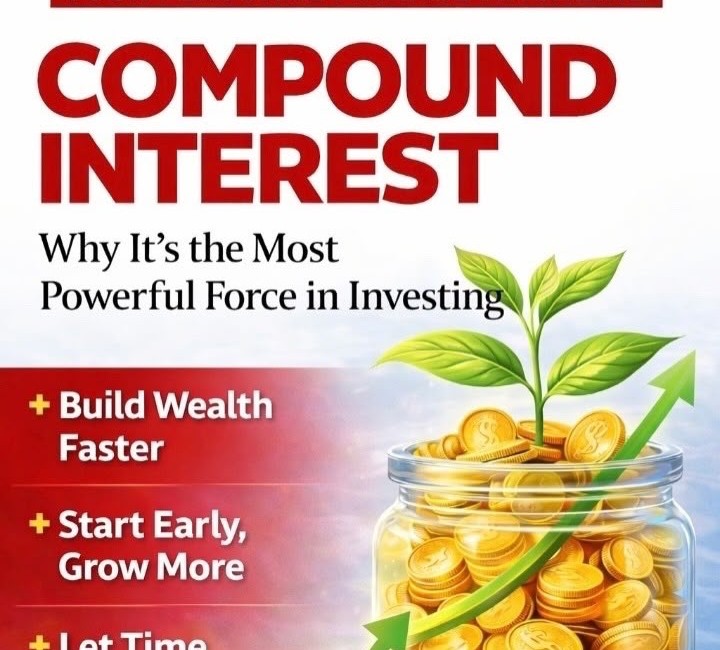
Compound interest is the hidden engine of wealth creation. It allows money to grow not only on the original investment but also on the gains that investment has already produced. Over time, this creates a snowball effect that accelerates, turning modest savings into extraordinary fortunes.
The Mechanics of Compounding
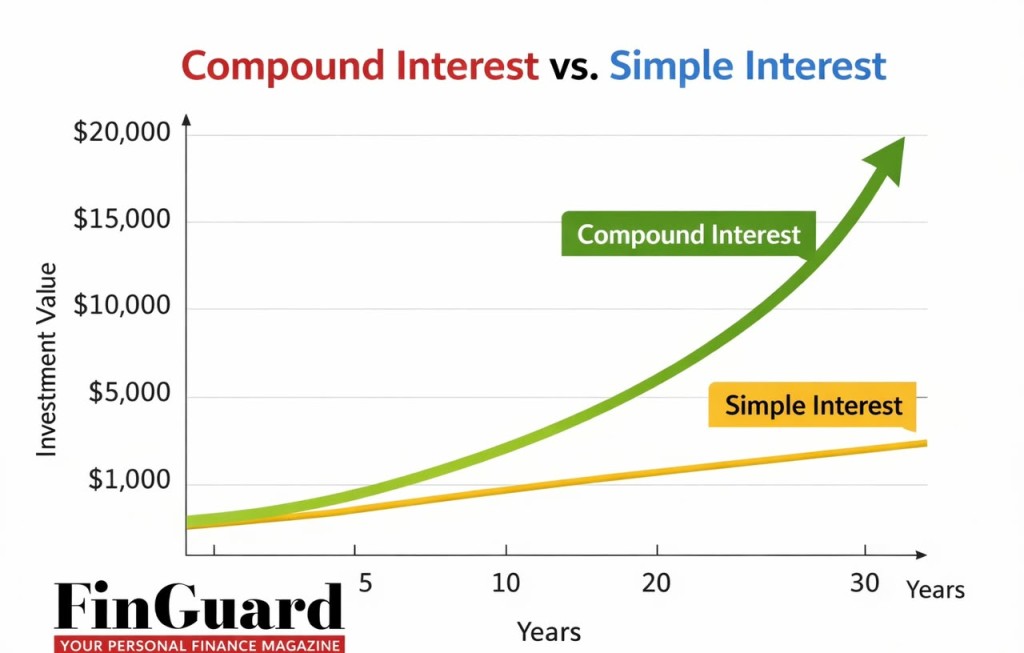
Simple interest grows in a straight line, whereas compound interest grows exponentially, creating a curve that steepens over time. The earlier you begin, the greater the reward, and a decade of delay can mean hundreds of thousands lost in potential growth. Investors often use the Rule of 72 as a guide: divide 72 by your annual return rate to estimate how long it takes for your money to double. At 8 percent, it doubles in about nine years.
Why It’s the Investor’s Greatest Ally
Compound interest rewards discipline more than size. Even small monthly deposits, when left to compound, can grow into substantial wealth. Regular investing beats sporadic windfalls, and reinvesting dividends or interest accelerates the journey. It is consistency, not luck, that builds fortunes.
The Double Edge of Compounding
Compound interest is a friend to investors, but a foe to borrowers. Savings accounts, mutual funds, and retirement portfolios thrive on compounding. Credit card balances and high‑interest loans, however, compound in reverse, turning small debts into overwhelming burdens. The same force that builds wealth can also destroy it if mismanaged.
Local Perspective – Building Wealth in Eswatini
For readers in Eswatini and across Africa, compound interest is more than mathematics; it is empowerment. It allows ordinary earners to build wealth steadily, even with modest monthly contributions. It democratizes finance, making millionaire retirements achievable for disciplined savers. And it encourages a cultural shift toward patience and long‑term planning, values that resonate deeply in communities striving for stability and growth.
Local Bond Examples
The Central Bank of Eswatini issues government bonds and treasury bills that provide a practical demonstration of compounding. A saver who invests in a 10‑year government bond at 8 percent receives annual coupons. If they reinvest those coupons into new bonds, the returns compound steadily. For example, an investment of E50,000 could grow to more than E108,000 over a decade once reinvested interest is added to the principal.
This shows that compounding is not just a theory from textbooks or foreign markets, it is alive in Eswatini’s own financial system. Bonds, with their predictable coupon payments, illustrate the disciplined side of compounding, while dividend‑paying shares on the Eswatini Stock Exchange highlight the dynamic side. Together, they prove that compounding is accessible to every investor, whether through fixed‑income securities or equity holdings.
Words to Live By
“Compound interest is not just mathematics; it is a philosophy of wealth.”
“Those who harness it build futures of abundance; those who ignore it pay the price.”The Investor’s Compass
Start early, because time is your greatest ally. Stay invested, resisting the temptation to pull money out too soon. Reinvest returns, letting dividends and interest fuel growth. And above all, think long-term; compounding rewards patience, not quick wins.
Compound interest rewards consistency, punishes procrastination, and transforms ordinary savers into extraordinary investors. It is the most powerful force in investing because it turns patience into prosperity, whether through local bonds or bank dividends. The principle remains the same: wealth grows when you let time and discipline do the work.

Other Articles

The Uncertain US–Iran Deal and Its Global Promise
Wealth-Building Principles That Stand the Test of Time