




By: Nkosiyabusa Nsibande
Eswatini’s inflation rate may still be sitting comfortably below historical averages, but the latest Consumer Price Index data suggests the country is entering a new phase of inflationary pressure, one driven less by food prices and consumer demand, and increasingly by rising utility charges, energy costs and transport expenses
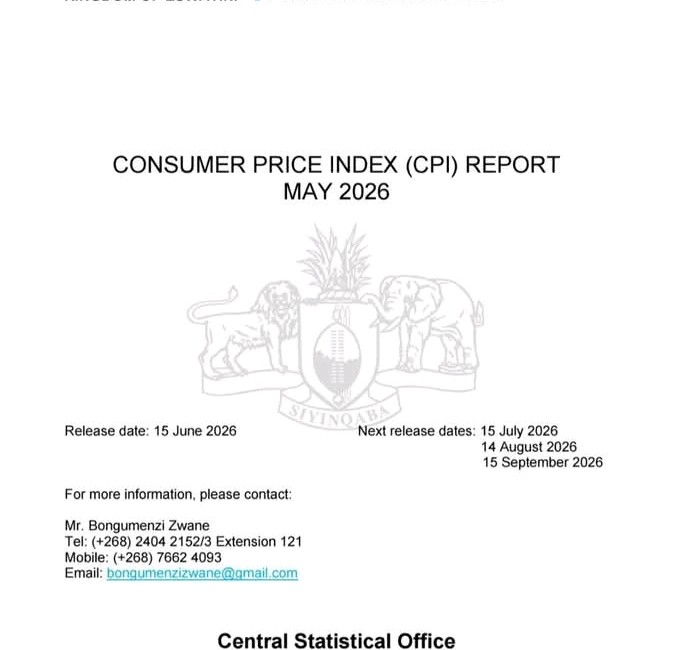
The headline inflation rate rose to 2.7 percent in May 2026 from 2.0 percent in April, ending a period of steadily easing inflation and signalling a shift in the composition of price growth across the economy. While the overall inflation figure remains moderate by regional standards, the underlying drivers reveal growing cost pressures in sectors that affect virtually every household and business in the country.
Unlike previous inflation cycles that were heavily influenced by food prices, the current trend is being driven by housing, electricity, fuel and transport costs. These are categories that economists often associate with cost-push inflation, a form of inflation that occurs when rising production and operating costs force prices higher throughout the economy.
The distinction is important because cost-push inflation is often more difficult to manage than inflation driven by strong consumer demand. When consumers spend excessively, central banks can respond by tightening monetary conditions. However, when inflation originates from higher utility tariffs, fuel prices and other externally influenced costs, monetary policy has limited influence over the underlying causes. The latest CPI report suggests that this is increasingly becoming Eswatini’s reality.
Inflation Is Rising Again, But For Different Reasons
Housing, water, electricity, gas and other fuels recorded annual inflation of 6.6 percent in May, making it the largest contributor to the country’s overall inflation rate. The category alone contributed 1.9 percentage points to the headline inflation figure of 2.7 percent, meaning that most of the inflation currently being experienced in the economy originates from housing and utility-related costs.
A deeper examination of the data reveals where these pressures are emerging. Electricity prices rose by 15.1 percent compared with May last year, while liquid fuel costs increased by an extraordinary 48.2 percent. Water charges climbed by 4.0 percent and rental costs increased by 3.3 percent over the same period.
The significance of these increases lies not only in their impact on household budgets but also in their influence on the wider economy. Utility costs are foundational inputs into production and service delivery. When electricity, fuel and water become more expensive, businesses face rising operational expenses regardless of whether consumer demand is strong or weak. This creates an inflationary environment that originates from the supply side of the economy rather than from excessive spending.
Why Energy Costs Matter Beyond Household Bills
Utility and energy costs are embedded in virtually every economic activity. Electricity powers factories, retail stores, offices, hotels, restaurants and telecommunications infrastructure. Fuel powers transportation networks, logistics operations and agricultural machinery. Water supports industrial production, food processing and hospitality services.
As a result, increases in utility and fuel costs rarely remain confined to those sectors. Instead, they gradually move through supply chains, increasing the cost of producing, transporting and selling goods and services. The impact is often delayed, which means the full economic effect of today’s utility cost increases may only become visible months later through higher prices in other sectors.
This transmission mechanism is what makes energy-related inflation particularly concerning. Unlike temporary price increases in isolated sectors, energy inflation has the potential to spread throughout the economy, influencing business decisions, consumer prices and investment plans simultaneously.
Manufacturers Face Growing Pressure on Margins
For businesses, this development represents a significant challenge. Manufacturers are among the most exposed. Rising electricity tariffs directly affect production costs, particularly for energy-intensive industries. Firms operating in food processing, textiles, construction materials and manufacturing sectors face the prospect of shrinking margins unless they improve efficiency, absorb higher costs or pass those costs on to consumers.
The challenge is particularly important given Government’s ambition to position Eswatini as a regional manufacturing and industrial hub. Industrial expansion depends heavily on reliable and affordable energy. As utility costs rise, investors evaluating production locations become increasingly sensitive to operating costs, potentially affecting the country’s attractiveness as an investment destination. For many businesses, the concern is not necessarily the current inflation rate itself, but the possibility that elevated utility costs become a permanent feature of the operating environment.
Transport Costs Are Becoming a Hidden Tax on Business
The transport and logistics sector faces similar pressures. The CPI report shows that the operation of personal transport equipment increased by 14.4 percent year-on-year, while fuels and lubricants rose by 23.2 percent. Air passenger transport costs surged by 20.8 percent, highlighting broader increases in transportation expenses.
For businesses that depend on imported inputs or nationwide distribution networks, rising transport costs effectively function as an additional tax on operations. Every increase in logistics expenses eventually affects wholesale prices, retail margins and final consumer prices.
The implications extend beyond individual companies. Transport costs influence the competitiveness of the entire economy. As freight expenses rise, locally produced goods become more expensive to distribute within Eswatini and potentially less competitive in export markets. Companies competing against imports may find it increasingly difficult to maintain pricing advantages if domestic operating costs continue rising faster than those of regional competitors.
Food Prices Are Providing Relief, For Now
The irony is that these pressures are emerging at a time when food inflation is providing substantial relief to consumers. Food and non-alcoholic beverages recorded annual deflation of 1.8 percent in May, compared with inflation of 3.2 percent a year earlier. Bread and cereals declined by 5.4 percent, oils and fats fell by 1.7 percent and vegetables decreased by 1.1 percent.
Ordinarily, such developments would be expected to strengthen household purchasing power and support consumer spending. Lower food prices leave households with more disposable income, which can stimulate economic activity through increased consumption.
However, households do not experience inflation through statistical averages. Consumers pay monthly electricity bills, fuel costs, rental payments and transport expenses regardless of whether food prices are falling. Consequently, many families may continue feeling financially constrained even while the national inflation rate remains relatively low. The divergence between food prices and utility costs highlights an important reality: inflation figures may be improving, but the cost of essential services continues to rise.
The Growing Influence of Administered Prices
The situation becomes even more revealing when examining administered prices. The CPI for administered prices increased by 8.6 percent during May, more than three times faster than the overall inflation rate. By comparison, non-administered prices increased by only 1.1 percent.
Administered prices generally include goods and services whose prices are influenced by regulatory authorities, public institutions or utility providers rather than purely market forces. The widening gap between administered and non-administered inflation suggests that a growing share of price increases is originating from regulated sectors rather than from broad consumer demand.
This trend presents a policy dilemma. While low food inflation and weak demand-driven price pressures suggest that inflation remains under control, rapidly rising administered prices can create significant economic strain without necessarily triggering an immediate monetary policy response. The challenge for policymakers is that households and businesses experience the financial consequences regardless of whether inflation originates from market activity or regulatory adjustments.
What the Underlying Inflation Measures Reveal
The analytical measures within the CPI report reinforce the view that energy-related costs are becoming increasingly influential. Inflation excluding housing and utilities falls to just 1.5 percent. Inflation excluding energy drops to 1.9 percent. These measures indicate that without utility and energy-related price increases, inflation across much of the economy would remain exceptionally subdued.
In effect, energy and housing costs are doing most of the work in pushing the national inflation figure upward. This suggests that inflationary pressures are concentrated rather than broad-based, providing policymakers with a clearer picture of where emerging risks are located.
The data also indicate that goods inflation remains stronger than services inflation, suggesting that supply-chain and commodity-related pressures continue to play a greater role than wage-driven inflation.
A Warning Sign for Growth and Competitiveness
For investors and financial institutions, the data offer mixed signals. On one hand, moderate headline inflation supports macroeconomic stability and preserves purchasing power. Low inflation typically reduces uncertainty and improves planning conditions for businesses.
On the other hand, rising utility and transport costs create risks for corporate profitability, particularly among sectors with high energy intensity or significant distribution requirements. Businesses may increasingly face difficult choices between absorbing higher costs, reducing investment expenditure or passing costs on to consumers.
The implications for economic growth therefore deserve close monitoring. Eswatini’s economy has recently benefited from stronger private sector activity, increasing investment and expanding industrial development. Sustained increases in energy and transport costs could eventually moderate some of this momentum if businesses begin delaying expansion projects, reducing capital expenditure or reassessing investment decisions.

The Inflation Story Has Changed
The latest inflation report reveals more than a simple increase from 2.0 percent to 2.7 percent. It points to a gradual but important shift in the structure of inflation itself. Food prices are no longer the primary inflation story. Instead, the country’s inflation profile is becoming increasingly concentrated in utilities, energy and transport, three sectors that sit at the heart of economic productivity, business competitiveness and household welfare.
The headline inflation figure remains low, but the composition of inflation is sending a more cautionary message. For households, the warning is that essential living costs are rising faster than the national average. For businesses, the message is that operating costs are becoming increasingly difficult to contain.
For policymakers, meanwhile, the challenge will be ensuring that rising utility and transport costs do not evolve from a sector-specific problem into a broader constraint on economic growth, industrial competitiveness and long-term economic resilience.