





By: Nkosiyabusa Nsibande
Entrepreneurs have been urged to strengthen their financial discipline, improve their business knowledge, and separate personal finances from business operations if they are to build sustainable enterprises that contribute meaningfully to economic growth.
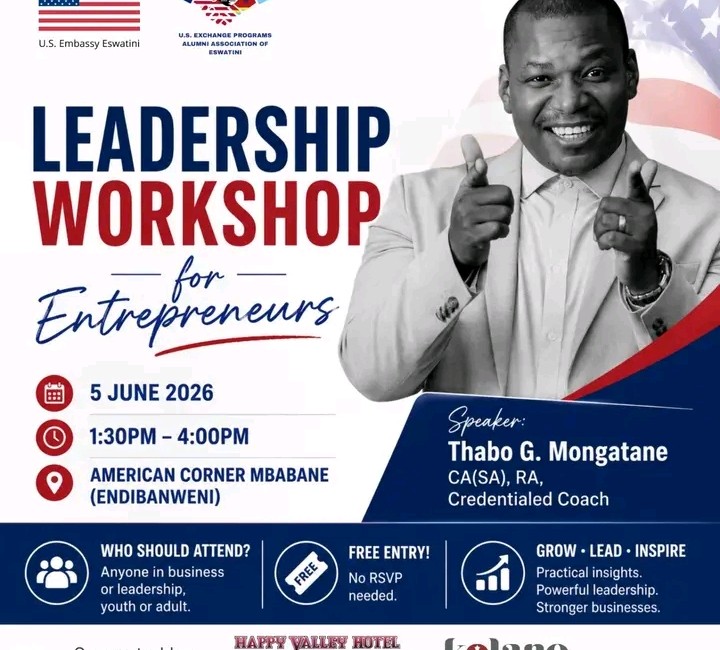
This was the key message delivered by leadership and business development speaker Thabo G. Mongatane during a leadership workshop, where he challenged business owners to rethink their approach to entrepreneurship and financial management.
Mongatane introduced what he described as the BEAKS framework, which stands for Behavior, Experience, Attitude, Knowledge, and Skills, arguing that these five elements are critical for business success. While many entrepreneurs focus on raising capital or finding customers, he said the greatest determinants of success often lie in the entrepreneur’s mindset, financial habits, and ability to make informed decisions.
One of the strongest warnings delivered during the workshop centered on debt and poor financial management. Mongatane described debt as one of the biggest traps facing consumers and entrepreneurs alike, noting that many businesses collapse not because of a lack of opportunity but because owners cannot manage cash flow and financial obligations effectively.
He further observed that while many entrepreneurs clearly understand why they started their businesses, maintaining momentum and ensuring long-term continuity often becomes a challenge. According to him, several factors contribute to this problem, including fear of failure, procrastination, and limited business knowledge.
“Many people know why they started their businesses, but continuity becomes a challenge,” he said, explaining that entrepreneurs frequently delay important decisions while waiting for the perfect opportunity, only to miss valuable growth prospects.
Mongatane argued that weak entrepreneurship skills have broader economic consequences beyond individual businesses. He warned that poor business practices can undermine economic development and job creation, adding that the country’s education system still falls short in preparing people for financial realities.
“Being a bad businessperson is bad for the economy,” he said. “Our educational system is not preparing us adequately in terms of financial literacy.”
A major focus of his presentation was the need for entrepreneurs to recognize the distinction between themselves and their businesses. He stressed that a company should be treated as a separate legal entity with its own financial obligations and growth requirements.
“The business is a separate legal entity. You are not the business,” Mongatane said. “The money made by your business is not for you. It is for the business to make more money, pay rent, pay taxes, and meet its operational obligations.”
He encouraged entrepreneurs to employ themselves within their businesses and to respect company structures and policies in the same way they would expect any other employee to do. Such discipline, he argued, creates stronger governance systems and improves the long-term sustainability of enterprises.
The speaker also challenged business owners to adopt a more competitive outlook, warning that local businesses are competing not only with domestic firms, but also with international products and services.
“Your product needs to compete with other products in the market,” he said, adding that entrepreneurs must continuously improve quality, efficiency, and customer value if they hope to remain relevant in an increasingly interconnected marketplace.
Mongatane emphasized that entrepreneurship requires sacrifice, discipline, and a willingness to invest in personal development. He reminded participants that success rarely happens by chance and that business owners must be prepared to make hard decisions and remain committed, even during challenging periods.
“You need to pay the cost to be the boss,” he said, while also highlighting the importance of strategic partnerships in expanding market access and driving sales growth.
Financial planning emerged as another critical theme during the workshop. Mongatane urged entrepreneurs to develop and consistently follow business budgets, describing budgeting as one of the most powerful tools available to business owners.
“Your budget is a prayer for your business,” he said, explaining that a budget reflects an entrepreneur’s intentions, priorities, and growth plans. Without a clear financial roadmap, he warned, businesses often struggle to manage resources and achieve sustainable profitability. He further noted that successful entrepreneurs maintain strong personal financial discipline alongside sound business management practices.
“Every successful entrepreneur has their personal finances in order,” he said, arguing that poor personal financial habits often spill over into business operations and weaken decision-making. On attitude, Mongatane encouraged entrepreneurs to cultivate what he termed an “attitude of gratitude,” suggesting that resilience, humility, and a willingness to learn are essential traits for long-term success.
Knowledge, however, remained at the center of his message. He cautioned entrepreneurs against becoming emotionally attached to business ideas that the market no longer supports. Sometimes, he said, closing a business may be the most rational financial decision. “Sometimes the market does not need your products, and you need to shut down the business,” he said, stressing that entrepreneurs must respond to market realities rather than personal preferences. He also challenged participants to confront another often-overlooked obstacle to growth.
“Sometimes the fear of success limits us,” Mongatane said, noting that some entrepreneurs hesitate to scale their businesses because of the increased responsibility and accountability that accompanies growth.
Concluding his remarks, Mongatane emphasized that sustainable business success requires discipline, continuous practice, and a deep understanding of one’s industry. Entrepreneurs, he said, must commit themselves to lifelong learning and ensure they possess knowledge not only of their products but of every aspect of their business operations.
“Success requires discipline and practice,” he said. “Always have more knowledge about your entire business and understand your industry.”
His message reinforced a growing consensus among business development experts that financial literacy, governance, budgeting, and entrepreneurial discipline remain fundamental building blocks for the growth of SMEs and the broader economy.