





By: Nkosiyabusa Nsibande
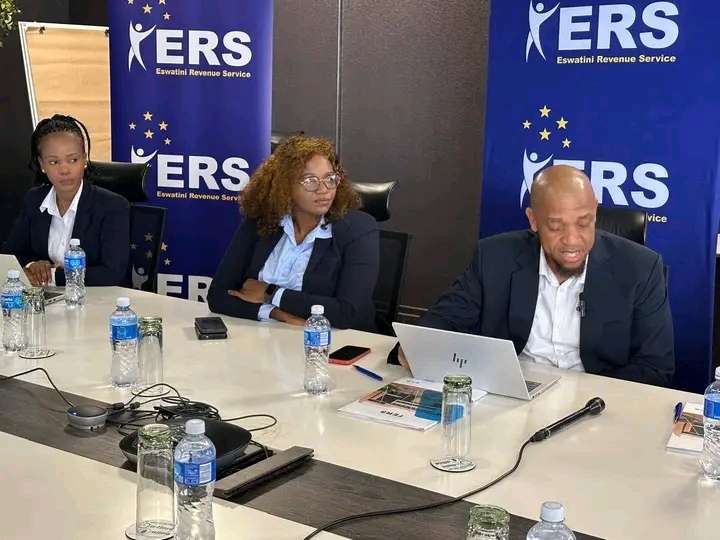
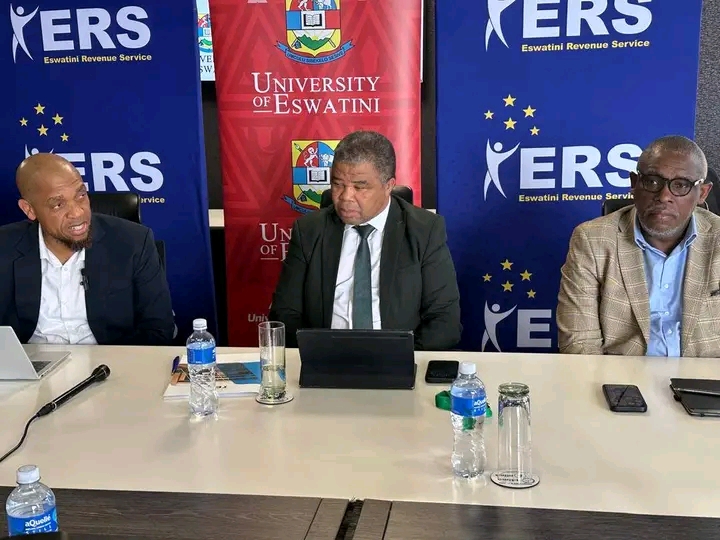
The Eswatini Revenue Service (ERS) is seeking to strengthen tax compliance and improve revenue collection through a new partnership with the University of Eswatini (UNESWA), signaling a shift towards a more research-driven approach to tax administration.
While the Memorandum of Understanding signed between the two institutions on Thursday includes cooperation on artificial intelligence and digital innovation, revenue officials say its broader value lies in generating the data, research, and behavioral insights needed to improve taxpayer compliance and support sustainable revenue growth.
For a country where domestic revenue remains critical to funding public services, infrastructure development, and social programs, the partnership reflects an increasing recognition that successful tax administration depends as much on understanding taxpayer behavior as it does on enforcement.
A Data-Driven Approach to Voluntary Compliance
Speaking during the signing ceremony, ERS Commissioner General Brightwell Nkambule said the institution’s long-term objective remains achieving voluntary compliance, where taxpayers willingly meet their obligations because they understand the system, trust the institution and find compliance straightforward.
“At ERS, we believe that sustainable revenue collection is not achieved through enforcement alone,” Nkambule said. “It is achieved when taxpayers comply because they understand their obligations, trust the tax system, and find compliance simple and convenient.”
He argued that achieving higher compliance rates requires a deeper understanding of the factors that influence taxpayer decisions. “The answers to these questions cannot be based on assumptions. They must be informed by evidence, research, and data,” he said, referring to questions around taxpayer support needs, barriers to compliance, and trust in the tax system.
Research as a Tool for Revenue Growth
Under the partnership, ERS intends to work with university researchers, academics, and students to conduct studies that can help shape taxpayer education programs, service delivery models, and compliance strategies. The collaboration is expected to include taxpayer perception surveys, behavioral research, economic analysis, and policy evaluations designed to provide evidence-based insights into taxpayer behavior.For FinGuard readers, signifying this approach extends beyond tax administration. Improved voluntary compliance has the potential to enhance revenue collection without increasing tax rates, providing the government with greater fiscal space to finance development priorities while reducing the costs associated with enforcement and debt-funded expenditure.
Nkambule said the partnership should be viewed as more than a relationship between a university and a government agency. Instead, he described it as “a strategic alliance that demonstrates how academia and industry can work together to advance the national development agenda.”
The Commissioner General pointed to international examples where revenue authorities have successfully partnered with academic institutions to develop relevant solutions to tax administration challenges. Such models combine academic expertise with operational experience to create interventions that are both cost-effective and responsive to local economic realities.
Universities as Partners in Economic Development
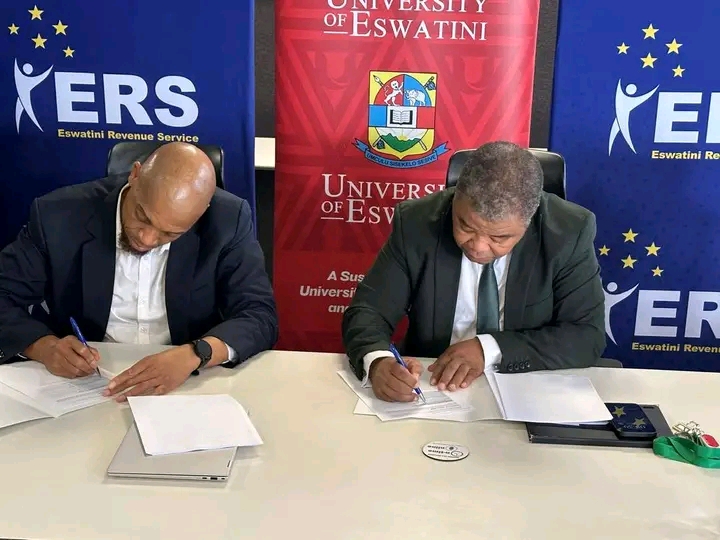
Vice Chancellor Professor Justice Thwala said universities are increasingly expected to move beyond their traditional role of producing graduates and become active contributors to solving national development challenges.
He noted taxes collected by ERS play a fundamental role in financing economic development. “The taxes collected by your institution finance essential public services, support infrastructure development, strengthen national institutions, and create opportunities for economic growth and social progress,” he said.
Professor Thwala suggested that collaboration between universities and public institutions could create new opportunities in specialized fields that are becoming increasingly important to modern economies. He specifically identified anti-money laundering, financial crime investigations, forensic accounting, tax intelligence, financial compliance, and advanced data analytics as areas where future cooperation could generate substantial value for both institutions and the wider economy.
Building Evidence-Based Tax Administration
The proposed collaboration also arrives when governments are under increasing pressure to improve revenue collection efficiency while maintaining taxpayer confidence. As economic activity becomes more complex and digital, tax authorities are relying more heavily on data analysis and behavioral insights to improve compliance outcomes.
ERS believes academic research can help bridge this gap by providing independent evidence on taxpayer attitudes, compliance barriers, and service delivery challenges.
Beyond the immediate objective of improving tax administration, the partnership may also contribute to building local expertise in economic analysis and public finance. Research generated through the collaboration could inform policy discussions, strengthen institutional decision-making, and provide a richer understanding of the factors shaping economic activity in Eswatini.
Strengthening the Foundations of Fiscal Sustainability
The agreement, therefore, represents more than an investment in technology or staff training. It reflects a growing appreciation that stronger revenue systems are built on knowledge, research, and evidence-based decision-making.
For ERS, the ultimate measure of success will be whether those insights translate into higher levels of voluntary compliance, improved taxpayer trust, and more sustainable domestic revenue generation. For the broader economy, the partnership offers a model of how academia and public institutions can work together to address fiscal challenges and strengthen the foundations of long-term economic growth.