






By: Nkosiyabusa Nsibande
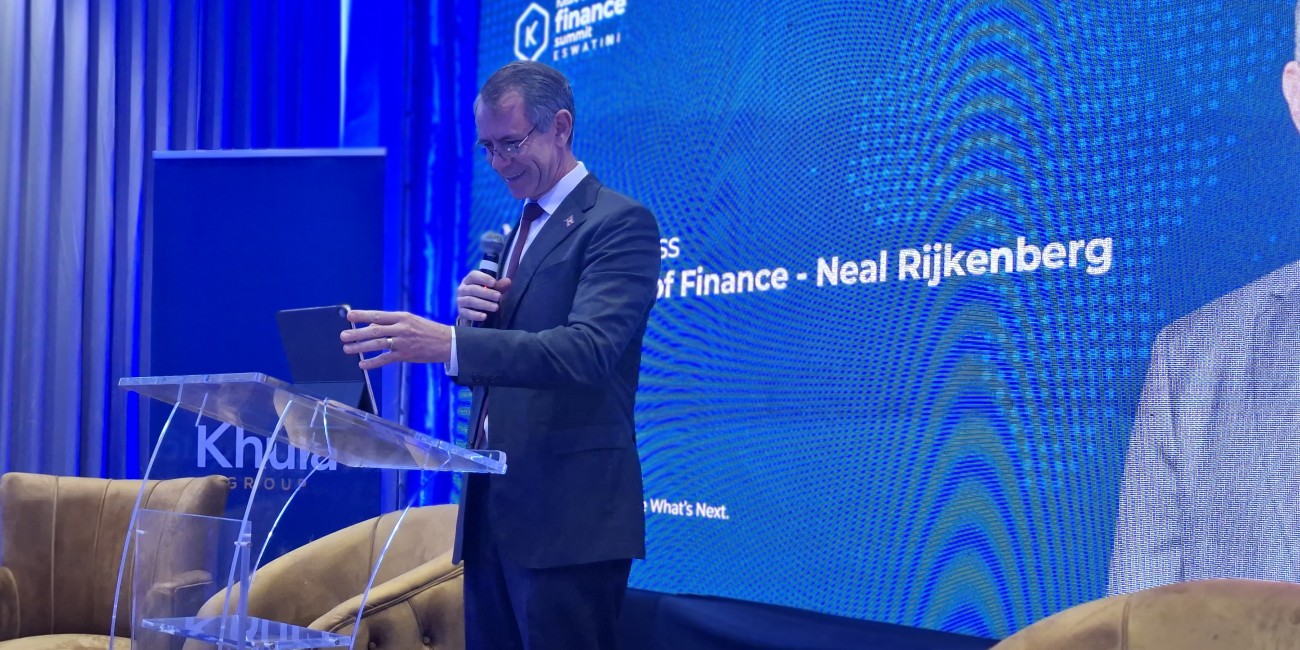
For a country of Eswatini’s size, hosting a forum dedicated to artificial intelligence in finance might once have seemed aspirational rather than substantive. However that kind of perception shifted yesterday, when Minister of Finance Neal Rijkenberg used his opening address at the inaugural Future of Finance Executive Forum (Eswatini Edition) to argue that the Kingdom is no longer positioning itself on the periphery of global financial innovation but is instead attempting to claim a leadership role in it regionally. Hosted by Eswatini technology firm Khula Group under the theme “AI, Digital Transformation & Intelligent Automation for Economic Growth,” the forum brought together banks, regulators, and technology leaders in a setting the minister described as deliberately symbolic. He told delegates that the fact the conversation was happening in Eswatini, rather than “London, New York, or Seoul,” was itself a signal of where the continent’s financial innovation is heading, framing the venue itself as part of the argument he was making.

Much of the Minister’s address was built around the idea that the financial sector is passing through a structural shift rather than a cyclical one, and that institutions and governments that fail to recognize the difference will find themselves permanently disadvantaged. He argued that finance has moved from being built on capital, compliance, and customers to being built on data, intelligence, and speed, a reframing that positions technology capability as a core competitive asset rather than a back-office function. Extending that logic, he described AI, digital transformation, and automation not as buzzwords but as “the new infrastructure of money,” a formulation intended to convey that these tools are becoming as foundational to modern finance as payment systems or capital markets themselves. He paired that framing with an explicit warning, cautioning that countries slow to adopt them “will be left behind,” a line clearly aimed at underscoring the urgency behind the government’s own investment agenda.
That agenda, as laid out in the address, rests on three interlocking pillars that together form the architecture of the government’s digital economy strategy. The first is digital public infrastructure, encompassing national identification systems, digital payment rails, and what the Minister described as sovereign data and compute capacity, essentially the physical and technical foundation without which more advanced applications of artificial intelligence cannot function. The second pillar, intelligent finance, is aimed squarely at the sector itself, encouraging banks, insurers, and fintechs to deploy AI for credit scoring in order to reach previously unbanked populations, to use automation to reduce the cost of regulatory compliance, and to apply data analytics to support real-time budget and policy decisions at the government level. The third pillar, people and partnerships, ties workforce upskilling to what the Minister termed “smart regulation,” a regulatory posture intended to protect consumers from the risks associated with AI deployment while still leaving room for the private sector to innovate and compete.
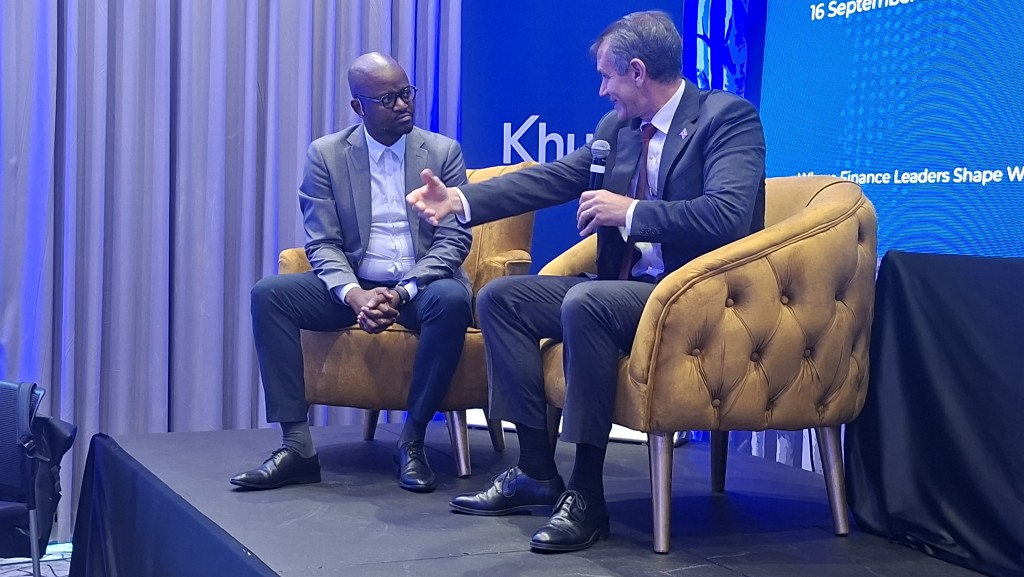
Government officials were careful throughout the address to present this strategy as an extension of existing momentum rather than a speculative leap, pointing to Eswatini’s digital payments performance as concrete evidence that the underlying foundation is already in place. Figures cited during the address showed that 61% of adults in the country made or received a digital payment in 2024, a figure ahead of the roughly 51% average recorded across Sub-Saharan Africa, with more than half of adults surveyed also holding a mobile-money account. Building on that base, the Minister argued that the next stage of the country’s development lies in moving “from digital payments to a genuinely digital economy,” a transition that would extend the same underlying principles into government services, taxation, lending, insurance, business registration, and dedicated support for small and medium enterprises.
The address also carried a pointed challenge to the private sector, with the Minister making clear that government’s infrastructure investment alone would not be sufficient to realize the ambitions he had outlined. Addressing bank and insurance executives directly, he argued that AI adoption is now a matter of “when and how fast” rather than “if,” effectively closing the door on the idea that institutions could afford to treat the technology as optional. He went further in outlining the competitive stakes involved, telling delegates that the institutions that succeed will be those that put the technology to direct commercial use, whether in strengthening customer relationships or streamlining operations.
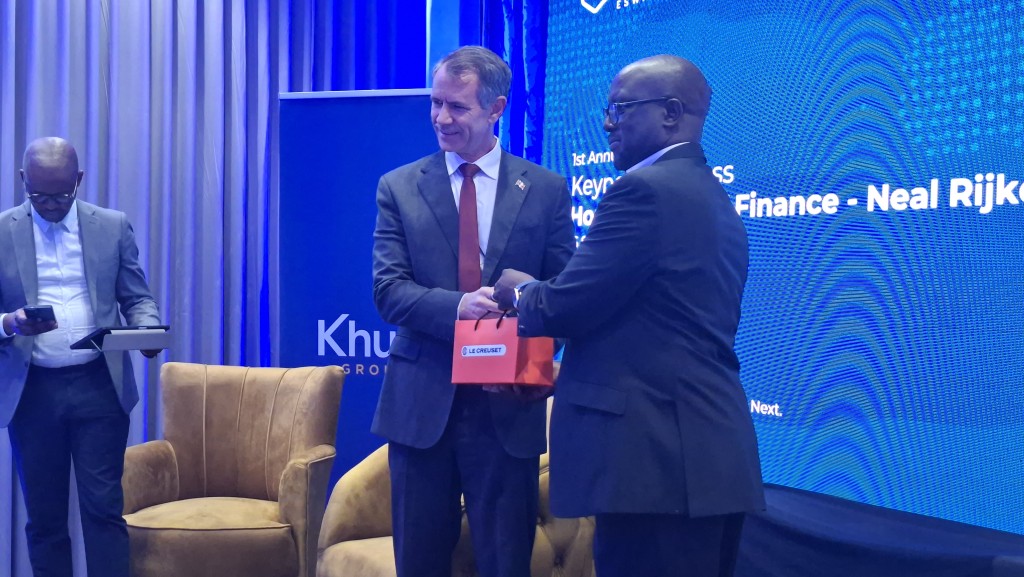
The Minister closed the address by placing Eswatini’s ambitions within a wider historical frame, casting the country’s digital finance push as an opportunity to leapfrog rather than simply catch up with more established financial centers and drawing a direct comparison to how the Asian Tigers transformed their economies through manufacturing decades earlier. He used that framing to issue a direct call to action, urging both government and the private sector to leave the forum having secured concrete partnerships and pilot projects rather than mere statements of intent. He closed on a note intended to convey resolve rather than aspiration, telling the room, “The Kingdom of Eswatini is ready. The future is calling. And together, we will answer.”