




By: Nkosiyabusa Nsibande
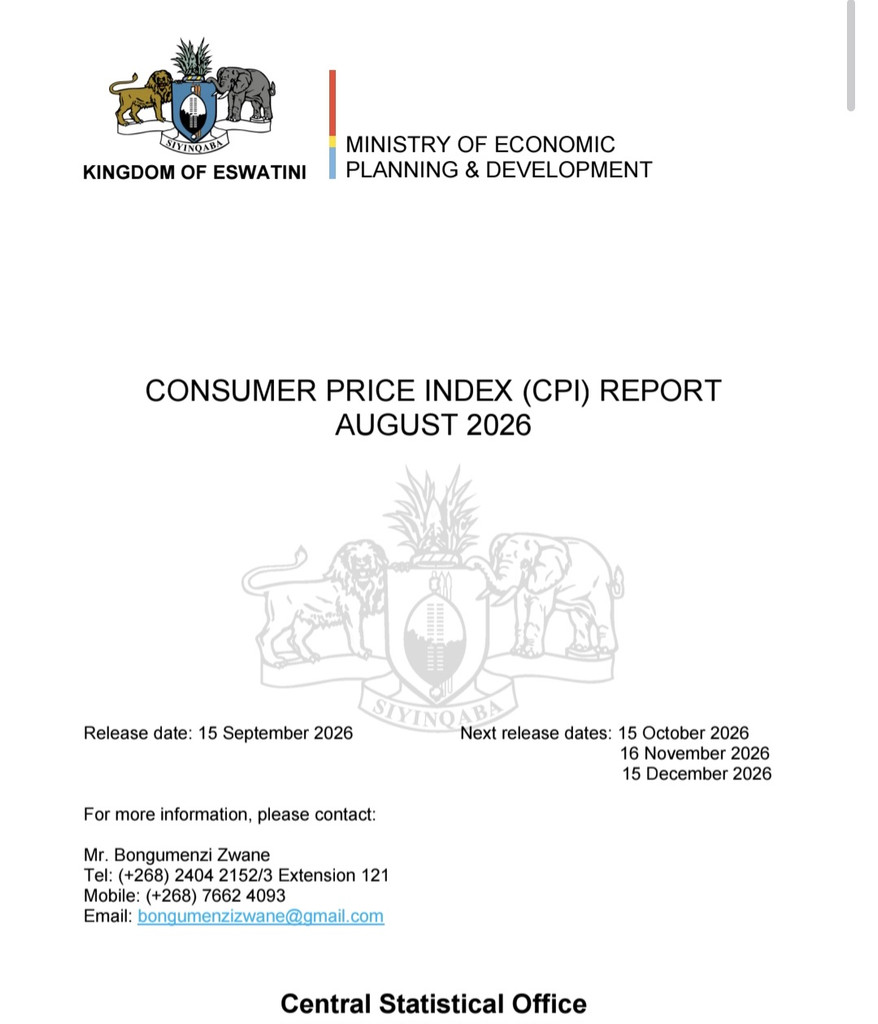
The recent Consumer Price Index report release by the Central Statistical Office of August 2026 headlines the figure of 2.8% annual inflation to be a modest and manageable number, while, within the comfort range, most central banks in the region would consider it acceptable. However, a closer reading of the report’s analytical series tells a more layered story, one that separates the inflation experienced by households and businesses into two distinct tracks, which are prices shaped by competitive market forces, and prices shaped by administrative decisions taken by government departments and state-linked utility providers.
According to the CPI Analytical Series contained in the report, the index for administered prices climbed 7.7% over the twelve months to August 2026, while the index tracking non-administered, market-determined prices rose by only 1.5% over the same period. That five-and-a-half percentage point divergence is not a marginal statistical quirk; it represents a fundamental split in how inflation is actually being generated within the economy, and it carries meaningful implications for how businesses, investors, and policymakers should interpret the country’s broader price stability narrative.

The clearest illustration of this divide sits within the housing, water, electricity, gas, and other fuels category, which carries a substantial 27.69% weighting in the overall CPI basket, the single largest weighting of any category measured. Within this group, electricity prices rose 15.1% year-on-year, liquid fuels surged by 28.2%, and water supply charges increased by 4.0%. Taken together, this category alone contributed 1.7 percentage points to the 2.8% headline inflation figure, meaning that well over half of the country’s entire inflation reading in August can be traced back to a basket dominated by tariff-driven, rather than demand-driven, price movements.
This distinction matters considerably for how the inflation figure should be read by business decision-makers. A headline rate driven primarily by consumer demand typically signals a growing economy, rising household purchasing power, and businesses able to pass on costs without significant resistance. A headline rate driven instead by administered price adjustments tells a different story altogether: one where cost increases are being imposed largely independent of underlying economic conditions, and where businesses face rising input costs for electricity, water, and fuel regardless of whether or not consumer demand justifies those increases. For energy-intensive industries, manufacturers, and any enterprise reliant on logistics and transport, this distinction directly shapes budgeting decisions, since tariff-driven cost increases tend to be far less predictable and far less responsive to standard monetary policy tools such as interest rate adjustments.

The report’s transport data reinforces this pattern. Fuels and lubricants for personal transport rose 19.5% annually, a figure closely tied to liquid fuel pricing mechanisms that fall within the administered price framework. Transport as a whole contributed 0.6 percentage points to headline inflation in August, the second-largest contribution after housing and utilities, further underscoring how heavily the current inflation print is weighted toward categories where prices are set through regulatory or policy mechanisms rather than through open competition among suppliers.
For monetary authorities, this creates a genuine policy dilemma. Interest rate adjustments are designed to cool or stimulate demand-driven inflation by influencing borrowing, spending, and investment decisions. They have considerably less traction over administered prices, which are set through separate regulatory processes tied to utility board decisions, fuel levy structures, and government fiscal considerations. If a growing share of the inflation basket is being driven by these administratively set prices, then conventional monetary tightening becomes a blunter instrument, potentially slowing the market-driven half of the economy without meaningfully addressing the source of the price pressure in the administered half.
There is also a forward-looking dimension worth watching closely. Should further tariff adjustments to electricity or fuel levies be implemented in the months ahead, and given global fuel price volatility, this remains a live possibility, the administered price index could climb further, pulling headline inflation upward even if consumer demand across the rest of the economy remains subdued. Conversely, should authorities hold administered prices steady while market prices continue rising modestly, the current gap could begin to narrow, offering a clearer read on where genuine demand pressure exists within the economy.
For businesses operating in Eswatini, and for investors assessing the country’s broader macroeconomic trajectory, the message from this month’s CPI report is a reminder that not all inflation is created equal. A 2.8% headline figure that is largely administered in origin behaves differently and requires very different planning assumptions than one generated organically by a strengthening consumer base. As the Central Statistical Office prepares its next release in October, close attention to the administered-versus-market price split will likely offer a far more useful signal than the headline number alone.

Other Articles

Eswatini Aims To Position Itself as Southern Africa’s AI Finance Hub
Europe-Bound Exports Rise 74.9% as Eswatini Diversifies Beyond SACU