






By: Nkosiyabusa Nsibande
Eswatini’s latest investment drive in Taiwan signals a deliberate shift towards attracting strategic capital capable of strengthening the country’s industrial base rather than expanding trade volumes. During a series of bilateral meetings held after the 30th Anniversary of the International Cooperation and Development Fund (ICDF), Minister of Commerce, Industry, and Trade Manqoba Khumalo positioned the Kingdom as an investment destination for companies operating in advanced manufacturing, renewable energy, biotechnology, and sustainable agriculture, sectors that the government has increasingly identified as critical for long-term economic transformation.
The engagements come when Eswatini is seeking to broaden its productive capacity, diversify exports, and improve value addition within the domestic economy. Rather than focusing exclusively on market access, the discussions centred on encouraging Taiwanese firms to establish operations that could generate employment, introduce new technologies, and integrate local businesses into regional and global value chains. This approach is consistent with the Joint Statement on Investing in Resilience and Prosperity: Digital Innovation for a Sustainable Future, which seeks to deepen economic cooperation between the two countries beyond traditional development assistance.
Among the companies engaged was YAGEO Corporation, a global manufacturer of electronic components whose product portfolio includes LAN magnetics, resistors, temperature sensors, limit switches, and inductors used across multiple electronics manufacturing industries. The company’s expertise presents potential opportunities for Eswatini to position itself within higher-value manufacturing activities, particularly as the country continues exploring avenues to attract investment into industrial production and export-oriented manufacturing.

The Minister also met with Leezen Company, whose business model combines organic food production with environmentally sustainable packaging solutions. Beyond its commitment to organic agriculture, the company already imports handicrafts from Eswatini for distribution in Taiwan, demonstrating an existing commercial relationship that might be expanded. Increased collaboration with firms operating in organic agriculture may also support efforts to develop niche export markets where sustainably produced products command higher international prices.
Industrial infrastructure featured prominently during discussions with Jia Bang Smart Investment, which outlined its development strategy for the Taiwan Industrial Innovation Park (TIIP). The proposed initiatives include establishing an essential oils manufacturing business, developing a bio-pharmaceutical project, and implementing a solar energy storage investment in collaboration with Blue Energy Company. Collectively, these projects represent investment opportunities that extend beyond conventional manufacturing by incorporating renewable energy and biotechnology, sectors that have become increasingly important in attracting long-term private investment globally.
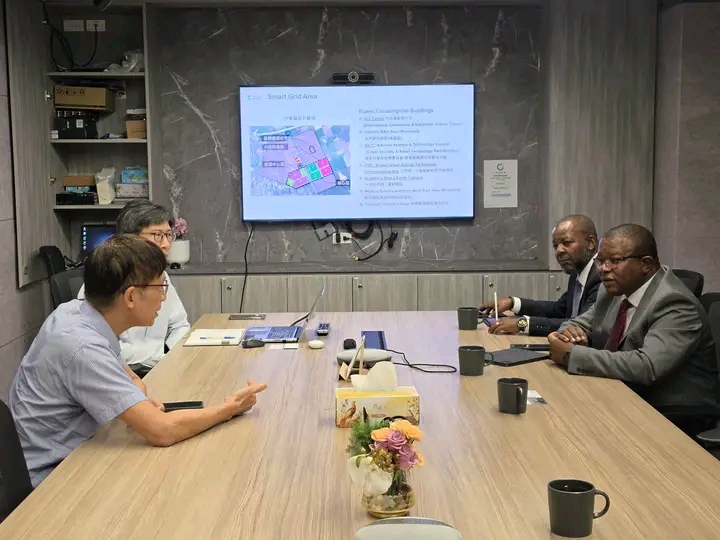
Renewable energy also emerged as a significant area of cooperation during meetings with Green Harvest Company, whose expertise includes smart grid technology, energy storage systems, and renewable energy infrastructure. For Eswatini, improving energy resilience remains an important factor in strengthening the investment climate, particularly for manufacturing businesses that depend on a reliable electricity supply to maintain productivity and remain competitive.
The economic significance of the visit was further reinforced during discussions with Taiwan’s Minister of Economic Affairs, Ming-Hsin Kung, who revealed that imports from Eswatini have increased by 78% since the Economic Cooperation Agreement between the two countries came into effect in 2018. According to the Taiwanese government, sugar, handicrafts, and beef remain the country’s principal imports from Eswatini, illustrating that the agreement has contributed to expanding market access for several of the Kingdom’s key export industries.
The bilateral meeting also highlighted efforts to modernize trade through digital platforms. Officials noted signing a Memorandum of Understanding to develop the Buy Eswatini digital platform, an initiative expected to improve the visibility of locally produced goods while creating new channels through which Eswatini businesses can reach Taiwanese buyers. If effectively implemented, digital trade platforms could reduce market entry barriers for small and medium-sized enterprises seeking to participate in international trade.
Taken together, the engagements reflect an evolving economic relationship that is increasingly focused on investment, industrial development, and technology transfer rather than trade alone. For Eswatini, the challenge will now translate investor interest into commercially viable projects that create jobs, strengthen local supply chains, and expand export capacity. Success will ultimately depend not only on attracting foreign capital but also on ensuring that new investments generate lasting economic value through skills development, local procurement, and sustained industrial growth.


Other Articles