





By: Nkosiyabusa Nsibande
The Common Monetary Area (CMA) is strengthening its focus on coordinated monetary policy and financial sector oversight as escalating geopolitical uncertainty, volatile global energy markets and emerging digital financial crime continue to test the resilience of Southern African economies.
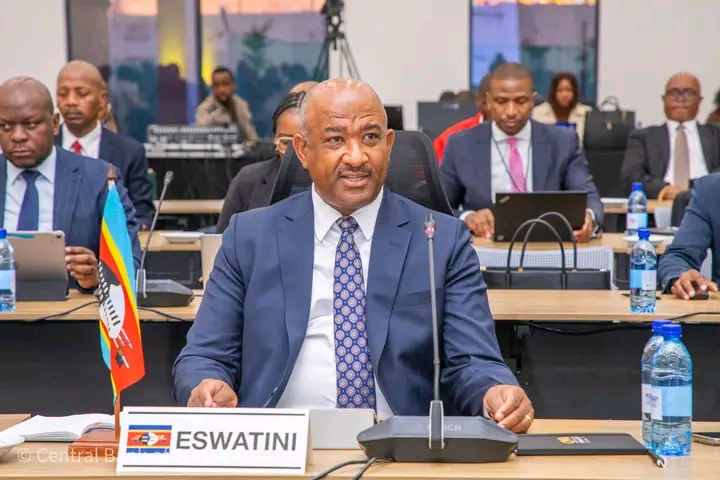
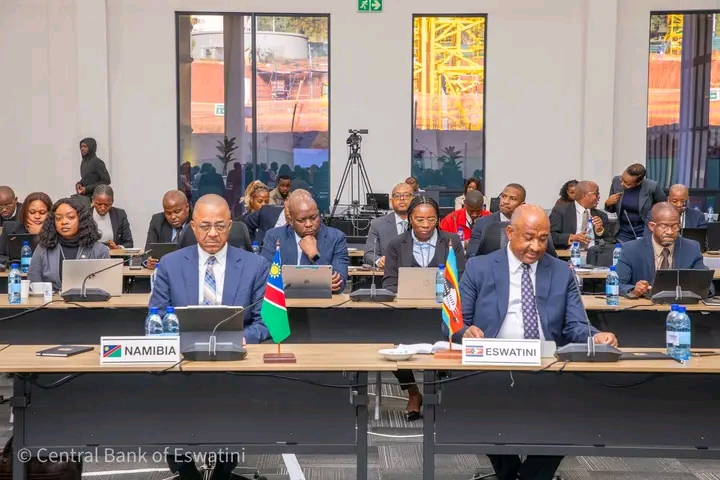
Opening the second day of the 2026 Common Monetary Area Central Bank Governors’ Meeting in Ezulwini, Central Bank of Eswatini Governor Dr. Phil Mnisi said recent global developments have reinforced the importance of preserving sound macroeconomic fundamentals while deepening regional cooperation among member central banks. His remarks positioned the meeting not simply as a routine policy engagement but as part of a broader effort to ensure the region remains resilient against increasingly complex external shocks.

The Governor noted that while recent geopolitical developments had provided some relief to financial markets, uncertainty remains elevated and continues to influence inflation, monetary policy and broader economic performance across import-dependent economies such as those within the CMA.
He pointed to the recent Memorandum of Understanding between the United States and Iran, which helped ease immediate concerns surrounding international shipping through the Strait of Hormuz. However, he cautioned that attacks on commercial vessels demonstrate that risks to global trade have not disappeared.
“However, the recent attacks on commercial vessels demonstrate that the risks remain elevated,” he said.
Although international crude oil prices have remained below US$80 per barrel, suggesting financial markets currently expect tensions to remain contained rather than evolve into a prolonged disruption, Dr. Mnisi warned that central banks cannot afford to become complacent.
For Eswatini and its CMA partners, petroleum imports remain a significant transmission channel through which global shocks quickly filter into domestic economies. Rising fuel prices increase transportation costs across supply chains, raise production expenses for businesses and ultimately place upward pressure on consumer prices. These effects can weaken household purchasing power while increasing operating costs for firms, particularly small and medium-sized enterprises that often have limited capacity to absorb higher input costs. Such conditions also complicate the work of central banks.
“Higher energy prices quickly feed into our transportation costs, production costs, inflation and external balances,” Dr. Mnisi said. “Such shocks also complicate the conduct of monetary policy by creating difficult trade-offs between preserving price stability and supporting economic growth.”
His remarks reflect one of the most significant challenges currently confronting monetary authorities globally. While higher interest rates can help contain inflation, tighter monetary policy may also slow business investment, reduce credit growth and moderate economic activity. Conversely, supporting growth through accommodative policy risks allowing inflationary pressures to become entrenched if external shocks persist.
Despite some easing in global inflationary pressures over recent months, Dr. Mnisi stressed that policymakers remain guided by incoming economic data rather than assumptions that current conditions will persist.
“While the recent moderation in oil prices provides some relief, we remain mindful that inflation risks have not disappeared, and policy decisions will continue to depend on incoming data and evolving global conditions.”
Beyond monetary policy, the Governor highlighted the rapid digital transformation of financial services as another area demanding closer regional collaboration. Financial technology continues to expand access to banking services, improve payment efficiency and support financial inclusion across Southern Africa. However, the same technologies are also creating new opportunities for organised criminal networks to exploit digital payment systems across national borders. Dr. Mnisi referenced the recent dismantling of an online gambling syndicate operating in Eswatini as an example of how illicit financial activity is becoming increasingly sophisticated.
“The recent dismantling of an online gambling syndicate here in Eswatini illustrated how criminal networks are exploiting digital platforms and payment systems to move funds across jurisdictions,” he said. The incident, he argued, demonstrates why combating financial crime can no longer be viewed solely as a domestic law enforcement responsibility. Instead, it requires coordinated action involving central banks, financial intelligence units, banking supervisors, commercial banks, payment system operators and law enforcement agencies throughout the region.
According to Dr. Mnisi, regulatory frameworks must evolve at the same pace as technological innovation to ensure financial inclusion and innovation are not achieved at the expense of financial system integrity. “Effective regulation must continue to evolve alongside technological innovation, ensuring that we promote innovation while safeguarding financial stability and public confidence.”
The Governor also highlighted progress on the regional Balance of Payments Harmonisation Project, describing it as an important initiative that will improve the consistency and comparability of external sector statistics across CMA member states. More reliable and harmonised economic data is expected to strengthen policy formulation by providing central banks with a clearer understanding of trade flows, capital movements and external vulnerabilities within the region.

His remarks reinforce the increasingly strategic role the Common Monetary Area plays beyond maintaining the currency link between Eswatini, Lesotho, Namibia and South Africa. As global financial markets become more interconnected and external shocks more frequent, regional policy coordination is emerging as an important pillar of economic resilience.
“The developments have reinforced the importance of maintaining strong macroeconomic fundamentals and preserving the credibility of our policy frameworks,” Dr. Mnisi said. “They also underscore the value of the CMA as a platform for consultation, coordination and collective action in responding to external shocks.”
For businesses, investors and financial institutions operating within the CMA, the discussions signal that regional policymakers remain focused on maintaining price stability, strengthening financial sector resilience and preserving confidence in increasingly uncertain global conditions. As geopolitical risks, digital finance and cross-border capital flows continue to reshape the operating environment, coordinated policymaking is likely to become an even more important feature of regional economic management.